

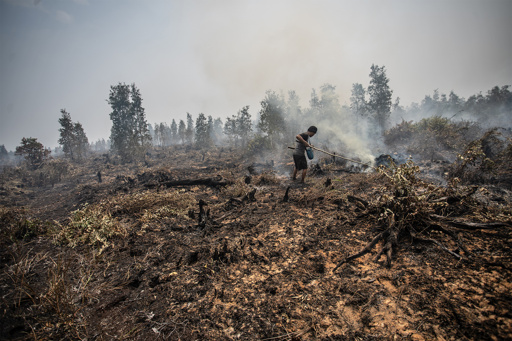
In October 2006, I was supposed to be starting my dissertation research on tropical reforestation in Indonesia. Instead, I found myself in the forests of Tanjung Puting National Park in Central Kalimantan helping locals to fight fires with brooms, backpack pumps, and hoses connected to hand-dug water wells. It was an ‘all hands-on deck’ moment for the local NGO I was working with then — Friends of Nature, People and Forests (FNPF) — including Basuki Santoso, FNPF’s Kalimantan program manager, alongside Adut and Isam, who were teenagers at the time. On our first night of firefighting, we slept in the forest on a raised platform that would later become part of a field station. I was awoken in the middle of the night by a sun bear rifling through our makeshift kitchen about 20 feet away. I sat frozen, watching this wild animal who was fleeing the fires while everyone else slept soundly. It was a surreal and humbling moment. Twenty years ago, these severe forest and peatland fires were due to a dangerous combination of El Niño-induced drought, slash-and-burn agriculture and other land clearing, and the grass-fire cycle. Much of Southeast Asia was left choking on the haze, and that was a weak El Niño year. Firefighting in Indonesia often requires resourcefulness as well as resilience and fortitude. Image courtesy of Basuki Santoso. History keeps repeating itself, and it’s hard to watch. Experts say we are now facing a Super El Niño. For the past three months, millions of…This article was originally published on Mongabay
From Conservation news via This RSS Feed.