

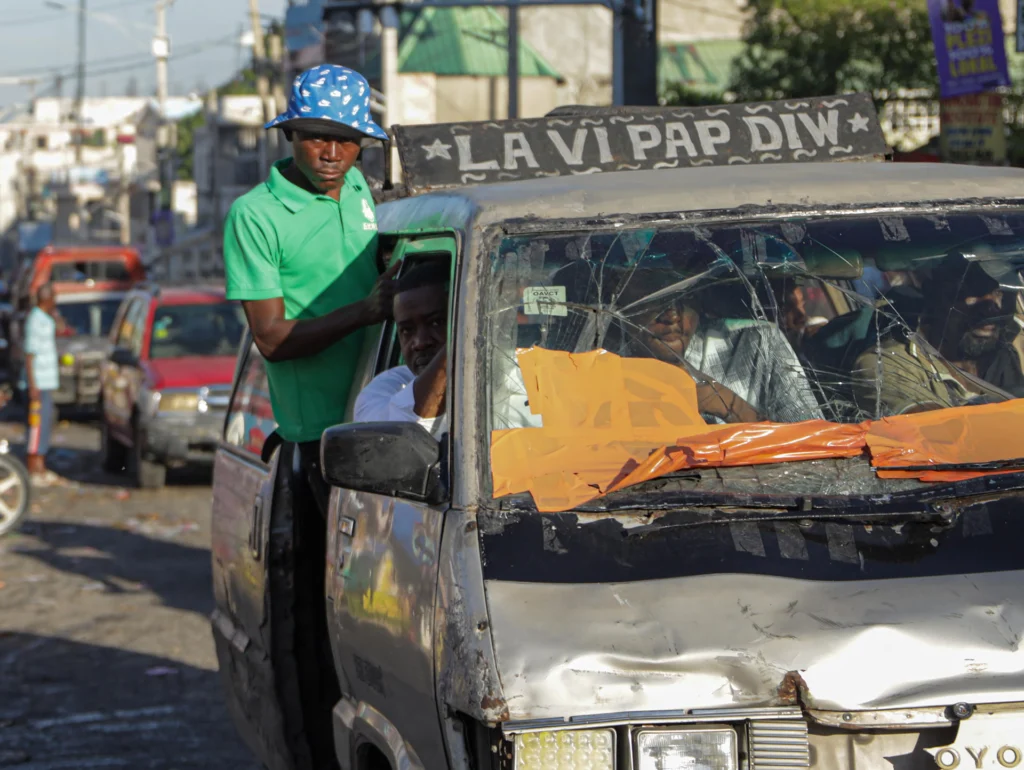
Haiti’s electoral council extended candidate registration, postponing the start of campaigning for elections scheduled for Dec. 13.
Haiti has postponed the start of campaigning for presidential and legislative elections scheduled for Dec. 13, adding to uncertainty over a vote the country has not held in a decade.
RELATED: UN Security Council Extends Anti-Gang Force Mandate in Haiti
The Provisional Electoral Council (CEP) extended the deadline for candidate registration to Oct. 31, from Oct. 9, after the Council of Ministers approved amendments to the Electoral Decree adopted June 2. The decision followed consultations with political actors, the CEP said.
The council said the extension would give candidates and political organizations more time to complete the procedures required under the current legal and regulatory framework. The campaign period, which was due to begin Monday, has therefore also been postponed.
The CEP said new campaign dates would be announced later as part of an updated electoral calendar, to be finalized in coordination with political organizations authorized to participate in the process.
No campaign activity was reported Monday in Port-au-Prince or major provincial cities, despite some candidates holding political events in the streets in the days before the scheduled start of the official campaign.
On Sept. 28, the CEP reminded candidates that the official campaign period had not yet begun and urged political parties to refrain from activities that could be considered campaigning outside the officially designated period.
The current electoral calendar calls for the first round of presidential and legislative elections on Dec. 13, alongside a popular vote on several proposed constitutional changes.
At least 10 prominent politicians have registered as presidential candidates, including former Prime Minister Claude Joseph, Delmas Mayor Wilson Jeudy, former interim President Jocelerme Privert and activist Wilner Joseph, who is considered the candidate backed by Prime Minister Alix Didier Fils-Aimé.
Political and security crisis
The electoral uncertainty comes as Haiti continues to face political instability and a severe security crisis. The CEP and the government have yet to agree on a definitive electoral decree, with amendments being introduced each month as preparations for the vote continue.
Haiti’s last president elected by popular vote was Jovenel Moïse, who took office in February 2017 and was assassinated on July 7, 2021.
The electoral process is unfolding amid widespread armed-group violence. More than 5,700 people have been killed or injured in Haiti so far this year as a result of violence by armed groups, according to the United Nations.
The groups are also blamed for more than 230 kidnappings and the rape of more than 1,000 women and girls, according to the UN.
The UN Security Council renewed the mandate of the Gang Suppression Force (GSF), established a year ago to combat armed groups in Haiti, for another six months on Sept. 29. The mandate now runs through March 31, 2027.
The electoral process also involves sitting mayors, former ministers, government commissioners and figures sanctioned by Canada, the United States and the European Union over alleged ties to armed groups that control much of Port-au-Prince and have expanded into other parts of the country.
From teleSUR English via This RSS Feed.