

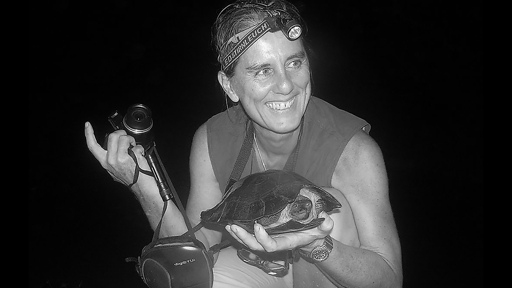
On June 17, 2015, Philippine officials confiscated thousands of turtles in cement tanks from a warehouse in Palawan, an island province in the Philippines. More than 3,800 of them were endangered Palawan forest turtles (Siebenrockiella leytensis), piled as many as a dozen deep, awaiting export. Some had ulcers on the undersides of their shells or open wounds on their feet; others had been bitten by turtles crowded in alongside them. Sabine Schoppe organized the response. No facility was equipped to deal with thousands of turtles so students built shade and shelters. A former crocodile enclosure was turned into an emergency pond. Schoppe and her colleagues worked around the clock, joined by veterinarians and turtle specialists who came from abroad. “Yesterday by sadness and work, now by hope,” she wrote after help began arriving. Schoppe had arrived in the Philippines from Germany in 1995 after completing a doctorate in biology. She began with bird surveys and coastal resource management in the Visayas before moving to the State Polytechnic College of Palawan, now Western Philippines University, where she was a guest professor of aquatic and marine biology. She also became an associate editor of The Palawan Scientist. The bakoko, as the Palawan forest turtle is known locally, was first described scientifically from specimens said to have come from the Philippine island of Leyte. Those specimens were later destroyed during the bombing of Manila in World War II. For decades scientists didn’t know where the turtles lived until they were eventually found in…This article was originally published on Mongabay
From Conservation news via This RSS Feed.