

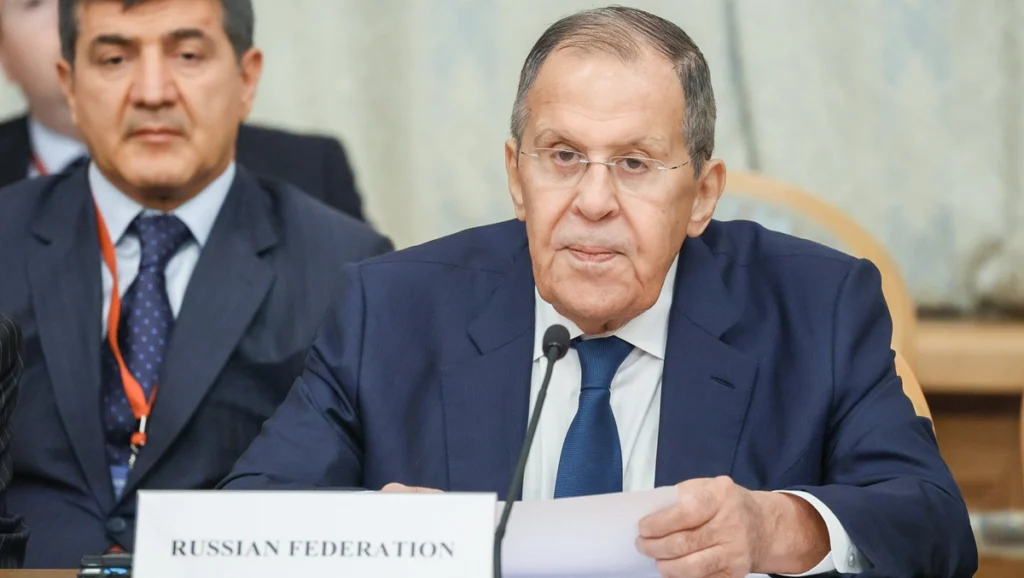
FM Lavrov warns that a potential NATO return to Central Asia could destabilize the region.
On Monday, Russian Foreign Minister Sergei Lavrov called any form of military presence by the North Atlantic Treaty Organization (NATO) in Afghanistan or neighboring countries “categorically unacceptable.”
RELATED:
U.S. Meets with Pakistani Army Chief Amid Tensions with Afghanistan
During his remarks at the eighth session of consultations on Afghanistan under the Moscow Format, he argued that the presence of Western forces had generated regional instability and warned about the security risks posed by a potential NATO return to Central Asia.
“As historical experience demonstrates, such a presence carries the risk of destabilization and an escalation of the conflict. In recent decades, we have not seen any other results as a consequence of such a presence,” he said.
On Monday, Lavrov also reaffirmed his country’s interest in “strengthening Kabul’s counterterrorism capabilities by providing material, technical and expert assistance, and supporting contacts between intelligence services and security forces.”
He recalled that Afghanistan’s current authorities maintain “an unconditional fight against the Islamic State and other terrorist groups. Hundreds of militants have been eliminated, and major terrorist attacks have been thwarted, including attacks against foreign citizens and diplomatic missions.”
‘We have ZERO tolerance for the deployment of NATO forces in Afghanistan or neighboring countries’ — Lavrov
‘History shows that such a presence could lead to destabilization and growing conflicts’ https://t.co/3zmS7YuBoZ pic.twitter.com/KO7xkgnBBQ
— RT Intl (@RT_on_X) October 5, 2026
Regarding the fight against drug trafficking, Lavrov highlighted measures adopted by Kabul that have produced results, as opium production has fallen 90% over the past five years, according to data from U.N. agencies.
“The national government that came to power under the leadership of the Taliban movement has managed to take control of the country’s territory, and it must be acknowledged that it governs it quite successfully,” the Russian diplomat said.
Lavrov also denounced the retention of the financial assets of Afghanistan’s Central Bank by Western countries and the imposition of economic sanctions following the Taliban’s return to power in August 2021, which occurred after the withdrawal of U.S. troops and the collapse of the Ashraf Ghani administration.
The Russian diplomat stressed that, despite these restrictions and the isolation of the international banking system, Afghanistan has strengthened its economy by opening about 170 new production facilities, reforming tax legislation and developing regional energy projects such as the Turkmenistan-Afghanistan-Pakistan-India (TAPI) gas pipeline.
🗓 On October 5, Moscow hosted the 8th Moscow Format Consultations on #Afghanistan.
Participants reaffirmed that there is no alternative to equal, mutually beneficial cooperation with Kabul & supporting Afghanistan’s integration into the global economy.https://t.co/M9T6lpjIcl pic.twitter.com/ORTISmaGIu
— MFA Russia 🇷🇺 (@mfa_russia) October 5, 2026
The eighth Moscow Format meeting brought together representatives and senior officials from Afghanistan, Russia, China, India, Iran, Pakistan and several Central Asian countries. In addition, Belarus and Egypt were invited as guest countries.
The regional meeting, attended by Afghan Foreign Minister Amir Khan Muttaqi, focused on political and economic cooperation between Afghanistan and neighboring countries, as well as joint efforts to combat terrorism and drug trafficking.
The Taliban foreign policy chief’s visit comes after a high-level delegation from Afghanistan’s Defense Ministry attended the joint “Center-2026” strategic military exercises in Russia.
In May, the two sides signed a technical-military agreement aimed at maintaining and upgrading Afghanistan’s Russian-made weapons inventory, including aircraft and helicopters.
The Russian Foreign Ministry confirmed that it will continue sending humanitarian assistance to the Afghan population, with a new shipment scheduled for the next two months. The two sides agreed to continue technical cooperation and the exchange of information between security services to strengthen counterterrorism capabilities.
The Moscow Format deliberations included the participation of regional delegations seeking to assess political stability, cross-border trade and collective security in Eurasia following the withdrawal of international forces from Afghan territory.
teleSUR/ JF
Sources: EFE – TASS
From teleSUR English via This RSS Feed.
Pot, meet kettle
