

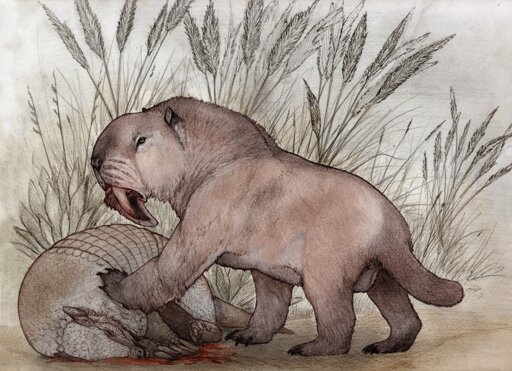
In 2014, members of a local museum found fragments of an ancient fossil dating to the end of the Pliocene or early Pleistocene epoch in a seaside cliff on the Argentine pampas. They belonged to a large predator, but the only group they fit, saber-toothed marsupial relatives, had supposedly gone extinct earlier, leaving the identity of the fossil a mystery. That was until Eric del Campo, a paleontologist at the Argentine Museum of Natural Sciences in Buenos Aires and lead author of the study, and his colleagues took a closer look.
From Biology News - Evolution, Cell theory, Gene theory, Microbiology, Biotechnology via This RSS Feed.
You must log in or # to comment.