

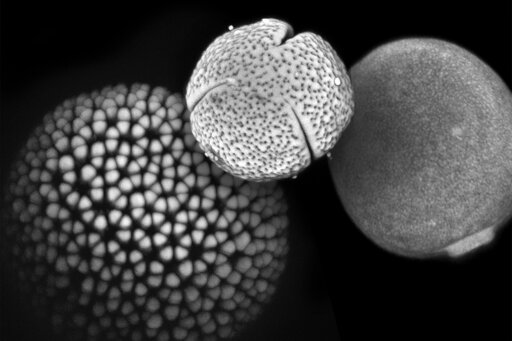
Scientists used machine learning and super-resolution microscopy to overcome a challenge that has stymied research into the natural history of grasses for decades. Their method allowed them to detect subtle differences among grass pollen grains and trace changes in grass diversity and the proportions of the two main photosynthetic types of grasses at one site over a period of 25,000 years.
From Biology News - Evolution, Cell theory, Gene theory, Microbiology, Biotechnology via This RSS Feed.
You must log in or # to comment.