

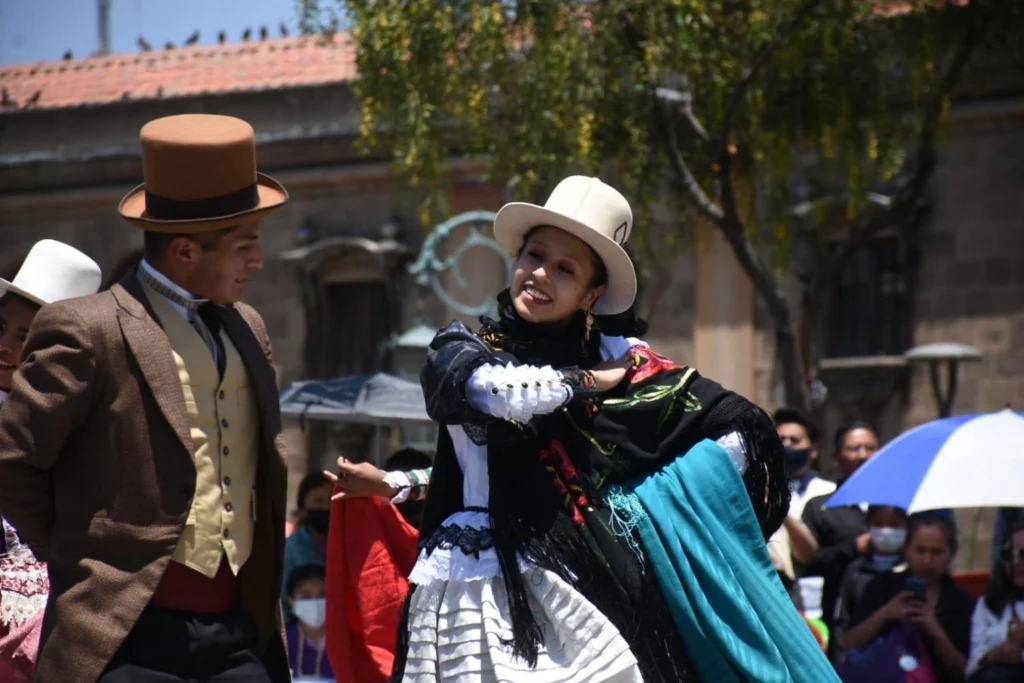
In 2015, the cueca was declared an intangible cultural heritage of the country.
On Sunday, hundreds of people paid tribute to the cueca, the dance that expresses Bolivian cultural diversity through the variety of styles, costumes, and rhythms with which it is performed in each region.
RELATED:
Folk Dancers Pay Tribute to the Union of Writers and Artists of Cuba
Celebrations marked the ‘National Bolivian Cueca Day’ in cities such as Cochabamba, where events were held at the regional government headquarters and at the Mayor’s office in Plaza 14 de Septiembre, the city’s main square.
The cueca is a partner dance in which the dancers carry a white handkerchief in their right hand and alternate circular movements with flourishes and a final footwork step.
Bolivian regions such as La Paz, Cochabamba, Chuquisaca, Tarija, and Potosi, as well as the Chaco region, have their own versions of this dance, which represents the allegory of a man’s courtship of a woman.
🇧🇴💃 ¡La cueca boliviana está de fiesta! Cada primer domingo de octubre se celebra el Día Nacional de la Cueca Boliviana, y se lo celebra en instalaciones de la estación de la línea roja de Mi Teleférico.
🗓️ 04/10/2026#SiempreBolivia #BTVInforma pic.twitter.com/KkSACwOSbw— Bolivia Tv Oficial (@Canal_BoliviaTV) October 4, 2026
The text reads, “The Bolivian cueca is in celebration! Every first Sunday of October, the National Day of the Bolivian Cueca is celebrated, and it’s held at the facilities of the red line station of Mi Teleferico.”
Women’s attire includes skirts, hats, shawls, and blouses, although the materials and lengths of the skirts vary by region. They are longer and warmer in the Andean region and shorter and lighter in the valleys; some wear boots or closed shoes, while others wear sandals.
Edson Ontiveros, Cochabamba’s Director of Culture, mentioned that there are “very luxurious, ostentatious costumes” like those worn in the Chuquisaca cueca, and others that are simpler, like those from Tarija.
In 2015, a law was enacted declaring the Bolivian cueca an intangible cultural heritage of the country, “due to the diversity of its musical, poetic, choreographic, and sartorial expressions, for the safeguarding of the cultural, traditional, and popular values that give it national identity.”
#Bolivia | Urban transport services came to a standstill in Santa Cruz as drivers held a 24-hour strike against the elimination of the diesel subsidy and higher fuel costs.
Thousands of public transport vehicles were withdrawn from service.#SantaCruz #Transport #Diesel… pic.twitter.com/wEL2a9LlVp
— teleSUR English (@telesurenglish) September 29, 2026
teleSUR: JP
Source: EFE
From teleSUR English via This RSS Feed.