

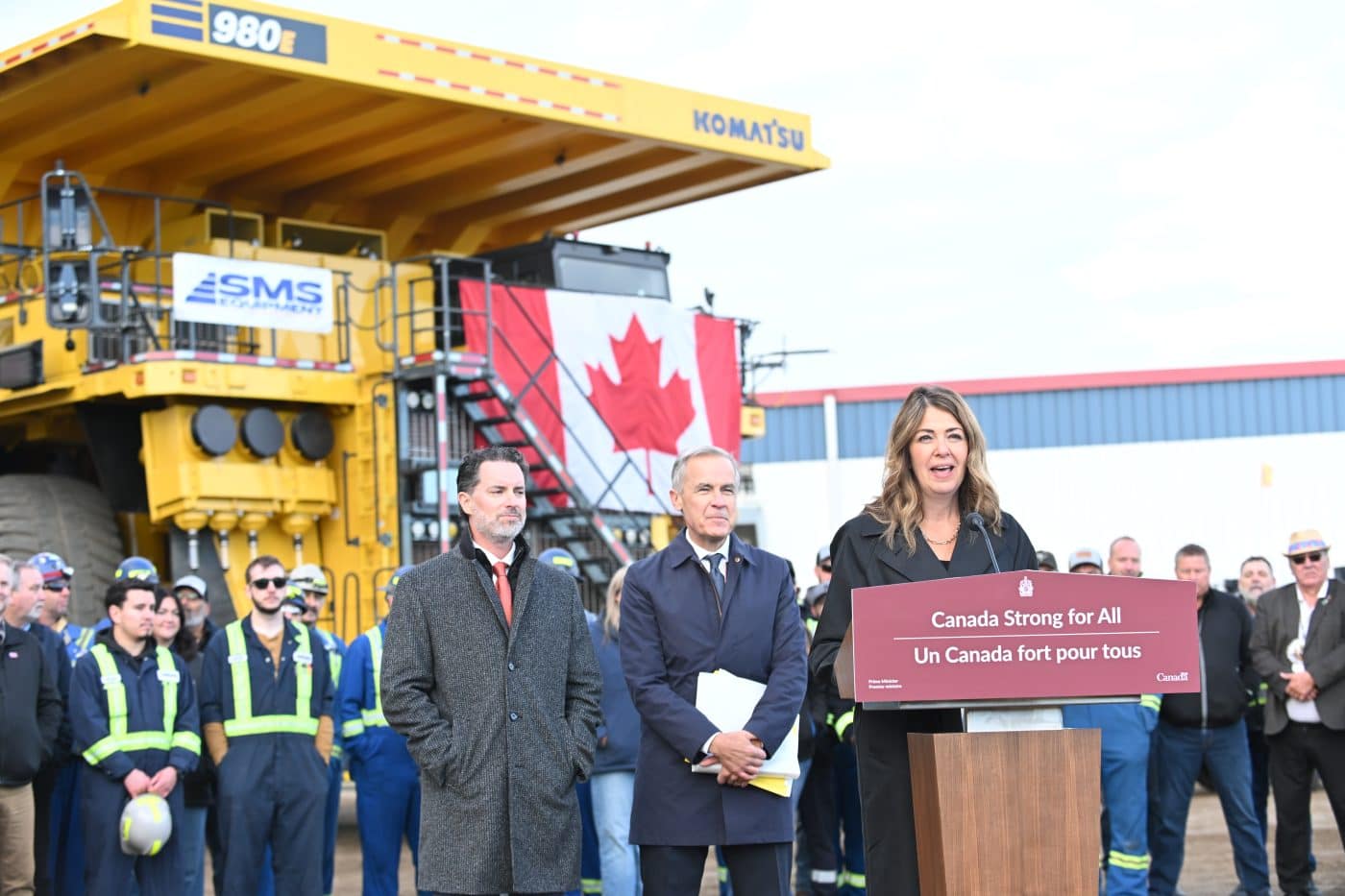
Photo: Greg Halinda / The Canadian Press
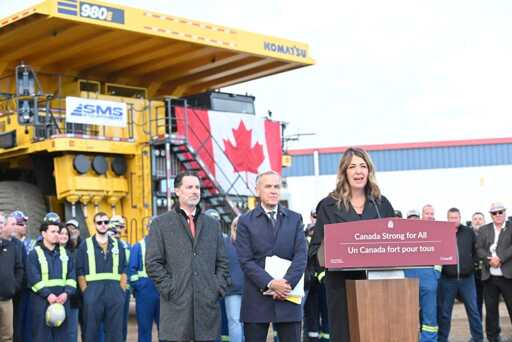
There was a brief, telling moment when Prime Minister Mark Carney was onstage at a Calgary Chamber of Commerce event last year, following the announcement of a memorandum of understanding with the Alberta government for a new “private sector constructed and financed pipeline” to the West Coast.
Deborah Yedlin, the CEO of the chamber, mentioned the agreement’s stipulation: the project needed a private proponent rather than public funding. Then she said the project required “derisking.”“Are you saying there’s no room for the government to derisk something for a period of time in order to attract private capital that’s needed for a project like that?” she asked Carney. In other words, how far was Carney willing to go to protect industry from losses?Carney listed off moves his government was making, including regulatory clarity, tax incentives and loan guarantees to move the project forward. And then he said: “In essence, the Asian pipeline will be a private sector project …”
That one word, essence, bore considerable weight.
So too did the timing of the Oct. 1 announcement that the pipeline — now known as Pacific Link — would be the first project of national interest listed under the federal government’s sweeping Building Canada Act. It comes just over two weeks before Alberta holds a referendum on whether to hold an independence referendum, as well as a slew of questions aimed mostly at immigrants.
From the beginning, the pipeline plan was a political one, based on a calculus that can be hard to understand outside of Alberta, where decades of government and industry messaging has succeeded in tightly weaving oil and gas into the province’s culture.
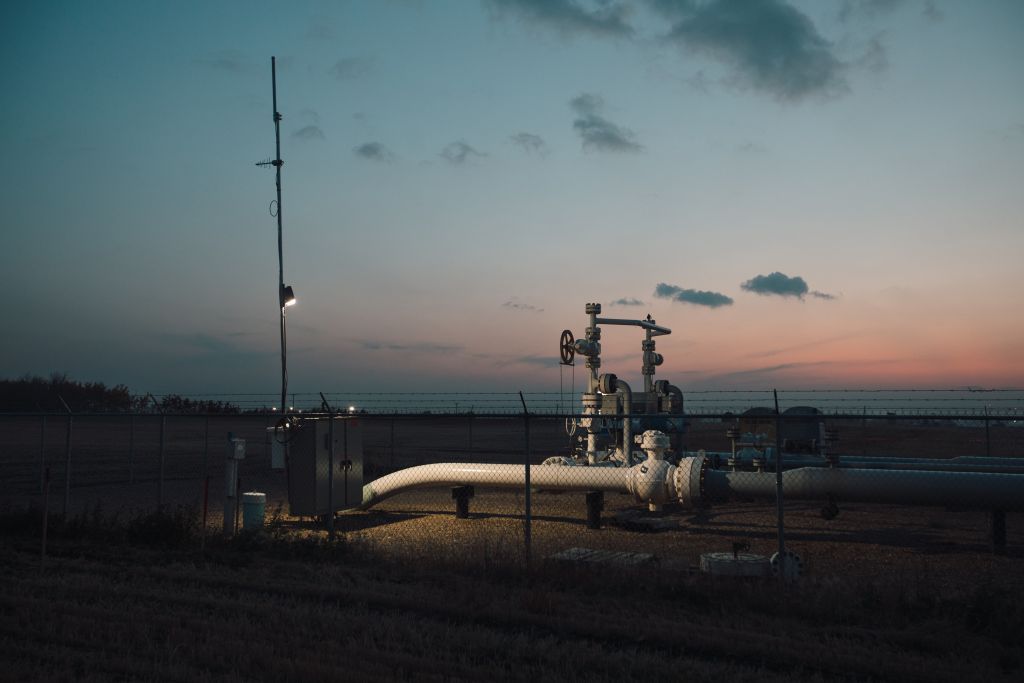
Alberta Premier Danielle Smith threatened Prime Minister Mark Carney with an “unprecedented national unity crisis” if he did not respond to a list of demands almost entirely focused on boosting the oil and gas sector. Photo: Amber Bracken / The Narwhal
Never has that narrative been pushed harder than by the United Conservative Party government, first under former premier Jason Kenney and now amplified even more under Premier Danielle Smith.
Having directly linked the future of the country with deregulation for the oil and gas sector, Smith now faces the headwinds of that rhetoric in the form of a burgeoning separatist movement. It’s one she has aided to protect herself from an influential secessionist base in her party.
It’s a situation Carney has recognized and attempted to shape, acquiescing to Alberta’s demands in an effort to shore up a united front as threats from the United States grow more stark.
The prime minister might have promised Canadians a “private sector constructed and financed pipeline” in last fall’s memorandum. But it was clear from the beginning he was willing to pay a premium to achieve peace.
How Alberta’s politics of wealth and alienation fuelled the Pacific Link promise
After their first meeting in March of last year, Smith threatened Carney with an “unprecedented national unity crisis” if he did not respond to a list of demands almost entirely focused on boosting the oil and gas sector.
It was part and parcel of a wider campaign to link Alberta’s political and economic fortunes more tightly with fossil fuels, including moves to designate emissions data as critical infrastructure to prevent the federal government from accessing it and put up regulatory and economic hurdles to block renewable energy development.
Smith’s actions are part of a long history of resentment that stretches back as far as the creation of the province, when the federal government denied Alberta control over its natural resources, a move that was later reversed.
There’s an entire mythology of eastern Canadian domination built up around the National Energy Program introduced by Pierre Elliot Trudeau in the early 1980s, which still resonates with separatists and mainstream conservatives alike. In this century, the climate actions of his son Justin Trudeau inflamed a new sense of subjugation in the oil patch.
Those resentments and mythologies have been curated by successive Alberta governments as an easy way to rally Albertans to their cause and help cover up internal failures, particularly when it comes to budget crashes. And now it has reached a fever pitch.
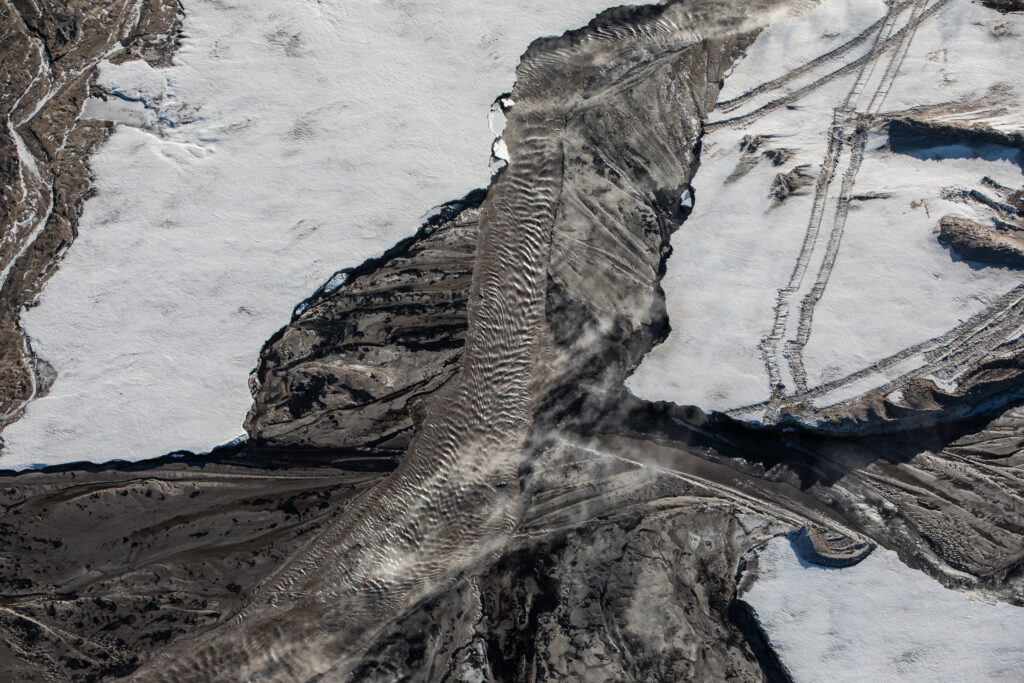
A tailings pond in the Alberta oilsands. The agreement between Canada and Alberta requires oilsands companies to begin work on a massive carbon capture and storage project to reduce the region’s emissions. Photo: Amber Bracken / The Narwhal
Carney, a veteran of Brexit and big brain amidst big brain money makers, recognized the weight of Smith’s threat and an especially restless Alberta, particularly as the geopolitical landscape shifted under his feet. He wasted no time in wooing her, and her province.
He has proven willing to deregulate and slash emissions programs and targets to help industry. Now, he’s opening the federal government’s hefty purse to buy peace. The pipeline will cost billions, without any promise that price will be enough to please Smith’s government and the powers it has unleashed.
Pacific Link pipeline promise is rushing to meet a very specific moment
Pacific Link is moving fast, because it’s meant to meet this specific moment: oil prices are high, Alberta separation is occupying vital political real estate, and a trade war with the U.S. is both threatening Canadian well-being and galvanizing political will for big risks and fast action.
In this rush, it’s easy to lose sight of the fact that many important details still aren’t finalized — such as the route, financing and oilsands companies meeting requirements for a massive carbon capture and storage project.
All of this makes meeting this specific moment difficult, to say the least. It will be years before the pipeline is online.
There are also serious questions about investing billions of taxpayer dollars into a project for a sector facing possible reductions in demand and a global shift away from the uncertainty of oil markets. Not to mention concerns over the impacts of increased emissions and the reduced ambitions for carbon capture.
Despite this announcement, the referendum will still take place. The provincial government is spending millions to tell Albertans to send Ottawa a message and stand up for a more sovereign province. Its list of demands remains, even if Smith is playing nice with Carney for the time being.
The willingness of the Alberta government to act in good faith is also questionable. Only days after it signed last fall’s memorandum with the federal government, it went ahead with changes which undermined its industrial carbon price that it promised to strengthen in the agreement.
That’s the same memorandum containing the broken promise of a “private sector constructed and financed pipeline.” It all suggests Donald Trump isn’t the only Western leader who signs agreements in pencil.
The Narwhal’s reporters are telling environment stories you won’t read about anywhere else. Stay in the loop by signing up for our free weekly dose of independent journalism.
From The Narwhal | News on Climate Change, Environmental Issues in Canada via This RSS Feed.