


Wars, neocolonial destabilization, the “aid” ideology, and the influence of Western financial institutions have sabotaged the African continent from the inside and kept it in a state of economic dependency. Yet its peoples have consistently expressed a desire for sovereignty and a rejection of external interference.
What current manifestations of the struggle for African unity can we observe nowadays, and what continuity can be drawn with the Pan-Africanist movement of the 20th century? In the context of Trump’s administration US policies, which are targeting migrant workers, and the promotion of far-right ideology in the capitalist countries, can we say that African diasporas still play an important role in these challenges and in the emergence of a new Black power?
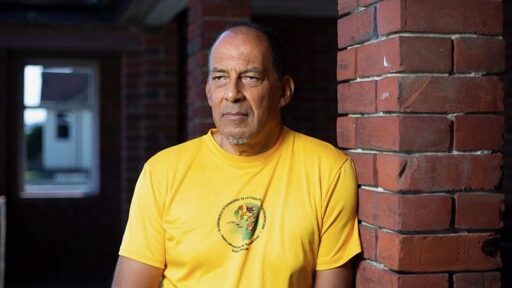
Professor Hakim Adi, the author of “Panafricanism: a History” was interviewed by Alex Anfruns, a journalist and researcher, on the African struggles for emancipation.
“History has shown us that an attack on anyone
is an attack on everybody”
Alex Anfruns: Let’s start from a chronological perspective. In the 1950s there were different strands within the Pan-Africanist movement that, despite sharing common goals such as anti-racism and anti-colonialism, diverged in their views on the liberation struggle. Which key figures and moments of that Pan-Africanism debate would you highlight?
Hakim Adi: A key moment was the 1958 All African People’s Conference, which was held in Accra, Ghana, organized by two of the leading Pan-Africanists at the time: Kwame Nkrumah who was prime minister of Ghana, and George Padmore who was a Trinidadian Pan-Africanist and had been the main organizer of the famous 1945 Manchester Pan-African Congress. That Conference held in1958 was a very important moment because at that time there were very few independent African countries. Ghana had just become independent, it had achieved its formal political independence from Britain.
Some countries were still fighting for their independence like Algeria … one or two countries were already independent but most of the African continent was not yet independent … So it was very important to have this conference to bring together people from across the African continent, as well as some from the diaspora, and to discuss the necessary unity between Africans and also the politics of Pan-African liberation. It was a very successful conference in the sense that it brought together many different people, leaders from across the continent, like Felix Moumié from Cameroon, Joshua Nkomo from Zimbabwe, Patrice Lumumba from Congo and many others, including many organizations…
One of the key participants was Frantz Fanon. He was a Caribbean and Martinican Pan-Africanist, who personified Pan-Africanism, as even though he came from the Caribbean, he gave much of his life to the liberation struggle in Africa, and he was a representative of the FLN in Algeria at that time. He came to that famous conference and put forward a perspective of the liberation struggle in Africa which was different to the perspective of the main organizers of the conference, Nkrumah and Padmore. They had argued that Pan-African liberation could be non-violent, if people were organized properly and so on…
Fanon came along and based on his experience, and indeed the experience of other countries in Africa, he put forward a different perspective and said that force and violence might be necessary to truly liberate Africa. So this was a very important moment: the recordings and personal memoirs of that conference highlight Fanon’s intervention, that he created a great debate, so that the organizers even tried to find ways to combat Fanon’s ideas … It demonstrated a major difference within the Pan- African movement at that time: how to actually achieve liberation?
It’s interesting that in 1945 in Manchester the conference congress decided that force would be necessary to achieve anti-colonial liberation. By 1958 two of the key participants in the Manchester Conference had changed their minds. Fanon had the experience of the Algerian revolution and therefore said: “hold on a minute, it may well be the case that force and violence is necessary.” So I think this is a very important moment and a significant difference between these key Pan-Africanist figures of the 1950s. Of course there are many others but I think that’s a good example of the differences which emerged in the movement at that time.
AA: In your other seminal work, you have exhaustively analyzed the relationship between Pan-Africanism and communism. How did communism influence the Pan-African movement during the fight for independence?
HA: When we talk about communism as it developed historically, we can define it as the condition for the liberation of the wealth producers, the workers. This is what communism is about. The communist movement of the 1920s, the 1930s, of the Third International took a very great interest in the liberation struggle in Africa as well and in other parts of the world. Just as Pan-Africanists in the US and Africa and the Caribbean and everywhere else took a very great interest in communism and the impact of the Russian Revolution, the ideas of Lenin and the Bolsheviks and so on.
People in Africa and in the diaspora were used to the impact of capitalism, to what the capitalist-centered system meant. It meant enslavement, it meant colonial rule and the division of the African continent. While the Russian revolution showed that this entire political system could be brought to an end, there was an alternative to it. That alternative opened many possibilities, for a different kind of society, where the majority of the people made the decisions, a society in which people who spoke different languages and different nations could live together.
The other thing that the communist movement brought to the colonies was a perspective of how you could struggle. If we look at the 1930’s, 1940’s, at that time generally speaking the approach of the Pan-African movement was to petition the big powers, the colonial powers, to say to the big powers: “hang on, colonial rule should be reformed, it should be made better and nicer…”
The communists said “that’s not going to change things”. What is going to change things is the organization of the masses of the people: organizing amongst the farmers, workers and so on. Secondly, the communists argued that force may need to be used and probably will need to be used to remove this system. And thirdly, this anti-colonial struggle of masses of people should be in unity with the struggles of people all over the world, whether in Europe, America, Asia, etc., who were struggling for common aims.
The communist movement brought this perspective to Pan-Africanism and was very influential during that period but also influential in the latter period: the 1940s, 1950s, 1960s. If we think about some of the key liberation struggles that took place in Africa in the period from the 1960s onwards, especially after Nkrumah was overthrown, but even before were influenced by Marxism. The liberation struggles in Angola, in South Africa, in Mozambique, in Zimbabwe, etc.
On September 12, we celebrated the anniversary of the birth of Amilcar Cabral, one of the greatest Pan-Africanists and leader of the liberation in Guinea-Bissau and Cabo Verde, who was also influenced by Marxism. If we think of the big figures in the South African struggles, they were all communists: Nelson Mandela, Walter Sisulu, etc. So, the influence of communism in general and Marxism were a very big influence on the Pan African movement in general.
AA: Would you say that events like Lumumba’s assassination and the long Algerian War pushed new African countries toward a more radical Pan-Africanism?
HA: I don’t think so. It was a very difficult period: first of all, the 1950’s, 1960’s and 1970’s, was in the midst of the cold war. The influence of anticommunism was immense and had a massive impact on Africa as well as on other parts of the world. This put pressure on African countries to do the impossible, to trying to find a way of achieving some kind of independence within the boundaries established by the big powers,
You might say that the fact that Algeria had to fight a war of ten years towards its liberation, that people in Kenya had to fight a war in order to achieve its liberation and other countries … this would have made clear to people in Africa the kind of struggle that was necessary…
Also the fact that in a country that had just achieved the independence like Congo, the big powers like Belgium, US and others could organize a mutiny within the army, could divide a country, arrest its leader and murder him … those facts would galvanize the whole continent and would have created a very different kind of Pan-Africanism. In fact, these events and particularly the arrest and murder of Lumumba did galvanize the continent amongst the masses of the people. It was a major event, but as far as the states were concerned, the governments were concerned, it was a different matter.
This is one of the things that we have to remember about this period: that the sixties were entering into the era of Pan-Africanism of states, and these states, even the most radical ones, we can call them, like Ghana, Algeria, Guinee perhaps, they operated within the conditions of that time. They tried to find a way of organizing that perhaps didn’t completely involve struggle, they tried to seek some kind of accommodation with the big powers. The majority of countries, especially the francophone countries, for example, maybe with one or two exceptions, nearly all of them stayed within the orbit of French imperialism.
It was a very difficult period and I don’t think those events in themselves pushed African states into different positions. It showed the limitations of this new independence, because African countries apparently had an independent state but then with a leader like Lumumba emerged, who showed a tendency to charter an independent cause, he was just removed like that by the big powers.
We saw the same thing a few years later when Nkrumah was removed, and that happened to many other leaders: Felix Moumié was assassinated in Cameroon. It showed more the strength and ruthlessness of the big powers, particularly the assassination of Lumumba. The struggle in Algeria did show what could be achieved by organizing among the majority of people and through armed struggle, but in most cases that wasn’t the course that was taken by African states.
AA: What do you think about the way Nkrumah and other liberation fighters analyzed neocolonialism in that period?
HA: There were analyses of neocolonialism by Nkrumah, Fanon and others but by then it was almost too late, Africa and Africans were not in the position to do very much about it, other than embark on new forms of struggle. These were lessons for the future. Neocolonialism meaning a new form of colonialism, where there appears to be an independent state, and an independent government and country but there is in fact a government which is tied to one of the old colonial powers, or perhaps a new power by economic ties, by military or political ties … and therefore it’s not operating in an independent way. Many people would argue that most of the states in Africa since the 1960s have been this kind of state. They have anthems and flags but they do not pursue independent paths that favor the majority of their citizens.
Nkrumah’s solution, or one of the things that Nkrumah argued for, was a United States of Africa, that if African countries could get together, they could be stronger economically, politically and perhaps also militarily, and that unity which would be able and strong enough to deal with neocolonialism.
The problem was that the nature, the characteristics of neocolonialism already existed in the 1960’s. And so the states that he was appealing to, for the United States of Africa were already essentially neocolonialist states, under the influence of the French, the British, the Belgians, and others, and so it became very difficult to unite in a way that Nkrumah envisioned.
Fanon wrote an incisive analysis of what neocolonialism was, how it worked, the reasons why it came about, the fact that it was a particular class of people that came to power, that economically they were dependent on foreign interests, and so on. That’s useful for everybody else, but for those governments existing in Africa, as well as in other countries, it hasn’t and could not have had a major effect.
What is important in the African context was that at least with all its limitations, these governments were able to come together in 1963 to form the Organization of African Unity. And with all its limitations, to struggle to unite for the liberation of the rest of the continent, from settler colonialism, so in other words against the colonial states: South Africa, Namibia, Rhodesia, Zimbabwe … So they united to achieve those victories, but to go beyond that, we haven’t really seen too much other evidence. Indeed, even the African states recognized the limitations of the OAU and replaced it with the AU.
AA: In your book, you address the ongoing debates that shaped Pan-Africanism across different geographic regions, highlighting its vitality and the diversity of expressions within the movement. What shared goals did diaspora activists have, how did they connect with Africa, and what challenges did they face fighting from inside Western countries?
HA: Yes, I suppose the most well-known activist who many people like is Malcolm X in the US, and the Black Panthers in the US and so on. And there were other activists like Walter Rodney in Guyana and so on. I think that for all of them and many others Africa was a great inspiration, Malcolm X is the best example. He traveled to Africa in the 1960’s he was impressed with the fact that these countries were becoming independent, that Africans were beginning to determine their own affairs and make their own decisions.
In his speeches he constantly talked about the importance of Africa and African liberation. To such an extent that when he formed an organization he called it the Organization of African-American Unity, the OAAU. And to such an extent that he called the African leaders to take responsibility for those in the diaspora, saying that “we are the lost sheep and you are the shepherds and you should be concerned with us as Africans, as people with African heritage, and fight for us in the United Nations” and so on …The Black Panthers similarly even had at one time a headquarters in Algiers, and they were influenced by struggles that were going on in Congo and many other places.
But as Malcolm X and the Panthers found out the struggles were different, although one could influence the other. We have to remember that the kind of politics which emerged in the US in the 1960’s, we tend to talk about it as Black Power, also had its influence in Africa, particularly amongst people like Steve Biko and the Black Consciouness movement in South Africa. But the struggles were different, they were struggles that were made in the US, although they were struggles by African people, there were struggles within the confines of the US and that meant that African Americans had to struggle alongside others in the US. The most far-sighted recognized that, people like the Black Panthers, they recognized they had to organize alongside other population groups within the US, and so they realized that liberation meant an alternative to the existing political and economic system.
Again, Malcolm X recognized that those who were oppressing African American in the US were also oppressing people in Africa. So removing that oppression, fighting to remove that oppression in the US would also help those in Africa. But, of course, they had many difficulties and many problems based on the way they organized, and also the fact that the US attempted to wipe them out, assassinated many of the leaders, including Malcolm X and many leaders of the Black Panthers, and imprisoned them …That was one of the main issues.
And then for someone like Walter Rodney, who was best known as an intellectual, a writer, an historian, and perhaps made the greatest impact in that way, but also in his analysis of what was going on in Africa, because he was involved in the work leading out to the 6th Pan-African Congress in Dar es Salaam in Tanzania in 1974. If we look at what he wrote, he was very critical of neocolonialism, critical of many African leaders including Nkrumah, and many Pan-Africanists like Georges Padmore, he said that they had lost their way, they lost sight of class struggle, that there were different classes involved and you had to struggle against them, as well as against the imperialist system of states, that you couldn’t just do things peacefully, without changing fundamentally the political system and the economic system.
He was also a victim of state’s terrorism, because he was assassinated in Guyana at a very young age. Those were some of the problems they faced, but there were many others…
AA: How are people fighting for African unity today, and how does it connect to the 20th-century Pan-African movement?
HA: Again, it’s very, very, difficult conditions today, it’s very complicated. I think the best example of modern Pan-Africanism would be something like the reparations movement. It is a movement for repair, to be carried out for the crimes of enslavement, of human trafficking, of colonialism and so on … and if we look at this struggle for reparations, that existed since the 20th century … even the 17th century! It has been one of the key elements of Pan-African struggles throughout the centuries, that restitution needs to be made, that repair that needs to be made for these crimes that have been carried out against Africans.
But if we look at that movement today, we see that it is headed by states. There has recently been a big conference in Barbados in the Caribbean about the reparation struggles, but it is led by the Organization of Caribbean States (CARICOM), the Organization of African Union (AU). Although these two organizations work together, there are differences within them and between them. Individuals and countries also have their own particular concerns, for example Algeria had a very big conference last year on the question of colonialism as a crime against humanity. It’s not a new perspective, but this is something that should be highlighted.
So we have these slightly different perspectives. Those in the Caribbean are most concerned with slavery, human trafficking, those in Africa are slightly more concerned with colonialism. These movements and organizations come together, but they are organizations of states. Then there are non-state actors in Europe, in the US, in the diaspora in general who say “hang on a minute, we are not being represented by any states, or more importantly we’re not represented in these deliberations.” It could be argued that the states don’t really have much of a mandate to represent the peoples of Africa and the Caribbean either, because they are not consulted any more than those in the diaspora outside these states.
So we have a movement which is very powerful, it is being discussed in the news all the time, there are conferences, it’s gathering momentum, but there are all kinds of tensions and contradictions within that make it quite difficult, yet it’s a very long lived movement that goes back to the 17th century … So it’s a very important movement and how it develops remains to be seen.
AA: How is the anti racist movement in the US and English-speaking world dealing with Trump’s anti-migrant policies?
HA: Well, the anti-racist movement is not only in the US, because it’s also important in Europe and elsewhere. In the US it’s a broad movement, it has different facets to it, because the Trump government in particular is launching an assault on everything: so we find first of all that it’s an attack on books, even the books that could be held in public libraries, school or university libraries are under attack, and are being banned or being burnt, that’s one struggle. And the next struggle is to defend books by black writers, about anti-racism, and books about all kind of other things too, because other people are also being attacked. Then there is an attack on the general principle of equality, what in the US they call the DEI (Diversity, Equality and Inclusion), in terms of employment, particularly in universities but also in government departments, public institutions … they’re also under attack.
Then there are other attacks, various forms of state racism, attacks by the police, and so on, then there are attacks by immigration officials, by ICE, then there are just general attacks that come from the government about people who they deem to be immigrant, or from immigrant backgrounds, since Trump makes racist speeches against Somalis, Haitians and others … So these are very serious escalations of attacks and they have influence also outside of the US, including in Britain and other countries as well, it then became seen as almost acceptable that somebody can be attacked.
We’ve recently had a case in Britain a Black professor in the University, we don’t have many Black professors, who was accused by some self-confessed racist of plagiarism, and this accusation was taken up and repeated by the whole of the British press, it was on the TV … and the consequence is that this young professor took his life … This was an openly racist attack, and there are many other manifestations.
Of course, those in the US are organizing, and I think the key again of this organizing is that it cannot be only African-Americans, or those from the Caribbean organizing, but people in general have to be organized against this attack on their rights, because history has shown us that an attack on anyone is an attack on everybody. So everybody has to organize against these attacks. So yes, these are very important struggles and of course they are linked to other attacks which the US are launching internationally against Cuba, Venezuela, Iran, Canada … against everybody else, against whoever. So it’s a very dangerous situation in the US and everyone needs to get together, but the Pan-Africanists have to be part of this broad struggle to change the situation in the US, Britain, and elsewhere.
Hakim Adi is an internationally renowned historian based in London, and the author of the book “Pan-Africanism: A History,” already published in Spanish, French, Portuguese and many other languages.
From BT News via This RSS Feed.