

Thousands vote in Madrid and Barcelona as Lula and Bolsonaro face off over sharply different economic models.
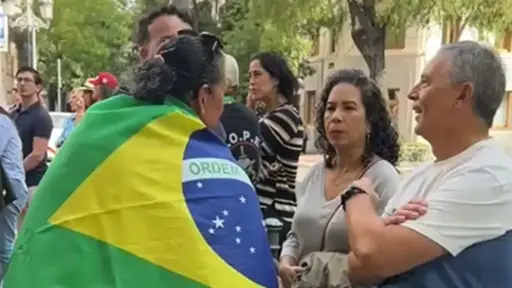
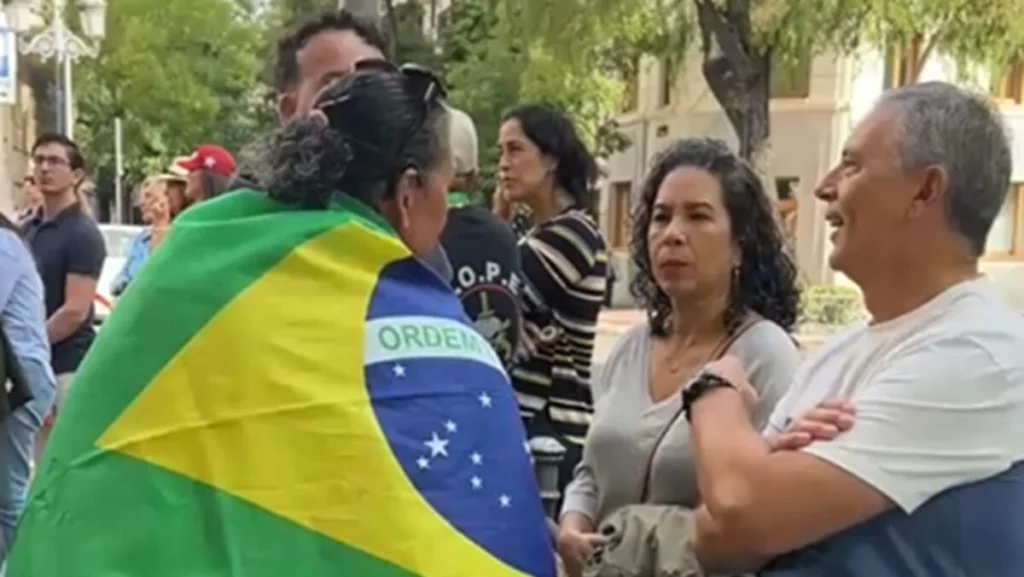
On Sunday, thousands of Brazilians living in Spain are voting at polling stations in Madrid and Barcelona to choose their next president between two opposing models: the social vision of President Luiz Inacio Lula da Silva and the neoliberalism of U.S.-backed Sen. Flavio Bolsonaro.
RELATED:
Brazil’s Lula Is Very Confident of Winning the Election
Brazilian Consul General Maria Angelica Ikeda said there is a high turnout at the polling station located at a school in Madrid, where many people were already waiting before the polls opened.
At least 9,000 of the 23,000 people eligible to vote in Madrid will go to the polls, she said, adding that the Brazilian Embassy has campaigned through social media to remind people of the importance of voting.
Among those who came to vote were many people wearing yellow shirts, the color of the Brazilian national team, as well as some stickers and caps bearing the names of Lula and Bolsonaro.
Marcio Vieras, who has lived in Spain for 20 years, said he voted for Lula mainly because the leftist leader has taken measures to reduce deforestation and strengthen democracy.
For Sunday’s presidential election voting abroad, Brazil has sent approximately 1,400 electronic voting machines to 134 countries, and polling stations have been set up in 186 cities. Europe is the continent with the largest number of voting-age citizens: 413,960 of the 918,876 Brazilians living abroad.
Brasileiros fazem festa em Londres após votarem. O encontro reuniu eleitores que foram às urnas na capital britânica neste domingo. Segundo dados do TSE, atualmente 37.564 brasileiros estão aptos a votar em Londres nas eleições de 2026.
pic.twitter.com/sLQRViW85v— Mídia NINJA (@MidiaNINJA) October 4, 2026
The Brazilian General Election in Figures
According to data from the Superior Electoral Court (TSE), the districts with the largest numbers of voters are located in São Paulo (34 million), Minas Gerais (16 million), Rio de Janeiro (13 million) and Bahia (11 million).
Citizens will be able to cast ballots on half a million electronic voting machines distributed across 92,000 polling places in the 5,570 municipalities throughout the country. Nearly 919,000 people registered to participate in the election from outside Brazil, a 32% increase compared with the 2022 election.
Once polling stations close throughout the country, authorities will have the first official results within a few hours, thanks to the electronic voting system Brazil has used for 30 years.
If none of the presidential candidates receives more than half of the valid votes, the two candidates who receive the most votes will face each other in a second round scheduled for Sunday, Oct. 25. The two leading presidential candidates remain technically tied in the country’s main polls. A Datafolha poll released Saturday night gives Lula 45% and Bolsonaro 42% of the vote in Sunday’s election.
Brazilian citizens residing in Spain, including voters in Madrid, gathered at designated polling stations to cast their ballots in Brazil’s presidential election. Members of the expatriate community joined thousands of overseas voters exercise their democratic right to shape… pic.twitter.com/IVWDjVkdOK
— teleSUR English (@telesurenglish) October 4, 2026
teleSUR/ JF
Source: EFE
From teleSUR English via This RSS Feed.