

Nearly 159 Million Voters Will Choose President, Vice President, Governors, Congress Members and Regional Legislators.
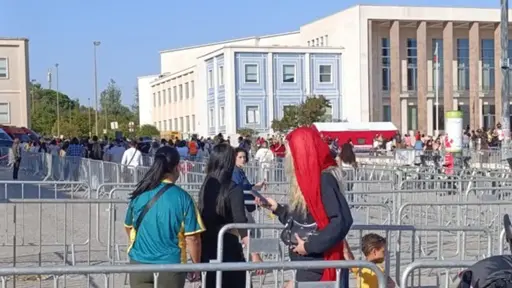
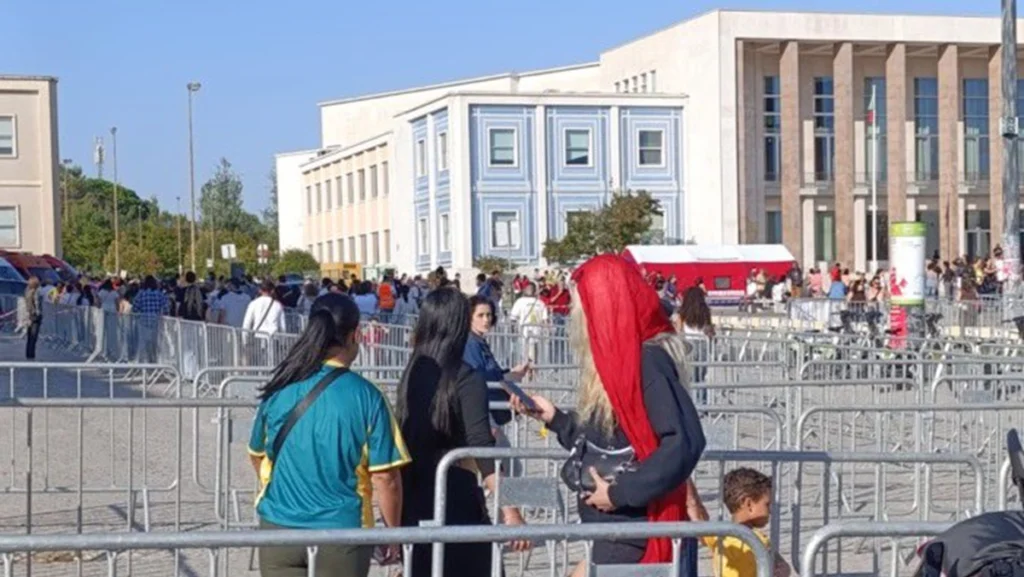
On Sunday, thousands of Brazilians turned out to exercise their right to vote at polling stations set up in Portugal, with long lines in cities such as Lisbon and Porto, in an election that most considered “decisive.”
RELATED:
Brazil’s Election Begins Abroad With Preliminary Wins for Lula in New Zealand and Australia
Carrying Brazilian flags, national soccer team jerseys or signs supporting their candidates, the University City of Lisbon filled with Brazilians early in the morning, forming long lines to vote for their next president and vice president.
On this occasion, a total of 134,797 Brazilians are registered in Portugal to vote Sunday in the first round of their country’s presidential election, a record figure that is 66.63% higher than in 2022 and represents the second-largest Brazilian electoral roll abroad, behind only the United States.
The final stretch of the campaign has been marked by a battle over fake news and accusations between the candidates, with the main development in recent days being the cancellation of the final debate of the presidential first round following a series of judicial decisions that altered the rules of the event at the last minute.
Both candidates ended their campaigns Saturday with simultaneous events in different regions of São Paulo, Brazil’s largest electoral district, with 34 million voters out of a total of 158 million people eligible to vote across the country.
Brasileiros enchem Cidade Universitária em Lisboa e escolhem o próximo Presidente. Também é possível votar no Porto e em Faro pic.twitter.com/CcnNsRYYmB
— Público (@Publico) October 4, 2026
The text reads, “Brazilians flock to the University City in Lisbon to choose the next president. Voting is also possible in Porto and Faro.”
Brazil Opens Polls as Lula Seeks Reelection Against Bolsonaro
On Sunday, polling stations across Brazil opened for general elections in which President Luiz Inacio Lula da Silva is seeking reelection against his main rival, far-right Sen. Flavio Bolsonaro.
In this election, which opened at 8 a.m. local time and will close at 5 p.m., about 158.7 million voters are called upon to elect a president, vice president, 27 governors, all 513 members of the Chamber of Deputies, two-thirds of the Senate and representatives to the regional legislative assemblies.
According to data from the Superior Electoral Court (TSE), São Paulo remains the country’s largest electoral district, with more than 34 million voters (21%), ahead of Minas Gerais, with more than 16 million people eligible to vote (10%).
Rio de Janeiro has nearly 13 million voters (8%), ahead of Bahia, the fourth-largest electoral district, with 11 million people (7%).
Voters will be able to cast ballots on half a million electronic voting machines distributed across 92,000 polling places in the 5,570 municipalities throughout the country.
Nearly 919,000 people registered to participate in the election from outside Brazil, a 32% increase compared with the 2022 presidential election.
Once polling stations close throughout the country, authorities will have the first official results within a few hours, thanks to the electronic voting system Brazil has used for 30 years.
If none of the presidential candidates receives more than half of the valid votes, the two candidates who receive the most votes will face each other in a second round scheduled for Sunday, Oct. 25.
The two leading presidential candidates remain technically tied in the country’s main polls. A Datafolha poll released Saturday night gives Lula 45% and Bolsonaro 42% of the vote in Sunday’s election.
Resultados do voto no exterior: Até o momento, 11 países e territórios concluíram a apuração. Lula lidera com vitória em 6 locais, enquanto Flávio Bolsonaro venceu em 5.
• Lula (6): Austrália, China, Coreia do Sul, Malásia, Nova Zelândia e Singapura.
• Flávio Bolsonaro (5):… pic.twitter.com/kgWGz3oj90
— Vai Desmaiar (@vaidesmaiar) October 4, 2026
The text reads, “Overseas voting results: So far, 11 countries and territories have completed the vote count. Lula leads with victories in 6 locations, while Flávio Bolsonaro won in 5. Lula (6): Australia, China, South Korea, Malaysia, New Zealand, and Singapore. Flávio Bolsonaro (5): Philippines, Hong Kong, Indonesia, Japan, and Thailand.”
Flavio Bolsonaro Vote in Rio de Janeiro
Far-right senator Flavio Bolsonaro, the main opposition candidate in Brazil’s presidential elections, votes at the Barão Homem school in Mello, located in the neighborhood of Vila Isabel in Rio de Janeiro, accompanied by his wife.
Former President Jair Bolsonaro’s eldest son believes he can win in the first round of elections.” I hope that Brazil has a protest vote against the era of backwardness,” he said to journalists, something afonic for the effort with the voice in the final stretch of campaign.
Bolsonaro was the first presidential candidate to cast his vote, only about 20 minutes into the election day. He came dressed in a light yellow short-sleeved shirt and wearing an adhesive on his chest with the number 22, which identifies him in the electronic urn.
teleSUR/ JF Source: EFE
From teleSUR English via This RSS Feed.