

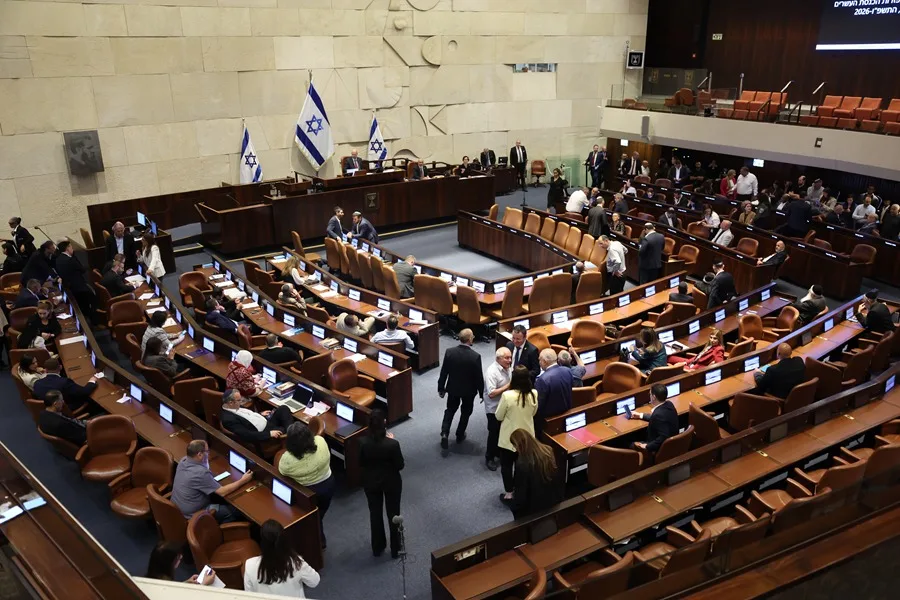
Israel’s Supreme Court unanimously ruled to overturn a ban on Arab political parties competing in upcoming Knesset elections, reversing a decision by the Central Elections Committee, which is largely composed of members of Prime Minister Benjamin Netanyahu’s Likud party.
With this ruling, the United Arab List and the Joint List -a coalition made up of the Hadash, Ta’al and Balad parties- are now cleared to participate in the October 27 elections, in which Israelis will choose the 120 members of the 26th Knesset and determine the governing coalition that will succeed Netanyahu’s current far-right cabinet as he seeks a seventh term in office.
RELATED: [Israeli Election Panel Bars All Arab-Majority Parties from October Elections](https://telesurenglish.net/israeli-election-panel-bars-all-arab-majority-parties-from-october-elections/)
The two parties had initially been barred on September 23 under Basic Law governing the Knesset, which allows for the exclusion of candidates or parties found to “reject Israel’s character as a Jewish and democratic state, promote racism, or support armed struggle against Israel by hostile states or organizations.” Excluding Palestinian-led parties on those grounds was widely described as an unusual step.
Separately, the court also overturned a ban imposed on Ofer Cassif, the Joint List’s sole Jewish Knesset member, while Balad chairman Sami Abu Shehadeh withdrew his own candidacy after a disqualification request filed by the Otzma Yehudit party, which cited an opinion piece he wrote following the events of October 7, 2023, in which he described Resistance Movement Hamas’s response on Israeli military bases and settlements as “a historically significant event from a military, political and strategic standpoint.”
Cassif had been disqualified after describing Israel’s military operations in Gaza as genocide, calling for the repeal of Israel’s Law of Return -which grants automatic citizenship to Jewish immigrants- and advocating for the release of imprisoned Palestinian leader Marwan Barghouti. He argued that efforts to exclude him were aimed at delegitimizing Arab society as a whole and Arab-Israeli cooperation, warning that such moves perpetuate what he called a totalitarian regime and the tyranny of the majority.
Israel’s Supreme Court overturned a ban on two Arab electoral lists, allowing the Joint List and United Arab List to run in the Oct. 27 Knesset election.
The bans had been approved by the Central Elections Committee following requests from Likud, Jewish Power and other… pic.twitter.com/xHSdmkvZZ8
— Clash Report (@clashreport) October 2, 2026
Supporters of the bans argued that certain party leaders had made statements or engaged in conduct that crossed legal boundaries, pointing in the case of the United Arab List to alleged ties between affiliated organizations and Hamas-linked entities, as well as statements by party leader Mansour Abbas they characterized as conveying contradictory messages to Hebrew- and Arabic-speaking audiences. Likud backed the bans, arguing the Knesset should not include members who attack Israeli soldiers or decline to label Hamas and Hezbollah as alleged “terrorist organizations.”
Centrist Israeli politicians were divided, with some supporting individual disqualifications while expressing discomfort with excluding entire parties representing a substantial minority. Attorney General Gali Baharav-Miara’s office found that evidence against the United Arab List and Joint List did not meet the legal threshold for exclusion, though it did support the ban against Abu Shehadeh.
First and foremost, I extend my deepest gratitude to the thousands of supporters who stood shoulder to shoulder with us over recent days, rising up against the Central Elections Committee’s anti-democratic decisions.
We owe special thanks to Adalah – The Legal Center for Arab… https://t.co/ymTA2OfabD
— Ofer Cassif עופר כסיף عوفر كسيف (@ofercass) October 2, 2026
While Israeli authorities have previously sought to ban Arab parties and candidates, the simultaneous exclusion of every major Arab-led list was unprecedented in scale. Since a 1985 legal amendment, Israel’s Supreme Court has upheld only one such disqualification -against the ultranationalist Orthodox Jewish Kach party in 1988.
The United Arab List and Joint List rejected the allegations against them, with Adalah, a human rights organization, calling the Central Elections Committee’s decision an illegitimate political process aimed at targeting dissenting views.
From teleSUR English via This RSS Feed.