

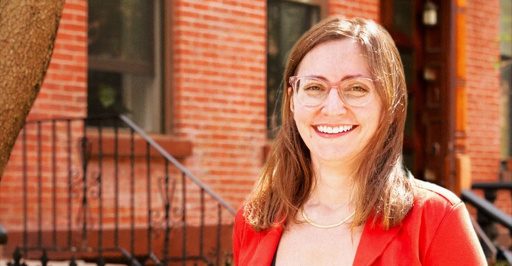
Janine Jackson interviewed author and FAIR contributor Raina Lipsitz about DSA politics for the September 25, 2026, episode of CounterSpin*. This is a lightly edited transcript.*
https://media.blubrry.com/counterspin/content.blubrry.com/counterspin/CounterSpin260925.mp3
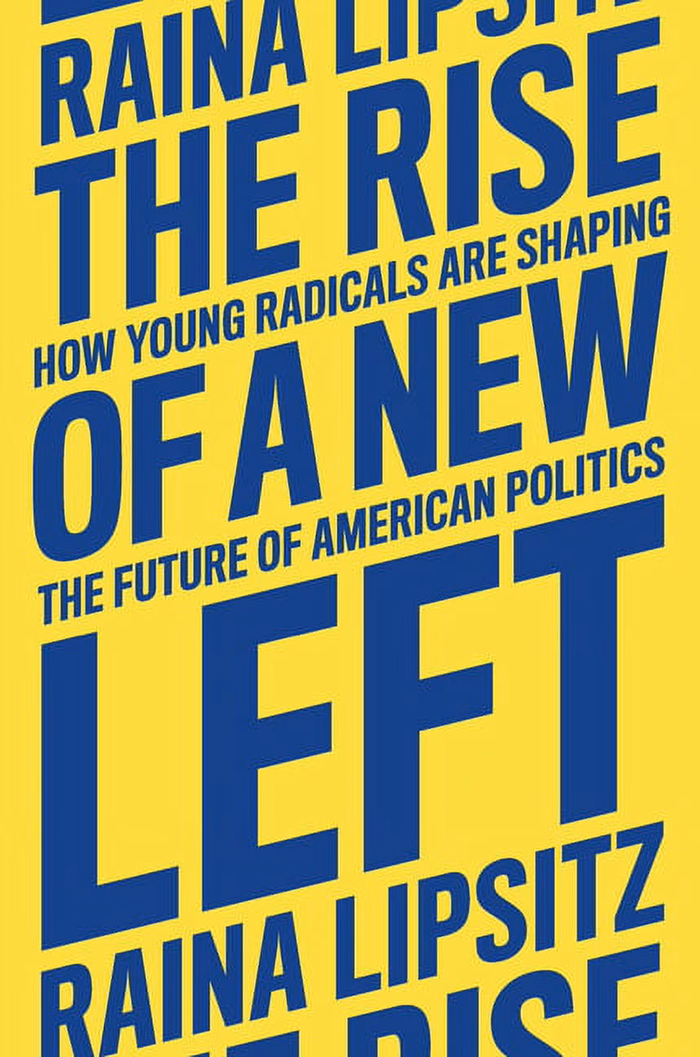
Verso (2022)
Janine Jackson: Welcome to CounterSpin, your weekly look behind the headlines. I’m Janine Jackson. This week on CounterSpin: Corporate news media sell a lot of messages, but perhaps the overarching one is: “This is how it is. You could be mad about it; we might give you a personal profile. But hey, this is just how it is.”
And how it is is that there are 34.5 million people living in poverty, according to the Census Bureau. The United States has the second-highest poverty rate among major developed nations in the OECD (Organization for Economic Cooperation and Development), trailing only Costa Rica.
You’re not happy with that? Well, welcome to corporate media’s echo chamber, where your dissatisfaction is naive at best. When people try to fight for something better, we get a lot of noise about how that can’t work, it won’t work. And you know who else wanted social change? Communists. Socialists. The idea is that we’ll be frightened off from wanting healthcare, because you know what? Russia.
The good news is that ever-increasing numbers of people just aren’t buying what elite media are selling, which is the same old top-down, racist, “why would you even speak up?” blather that we’ve been listening to for decades, and then the narrating of the nightmare that we’re living through.
It’s not that DSA, Democratic Socialists of America, are the answer, but ask yourself: Why won’t corporate media engage the questions they pose? We’ll hear from Raina Lipsitz, author of The Rise of a New Left: How Young Radicals Are Shaping the Future of American Politics, from Verso Books. She’s also author of a range of pieces, including some on socialism, including some for FAIR.org. That’s coming up this week on CounterSpin.
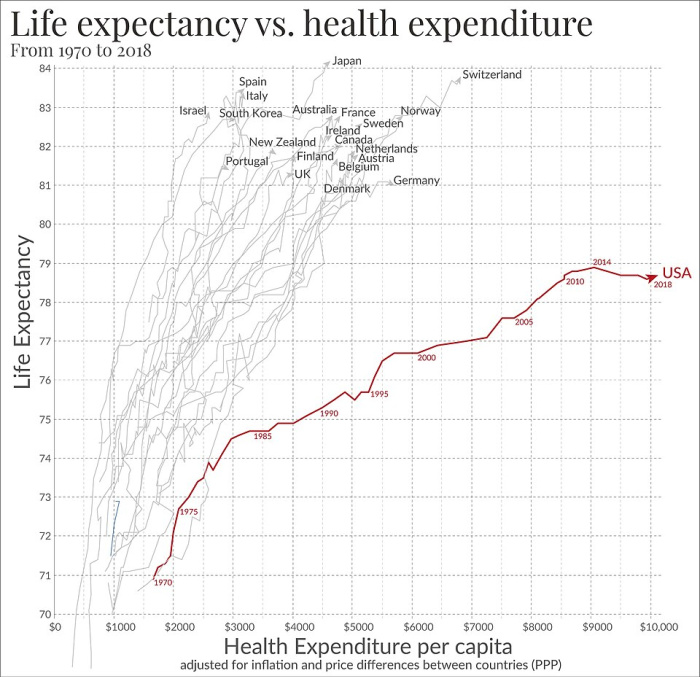
Washington State Democratic Congresswoman Pramila Jayapal released a survey indicating that 94% of Democratic voters support a universal public health insurance program, and so do a majority of self-defined “moderate” and independent voters. The survey noted that single-payer healthcare is also popular in battleground states, yet progressive lawmakers are constantly told to moderate—in other words, weaken, in other words, stop—their communication around universal healthcare. Sure, people want it, but if you as a representative push for it, you’re sure to lose.
Wikimedia Commons (3/11/22)

Well, millions of people in 2026 appear to be tired of the message that we can’t have the things we need and are willing to fight for. What’s in the way are powerful people and their institutions, who want to hang on to their outsized power, and corporate news media, who are invested in telling us that we can’t have things like a living wage, like healthcare that doesn’t bankrupt you, like human rights no matter your skin color. Elite media’s message seems to be: “Sure that would be nice, but seriously, once you grow up, you learn that we just can’t have things we want. Other wealthy countries have them? Well, we aren’t them.”
People have resisted that oppressive storyline throughout history, and it’s happening now. The trouble is, you might not learn about it if you only watch corporate news, where the very word “socialism” is used as a thought-stopper rather than an opening to conversation, much less change.
Our guest thinks a lot about this situation. Raina Lipsitz writes on politics and gender and culture for many outlets, including FAIR.org. And she’s author of The Rise of a New Left: How Young Radicals Are Shaping the Future of American Politics, from Verso Books. She joins us now by phone. Welcome to CounterSpin, Raina Lipsitz.
Raina Lipsitz: Thank you so much for having me.
Extra! (1-2/00)
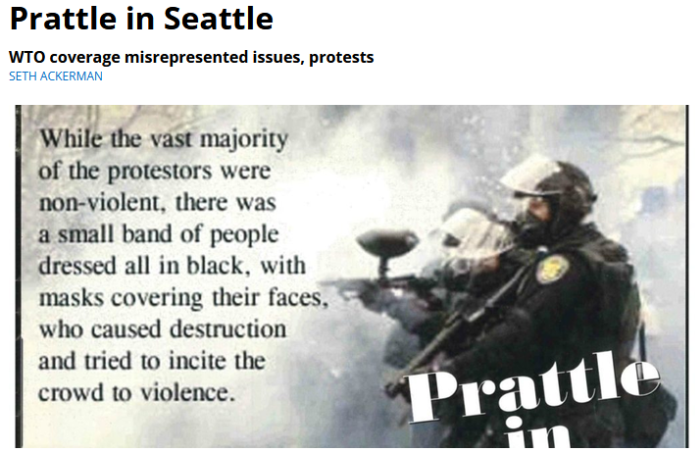
JJ: I will trot out a cite that I use. In 2000, when USA Today was covering activism in Seattle around the WTO, it reported, “Little noticed by the public, the upcoming World Trade Organization Summit has energized protesters around the world.”
I think that that’s emblematic of corporate news media: “Citizens, person on the street, let’s get your opinion. But wait, you got together with other people to try to actually change things? Well, now you’re marginal and maybe criminal and certainly stupid.” I think we’re seeing this now writ maybe larger, because now the protesters are inside the house, right?
Now groups like DSA, Democratic Socialists of America, are making inroads, electing candidates, reaching people who are disaffected. And so it seems like elite news media are bringing out their rhetorical guns, and you’ve been documenting that. I’m thinking of a piece you wrote in August, noting the Atlantic magazine article headlined “The DSA Is a Parasite,” but there’s lots. Where would you start, if you’re talking about the way that corporate news media are treating DSA, yes, but also the very word “socialism”?
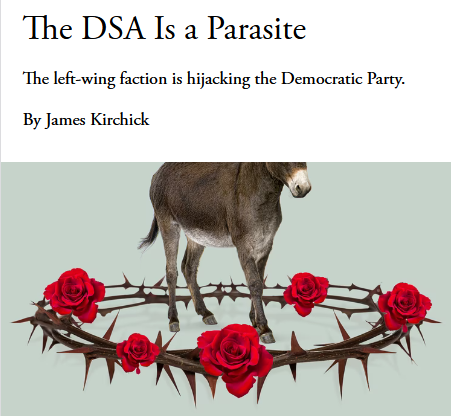
Atlantic
RL: I think the piece that you mentioned is a perfect place to start. “The DSA Is a Parasite.” It’s a particularly odious example of the kind of coverage I was writing about. And I was pretty disturbed, actually, to see the headline, because it’s such a loaded framing to characterize socialists, or any group of people, black and brown people, anyone, to characterize as a roach or vermin or a parasite. That’s pretty dangerous language that I think has real world consequences and can, in fact, harm people. There are different ways that they frame this, and you identified many of them in your introduction. The scariest and worst to me are the ones that mimic the language of, frankly, genociders the world over. It’s that “parasite” language, that “vermin” language.
But I think more common than that is what you said about presenting people, any activists, any group of people who are trying to challenge power and change things, as fundamentally unserious, ridiculous, fringe, marginal. I think that’s the more common framing. And I was thinking about what you said about “you just have to grow up” or “when you’re older you’ll understand,” which has been a message I’ve heard actually my whole adult life, as long as I’ve been politically engaged, I’d say it started when I was 18 and could vote, became very interested in American politics. And that’s always what I’ve heard.
And I think one thing that’s really changed a lot, and that accounts, in many ways, for the resurgence we’re seeing of socialism in the United States and the success of DSA, is the fact that millennials have grown up. I mean, I’m 43 years old. I’m going to be 44 in December. I’m not exactly a kid anymore. I don’t feel like a kid. I don’t have the same freedom that I did as a student or as a young person. And many people who were characterized as very young and silly for a long, long time, which was always the media framing around millennials, my generation are now parents, they’re trying to buy homes, they have serious jobs, they have all the same adult responsibilities as everybody else in this country, and they’re in a much, much worse position financially than their parents were overall on average.
JJ: It sounds like folks are feeling reached, feeling listened to, feeling like there might be something they can be part of to bring change. And we’re seeing that clamped down on in subtle and less subtle ways, which is part of the things that you write about. Just to get to the core of it, what is it that is being demonized? Because it sounds like organizing. It sounds like getting people together to fight for something they want is being treated by elite media as in itself suspect.
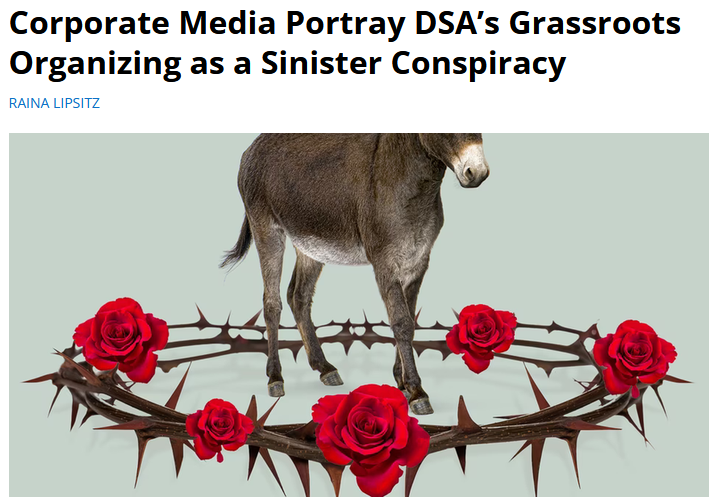
RL: Yes, exactly. And I think there’s a lot of internal contradictions in the framing, in the pushback to DSA. I mean, I wrote in a piece for FAIR, I mentioned what Barack Obama said when he was leaving office, in January 2017, I think, is when he said this, but he made an explicit appeal to young people. He said, “If you don’t like where the country’s going, grab a clipboard, get out there, get some signatures, run for office yourself.”
Hillary Clinton made a similar remark about 10 months earlier, in 2016, when she was on the campaign trail. So these are things I’ve heard my whole adult life: “You need to do the work and you should stop complaining or posting on social media. You should actually get out there and do the organizing work.”
And that is exactly what DSA has been doing, and that’s why we’re in a stronger position than we’ve ever been since the beginning of the organization. There’s consensus around that. And I know a lot of people who’ve been DSA members for much longer than I have, and there’s a new seriousness here. We’ve adapted to changing conditions.
And I think a lot of the credit for that goes to people who took that in, who admired Obama, who worked for him, in many cases, quite literally worked for him, and said, “You know what? That’s right. We need to approach this in a very serious and disciplined way, and we want it to work and we want to actually have some power on the left.”
Which, growing up in the ’90s, I did not really perceive us as having any organized power, frankly. I knocked doors for Ralph Nader in college and I was proud to do so, but it didn’t feel then, and it certainly turned out to be the case, that we didn’t come anywhere near electing Ralph Nader president, as much as I admire him in many ways.
Fox News (8/21/26)
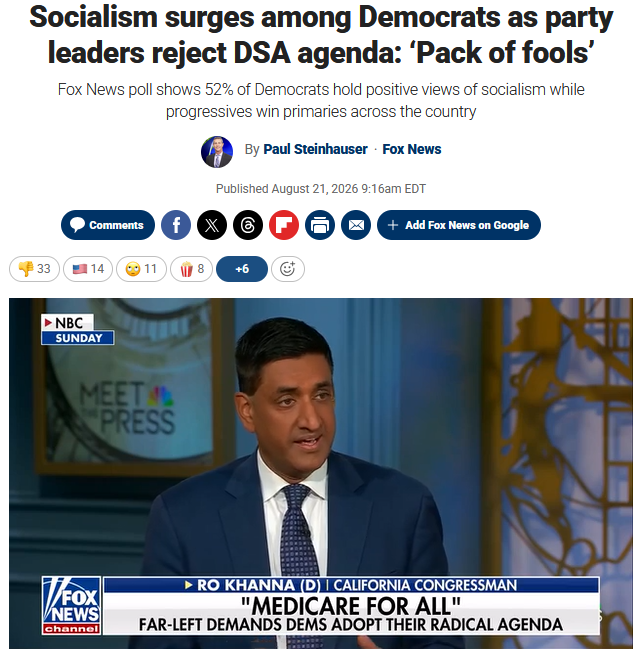
So conditions have changed, and we’ve adapted to those changes, and I’m very proud of what we’re doing. But what you hear from the media, and also from powerful actors in the Democratic Party, is that they now want to shut that down, which is at odds with everything else they’ve ever said about youth engagement. But what they mean by youth engagement is “go vote for who we tell you to vote for, and stay out of it otherwise.” And I think DSA has a much more serious and holistic approach to political organizing.
JJ: I’m going to bring you back to what DSA, what that actually looks like day to day. But if we could roll through some of what folks will have gleaned from news media coverage of, not just DSA, but socialism in general, which is kind of used as a slur, and as I say at the top, a thought-stopper. So one of the arguments is, “This is silly and because it’s silly, you’re going to hand power to the right, so you’re just going to lose.” Another argument is “Well, it’s just young people with blue hair and they can’t lead us anywhere.” But then another, and you talk about how the arguments fight with themselves, because another argument is, “Well, socialism is just rich white people cosplaying as working class, so it’s not really real.” The arguments don’t agree with one another, but they seem to add up to, “Yeah, this would be good, but it can’t happen. So you’re kind of mean to even introduce it to people.”
And that, I think, only works when media don’t talk about what’s actually happening on the ground. It only works when it’s a purely rhetorical argument.
RL: Yeah, exactly. And the media really, they can’t make up their minds about us, because they’re throwing a lot of things at the wall to see what sticks, and trying to find something that’s actually going to work against DSA. And so far they’ve found things that have gained a little bit of traction here and there, but not really enough to stop us.
And that’s why there’s this constant, are we ridiculous snowflakes who’ve never had any real-world experience, don’t know what we’re doing, really naive, really silly? Or are we terrifying terrorists who hate America, who are trying to harm people? And those are both ridiculous caricatures that have nothing to do with the actual people in the actual organization, but they also just fundamentally contradict each other. We can’t be both scary and silly and not going to win.
So you can see the limits of that thinking, and the limits of the coverage and the pushback. And I guess I would also say that the people in the organization are, they’re just, in fact, very serious, ordinary people.
There is very much a framing of, it’s white people, it’s privileged people, it’s college kids who had all the advantages. I don’t think that’s entirely wrong, but I also don’t think that it’s a bad thing to be a privileged person who is standing in solidarity with people who’ve had fewer privileges in their lives. I think that’s actually what you’re supposed to be doing. And that’s another message I grew up hearing, from Democratic Party leaders, from progressives in my community, from all of my teachers, all of my educators my whole life, have said with great privilege comes great responsibility. That’s actually a very mainstream American message.
And it’s kind of bizarre to me to now say, “Oh, we didn’t mean that. We didn’t mean it if you’re actually talking about economic policy or changing conditions or helping people in a material way. We only meant that you should, I don’t know, work for a nonprofit.” I mean, I’m not sure what else that could mean, other than what we’re now seeing.
New York (5/20/25)
JJ: Exactly. Well, part of what reporters have to grapple with is just facts on the ground. And the facts on the ground are that DSA-supported or self-defined socialists have been winning elections, have been appealing to people, and people are voting for them.
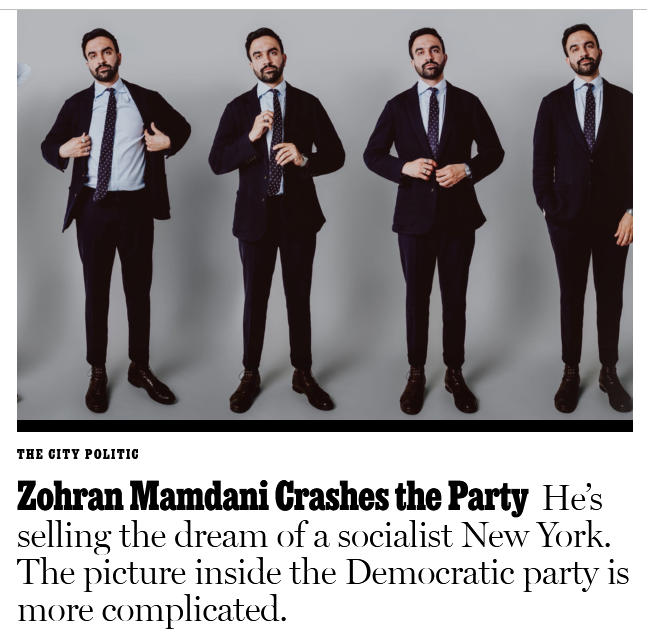
Like, for example, Zohran Mamdani, our mayor here in New York City. “Zohran Mamdani Crashes the Party” was New York magazine’s profile headline. And I think that gets at what we’re talking about, which is there’s a lot of rhetoric about “bottom up” and “we should listen to people,” but then when somebody does that and organizes, somehow they’re interfering with the way that things should actually work. It’s a big tell, I think, on elite media, the treatment of Mamdani.
RL: Absolutely. And there’s a real mystification. Some of it, I have to say, is very evidently bad faith, and comes from ideological enemies. And some of it, I think, actually just reveals the naivete of corporate media, and of certain types of political operatives, that they really are mystified, truly mystified by what’s going on, because they can’t imagine doing things the decent, honorable way.
They’re like, “What is the secret? What’s the trick? Are you taking money from China? Are you Russian bots?” All of this kind of, frankly, conspiracy thinking, because they themselves have never, would never spend time on a project that didn’t immediately enrich them, improve their social standing, get them a job. So the idea that there now are tens of thousands of people motivated by a desire to help each other and to improve conditions for everybody, it just doesn’t make any sense to them. And that’s very revealing of their worldview and of their own personal experiences, what they would or wouldn’t do to help other people.
JJ: But then also, the fact that they’re like, “Because I can’t imagine it, you shouldn’t either.” It’d be one thing if they went away with their opinions, but they don’t. They put them in our face every day and say: “You have to stop thinking this way. This isn’t going to work.” And it’s almost like a threat: “It’s not going to work because we’re not going to let it work.” I find it frightening.
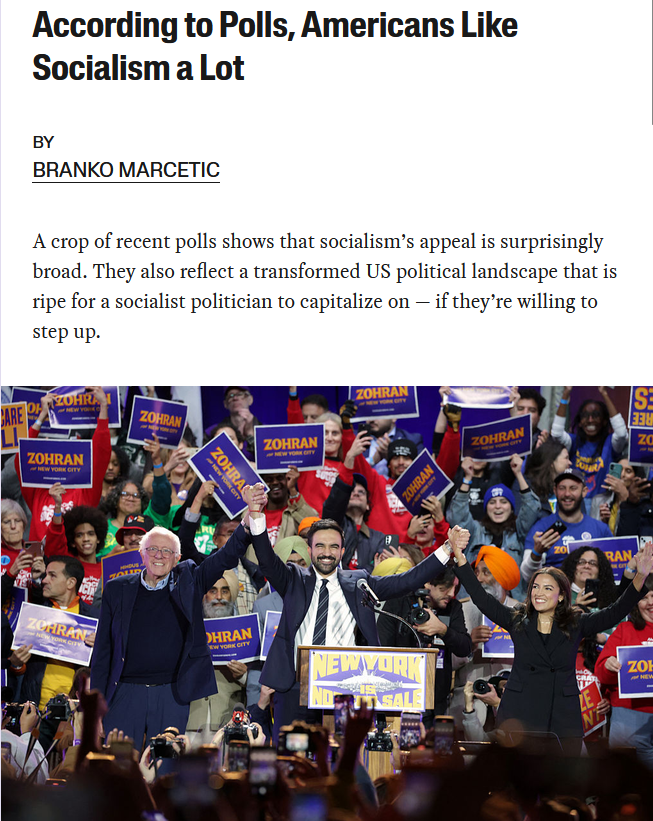
Jacobin (9/26)
RL: Yeah. And it’s also a loss of control, right? I mean, the people who are used to being the gatekeepers, used to being the ones who tell us what to do, it’s a threatening thing to them to now have a large and growing group of people who are saying: “Actually, I don’t care what you’re telling me to do. I feel like I’m drawn to this person. I’m going to vote for this person, work for this policy, join this organization.” And it’s destabilizing and threatening to the entire order that these people have built their lives and careers around.
So, in a way, I have some sympathy on a human level. It’s like they thought they were doing everything the right way, and it’s really stopped working for them. That’s a lesson that the left has had to learn over decades, right? If something’s not working, you’re supposed to recalibrate, you’re supposed to figure out another way.
It does call into question, what are their ultimate goals? The people who are the anti-DSA faction in the Democratic Party, do they actually want Democrats to win? It’s hard to believe that some of them really want that, given the choices that they’re making, because the energy in the party quite clearly is with the rising socialist tide.
And if you’re shutting down enthusiastic young people, people who’ve never participated before, people who were drawn to this or that campaign because it gave them hope, and you’re saying, “No, we can’t have that kind of energy,” I think you’re working against the interests of the party and the country, and I think you’re doing it for other reasons.
JJ: Obviously, this is not like an ad for DSA. It’s really about socialism and its place in corporate media’s conversation and how they define it, because you can see different ideas taken seriously, but then once they get a label, then they go off the page. And it’s odd, and it’s an infantilizing of the reading public, as though we don’t understand what can happen and what we can work for.
But I did want to give you a chance to just say, does DSA hide what they’re about? Because part of what we hear is that it’s shifty or sinister somehow. Does DSA hide what they are for, and what does the work look like day-to-day? What does it look like?
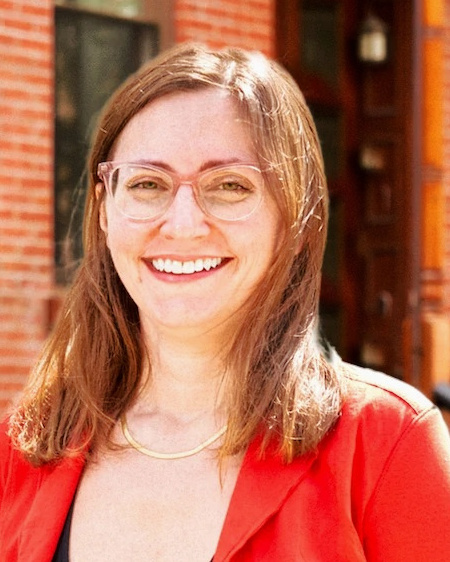
Raina Lipsitz: “It’s old-fashioned, it’s knocking on doors, it’s talking to our neighbors, it’s going to meetings…making connections, reaching out to other human beings.”
RL: Sure. I mean, to answer the first question, no, of course we don’t hide what we’re for. We have a public platform, a website that’s actually pretty, I think, user-friendly, and easy to see what the platform is.
I think where there is some legitimate confusion sometimes is that individual politicians and candidates have their own platforms, which, as with Zohran Mamdani, sometimes differ in small ways from the national DSA platform. But again, that’s not hidden. I mean, you can look up what a candidate, particularly our candidates, what they stand for, and find that out pretty easily, and where they diverged from the national organization. Zohran Mamdani was extremely clear about that throughout the race, and consistent and stayed on message.
The actual work of what we’re doing is also not a secret and is also available to anyone, and in fact has been used very successfully for a long time by the right. I mean, it’s old-fashioned, it’s knocking on doors, it’s talking to our neighbors, it’s going to meetings, organizing meetings, calling venues to see if they will host a meeting for free or for a low fee, and then getting people to show up to those meetings, calling, texting, making connections, reaching out to other human beings.
I really do think that a big part of this also is emerging from the shadow of the pandemic. People are so desperate for that still. It wasn’t that long ago that we couldn’t hug each other, that we couldn’t congregate and couldn’t have large meetings in closed spaces. And that was a real loss, I think. We’re social creatures; people missed each other, they missed the feeling of connection and community, they missed having friends and doing social activities together. So I think that’s also a big part of what’s happening now.
And that could be true of any political tendency, but it’s true now of the left, because people are so angry about the status quo, and the leadership of the Democratic Party has failed repeatedly. How is it that Donald Trump is still the president? I ask myself that pretty much every day. I know what my answers are, but some of that at least can be blamed on Democratic leadership, I think.
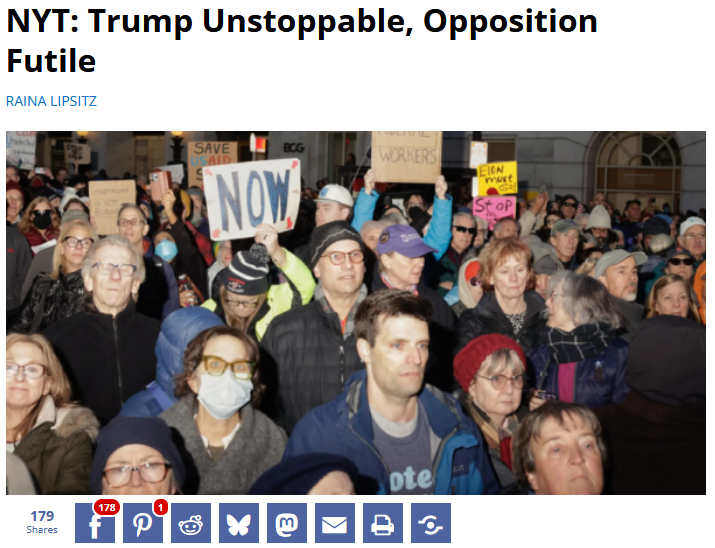
JJ: Well, and I’ll just point folks to FAIR.org and your articles going back several years, including talking about how corporate media kind of sigh at Donald Trump: “Oh gosh, how did we wind up here?” But then when people want to say, “Well, we can see how we got here and we want to pull ourselves out of it,” then suddenly that’s a different conversation. It’s on a different page, and it’s treated with a different lens. So I blame media.
RL: I do as well. And I just want to say, they also act as if it’s evident, particularly when he won in 2024, “Oh, it’s a vibe shift. This is what people really wanted all along. We have to admit it’s a center-right, or not even center-right, like a right-wing fascist country.”
I really reject that narrative completely. Donald Trump never had a consistent, strong majority of Americans who said, “Yes, I like this guy. I admire him. I support him.” Many, many, many people in this country are checked out. Tens of millions of people didn’t vote, don’t vote. What does that tell you? To me, it does not tell me that Donald Trump is some kind of popular reflection of the democratic will. I just don’t think that’s accurate.
JJ: I’ll just ask you, finally, if you have any further thoughts you want to share, but also I think that one of the main harms that corporate media do is suggest that politics, first of all, it’s a thing called “politics.” It’s not like your life as you live it, and how you buy groceries and how you interact with your neighbors. It’s this separate thing called “politics,” but then also, politics is just electoral politics, and it doesn’t have anything to do with what happens in between. And I think that’s what disaffects a lot of people, because people don’t see their lives pulling a lever every four years. That’s not where they think of making change. So just final thoughts on this set of issues, Raina Lipsitz.
RL: I think that’s a really good point. I think that we’ve siloed off the idea of politics as something you do every four years. You show up to the polling place and you cast a vote, and that’s the sum total of your obligation as a citizen, as a human.
I think of politics as a much more encompassing thing, a much more holistic thing. And it can be a very satisfying and important aspect of life, that enhances your life, that brings you joy, connection, community, friendship.
Actually, I say this in a lot of interviews. I know now I think three different babies who exist because their parents met in DSA. I mean, that’s a really beautiful thing, to have people starting families together because they met through this organization.
It’s really sad to me that politics is so closely associated with misery, fighting, division, unhappiness, when in fact it can be a very life-affirming thing if you find your political home, if you find your people, and if you’re working together consistently and joyfully towards a goal that is going to help improve things for your neighbors, your community and your own family. And that’s what we need to bring back, is that connection.
And that’s a global phenomenon. I’ve talked to people all around the world about my book, and they all say: “How do we get this back?” It’s not that you win all the time. It’s not that every moment is hopeful or filled with joy. It’s a deeper thing, and it’s a longer-term commitment, but that satisfaction can only come from building your life around a set of commitments, all of which are political in nature.
JJ: I’m going to end on that note. Raina Lipsitz writes on politics and culture for many outlets, including FAIR.org. And the book is The Rise of a New Left: How Young Radicals Are Shaping the Future of American Politics. That’s from Verso Books. Thank you so much, Raina Lipsitz, for joining us this week on CounterSpin.
RL: Thank you so much for having me.
From FAIR via This RSS Feed.