

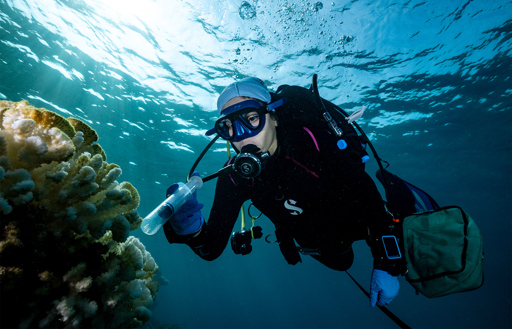
As a heat wave settled on the Red Sea in 2022, a patch of corals in a reef 15 kilometers (9.3 miles) off the coast of Saudi Arabia reacted differently than other corals. They’d been treated with probiotics, beneficial bacteria isolated from healthy corals, and those treatments prevented the corals from bleaching, scientists now report. Corals provide habitat for about one-third of marine species but are declining at an unprecedented rate, according to the latest report from the Global Coral Reef Monitoring Network. Rising temperatures lead to coral bleaching, a breakdown of the beneficial symbiosis between corals and algae that can result in coral death. Scientists estimate that if global temperatures rise by 1.5°Celsius (2.7°Fahrenheit) above pre-industrial levels, 70-90% of corals will be at risk of severe degradation worldwide by 2100. “Corals can acclimate and adapt, but only if they are alive,” principal investigator of the new study Raquel Peixoto, a microbial ecologist at the King Abdullah University of Science and Technology (KAUST) in Saudi Arabia, told Mongabay in a video call. She and other researchers around the world are investigating how manipulating the microscopic bacteria that live on corals can help them respond to threats ranging from oil spills to infectious disease. Though Peixoto previously showed that probiotics could stave off bleaching and keep corals alive in tanks, the new results, published Sept. 3 in Cell Reports, are the first to indicate that probiotics may help protect corals in the wild from marine heat waves. “It’s one thing to…This article was originally published on Mongabay
From Conservation news via This RSS Feed.