

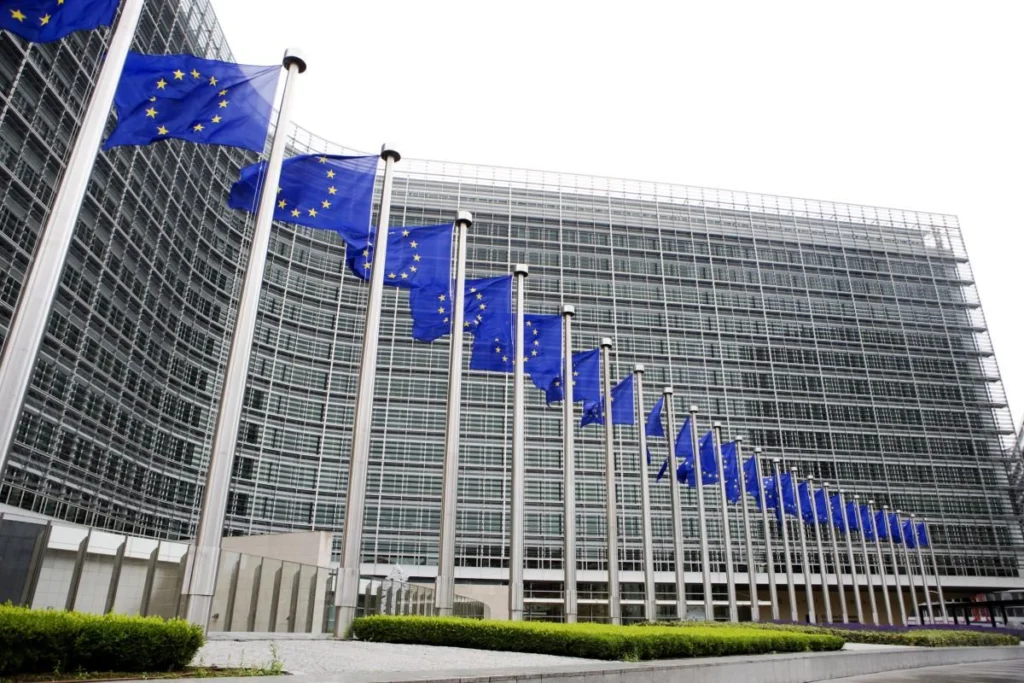
On Friday, European Commission rejected any potential ban on U.S. diesel exports, warning that such a measure would undermine the European Union’s confidence in Washington as a reliable partner, amidst pressure on global energy prices and supplies.
“We completely reject any ban on diesel exports. Such a measure would benefit no one and would undermine our confidence in the United States as a reliable partner,” stated Anna-Kaisa Itkonen, the European Commission’s energy spokesperson, during a press briefing.
RELATED:
U.S. Diesel Price Tops $6 a Gallon for First Time Amid Iran War
European Commission spokesperson Paula Pinho also announced that France plans to convene a teleconference of G7 leaders—a group currently chaired by Paris—as soon as possible. The meeting could take place this Friday afternoon.
The aim of the meeting would be to coordinate measures to alleviate price pressures and ensure the supply of crude oil and refined products among G7 nations and globally, Pinho explained.
When asked about the possibility of the European Union taking retaliatory measures should Washington ultimately ban diesel exports, Itkonen urged waiting to see how events unfold.
“What we are saying now is that we reject any ban on exports. It would not benefit anyone,” the European spokesperson insisted, without specifying potential responses to a possible decision by the U.S. government.
A US ban on diesel exports that’s under consideration by President Donald Trump to combat high prices would probably backfire by impacting gasoline prices, the boss of French oil major TotalEnergies said https://t.co/Yq6Qdl4mx1
— Bloomberg (@business) September 28, 2026
On Friday, energy experts from the European Commission and member states held a virtual meeting to analyze market conditions and oil supplies, with a particular focus on diesel.
Following the meeting of the Energy Union Working Group, the Commission noted that diesel supplies in the EU remain stable for the time being, though prices stay high, reflecting tensions in the global market.
The meeting provided an opportunity to exchange information on market trends and examine potential measures to address the situation. These experts have been meeting regularly since the spike in fossil fuel prices caused by the blockade of the Strait of Hormuz—which followed the U.S. and Israeli attack on Iran.
The technical meeting took place after US President Donald Trump proposed a 90-day ban on his country’s diesel exports last week. Brussels viewed this possibility as unexpected and the European Commission described it as a negative measure for the market.
Various media outlets reported that the Trump administration is pressuring European countries to tap into their strategic diesel reserves. The proposal has been publicly backed by US Treasury Secretary Scott Bessent.
European countries previously tapped into their emergency reserves in March as part of a release coordinated by the International Energy Agency (IEA). Itkonen stated that any new decision would be made within that framework.
“As IEA members, we will participate in that context. And the European Commission’s role is to coordinate the decision of its member states should the IEA adopt a decision to that effect,” he explained.
The next meeting of energy experts is scheduled for October 15, although Brussels indicated it could be brought forward if market developments and diesel supply conditions require it.
During the United Nations General Assembly (UNGA), President Donald Trump announced he would make a “big decision” about the U.S. war on Iran.
“Will a deal be made with Iran that lets them rebuild and create a far greater country than it ever was before, maybe one of the… pic.twitter.com/KiW0Txx5xC
— teleSUR English (@telesurenglish) September 22, 2026
From teleSUR English via This RSS Feed.