

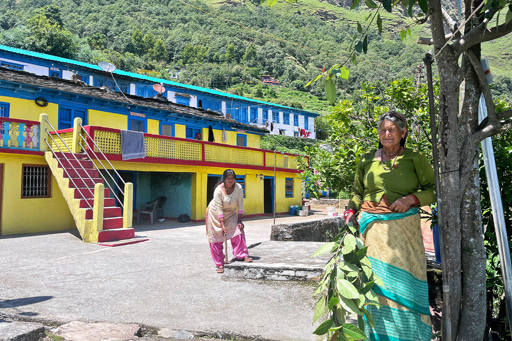
In the Indian Western Himalayas, women are the primary first responders to escalating forest fires. They risk their physical safety to protect homes and livelihoods despite receiving little formal support or equipment and no pay, reports contributor Swati Thapa for Mongabay. Uttarakhand is the most fire-prone state in India’s Western Himalayas. High-elevation warming exceeds global rates there, extending the wildfire season into the winter and hinting at bigger ecosystem-level changes. More than 71% of the state is forested, supplying the region with essential drinking water, firewood, and fodder for cattle. Climate change is both increasing fire risk and impacting local agriculture, such that men are migrating to cities for work, leaving rural women behind to manage farming, livestock, and fire defense. Kavya Pandey, a researcher at the Centre for Wildlife Studies in Bengaluru, has studied extensively the relationship between women in Uttarakhand and forest fires. Pandey notes that a traditional gender role for women is collecting firewood, so they’re often in the forest for hours and, by default, on the frontlines when forest fires start. Men are occasionally hired as paid seasonal fire watchers, and while authorities also call on women to help, they’re rarely paid for the work and don’t receive protective gear. “If a woman sees fire anywhere, and she does not have a phone, she calls out to others by ululating or whistling, and all the women go together to snuff the fire,” said Kamla Devi, head of the Marhmanley village van panchayat, a community-managed forest council.…This article was originally published on Mongabay
From Conservation news via This RSS Feed.