

El Niño has suppressed Atlantic hurricane activity, but the 2026 season still has two months to go.
September ended without a hurricane forming in the Atlantic for the first time in more than 30 years, as strong El Niño conditions continue to suppress storm development across the basin.
RELATED: Brazil Faces Increased Wildfires Due to Super El Niño Phenomenon
Eight named storms had formed by the end of September, but none had reached hurricane strength, according to The Weather Channel. The National Hurricane Center (NHC) in Miami confirmed that Sept. 12 marked the latest date for the first Atlantic hurricane of a season in the satellite era, surpassing the previous record of Sept. 11, set in 2002 and 2013.
The record comes during a season that has remained unusually quiet despite September typically being the Atlantic’s most active month. An average season produces seven hurricanes, while five would normally have formed by this point, according to experts cited in the report.
El Niño suppresses Atlantic activity
El Niño, an anomalous warming of the equatorial Pacific Ocean, is the main factor limiting hurricane formation in the Atlantic. According to the U.S. National Oceanic and Atmospheric Administration (NOAA), the phenomenon typically reduces Atlantic hurricane activity by increasing vertical wind shear — changes in wind speed or direction with altitude that can disrupt developing storm systems before they strengthen.
Organizaciones de DDHH de Europa y Guatemala denunciaron despojo territorial, afectaciones ambientales y vulneración de derechos colectivos por parte de redes corporativas transnacionales contra pueblos indígenas y campesinos. ¿Qué evidencian los defensores ambientales?
Entra al… pic.twitter.com/OOVzvsPTva
— teleSUR TV (@teleSURtv) September 26, 2026
Text Reads: Human rights organizations from Europe and Guatemala denounced territorial dispossession, environmental impacts, and violations of collective rights by transnational corporate networks against indigenous peoples and peasants. What do environmental defenders reveal?
The Caribbean is currently under the influence of this wind shear and will probably remain unsuitable for hurricane development for the rest of the season.
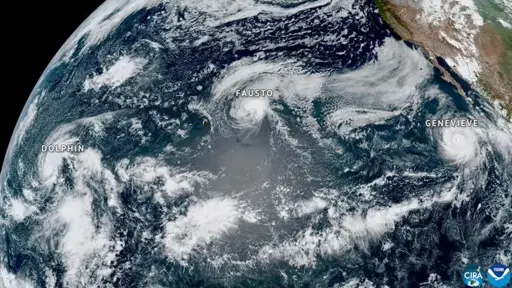
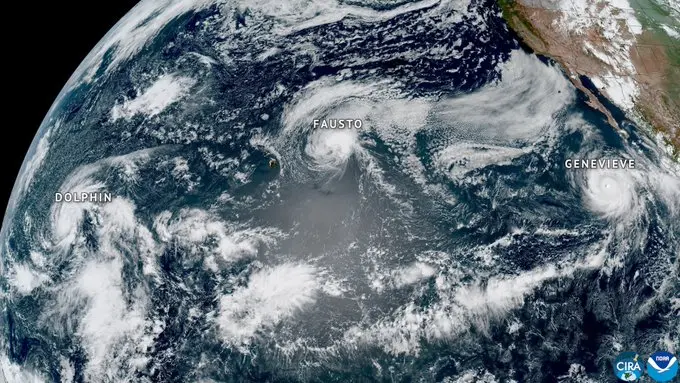
The contrast with the eastern and central Pacific has been stark. Those basins have experienced a highly active season amid unusually warm waters associated with El Niño, producing 20 named storms and three Category 5 hurricanes, with areas of Mexico and Hawaii heavily affected.
Since modern records began in 1950, only three other Septembers have passed without an Atlantic hurricane: 1994, 1972 and 1962, according to Dr. Phil Klotzbach.
No completely hurricane-free Atlantic season has occurred in the modern record, although 1907 and 1914 have been cited as possible exceptions because of uncertainty surrounding those records.
Tropical storms still causing damage
The absence of hurricanes has not meant an absence of serious impacts. Short-lived tropical storms such as Arthur and Edouard caused severe flash flooding and prompted water rescues near the Gulf Coast because of their heavy rainfall.
The 2026 season is not over yet. October typically produces about one hurricane per year on average, and storms can also form in November. With the official end of the season still set for Nov. 30, it remains too early to determine whether the Atlantic will ultimately go an entire year without a hurricane.
From teleSUR English via This RSS Feed.