

This story was originally published byThe Imprint*, a national nonprofit news outlet covering child welfare and youth justice. Sign up for The Imprint’s free*
Nancy Marie Spears
The Imprint
In her northeast Minnesota courtroom for Indigenous child welfare cases, Judge Rebekka Stumme lays out a traditional “four-directions” quilt and sits at a round table instead of the bench to speak to Fond du Lac and Bois Forte children and parents at eye-level. In another courtroom south of Minneapolis, Judge Jamie Cork scents the air with cedar oil spray to welcome families.
Lucianna Gutierrez, a Standing Rock Sioux tribal member and a Santee Sioux descendant who grew up in foster care, doesn’t remember any of these practices in the family courtrooms of her childhood.
What she saw recently in Hennepin County’s ICWA court surprised her. Sweetgrass, a tobacco pouch and a bundle of sage were displayed on a table near the judge’s bench.
“I’ve never seen something like that before,” the 24-year-old said. “It was honestly really cool — not anything like when I was a kid.”
Across the U.S., a growing number of specialized courts are dedicated to ensuring compliance with the 1978 Indian Child Welfare Act — a law designed to keep tribal children connected to their kin and communities. Judges in ICWA courts engage with children’s tribes and cultures and monitor whether public agencies place foster children within tribal communities, ensuring Native caregivers are prioritized.
Distinct from tribal courts, which adhere to a tribe’s specific laws, ICWA courts operate within a state or county’s existing juvenile or family court system.
Today, 25 such courts exist in 10 states, with several more in the works. The latest opened in Dakota County, Minnesota — the state with the most of these specialized courts.
‘The spirit of ICWA is simple, and it’s powerful’
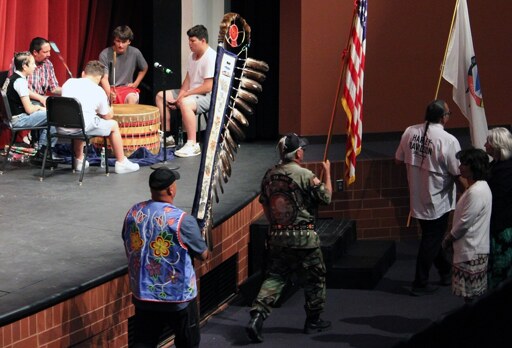
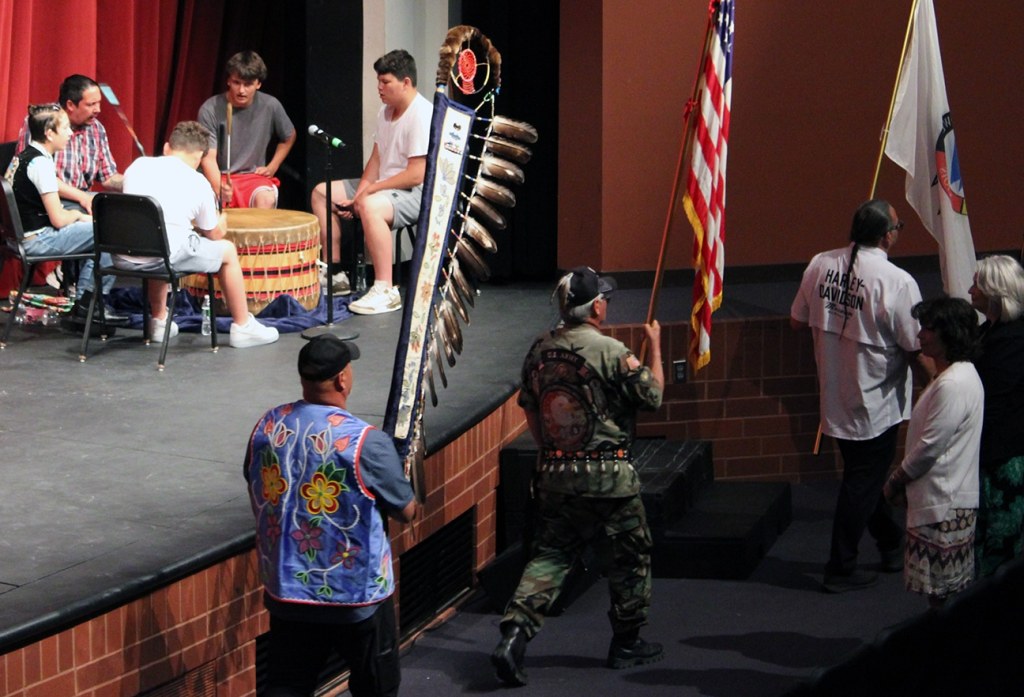
A June ceremony at Hastings High School marked the launch of Minnesota’s newest ICWA court, which had been years in the making. Dozens of judges, court staff and tribal leaders gathered to hear speakers representing the Prairie Island Indian Community, followed by traditional Ojibwe singing and the beat of buffalo-hide drums.
Nikki Conway, Children and Family Services director, told the assembled crowd that the new court would help ensure that tribal voices and cultures “are not simply an afterthought, but an essential part of the conversation from the beginning.”
“The spirit of ICWA is simple, and it’s powerful. Children belong in their families,” Conway said. “We all have a role in building trust, strengthening relationships and creating systems that honor families, cultures and tribal sovereignty.”
In courts like this across the country, there are signs of positive impact. Recent research by social scientists shows that when tribes are involved in early ICWA court proceedings, families reunify more quickly and more often, and children spend less time in foster care.
“I’m convinced ICWA courts make a difference,” Judge Stumme said in a lengthy interview with the Imprint. “So the more the merrier.’’
Judges and child welfare experts across the country describe the courts as essential to correcting the overrepresentation of Native Americans in foster care. But ongoing challenges — primarily data collection — remain.
There are also questions among researchers about their effectiveness within larger social service systems that are dependent on a variety of players. For example, even when judges held child welfare agencies accountable for making “active efforts” to prevent the breakup of a Native American family, that alone did not appear to improve reunification, guardianship or adoption rates, a 2023 study found. Researchers concluded that the outcome of ICWA cases depends not only on the use of services like drug treatment or counseling, but their quality.
“Just having an ICWA court doesn’t necessarily lead to better outcomes,’’ said Kate Fort, the Indian Law Clinic director at Michigan State University. “How that court is organized, operated — and also what you even mean by ‘better outcomes’ — is always important to articulate and measure.”
The origin story of ICWA courts
The Indian Child Welfare Act was created to counter centuries of harm to tribal communities caused by the United States government: Indigenous children forced to attend government-run boarding schools and sent out to be fostered and adopted by white families.
Colonization left deep scars in families that have fueled addiction, domestic violence, homelessness and poverty, and Indigenous children continue to be the most overrepresented group in the child welfare system. Federal data shows that nationwide they are overrepresented in state foster care systems at a rate 3.75 times greater than their proportion in the general population.
ICWA courts emerged as an effort to address that inequity.
They began operating informally in the 1990s as ICWA dockets or calendars within an existing courtroom. Back then, there wasn’t as much training available for judges on ICWA.
It’s believed that the first official model ICWA court launched in 2015 in St. Louis County, Minnesota, one of a handful that opened in the following two years.
Five core principles serve as guideposts for the “spirit and promise of ICWA” that define the courts, according to a recent report released by the National Council of Juvenile and Family Court Judges and Casey Family Programs. The principles include “judicial leadership,” or how judges adjust the court process to honor cultural practices and beliefs, and “tribal engagement” — building relationships and seeking guidance about specific traditions and values. Everyone working on ICWA cases must be specially trained and data must be collected to track effectiveness and monitor compliance.
To date, the National Council of Juvenile and Family Court Judges, Casey Family Programs and data experts have found courts that follow this path have improved children’s outcomes by encouraging parents and tribal representatives to be involved in proceedings centered on child maltreatment. Compared to non-ICWA courts, ICWA courts place more children with kin and tribe, and some report fewer terminations of parental rights.
A 2026 Family Justice Journal report found that in 2025, Arizona’s first ICWA court in Pima County shortened the time between an ICWA case’s filing and its closure by 298 days compared to the previous year. Reunification rates also rose from 38 percent in 2024 to 47 percent in 2025.
And in Albuquerque, New Mexico, the ICWA court has not ordered a single termination of parental rights in its six-year history, according to the national judges’ council.
Stumme, who presides over an ICWA court for Minnesota’s St. Louis and Carlton counties, describes the benefits of connecting with the families in her courtroom and holding proceedings that feel more like a collaboration than a legal confrontation.
“Sometimes parents tell me things they don’t tell their social worker, like, ‘I am not going to visitation with my child because I don’t have gas money,’” Stumme said. “Then I can look to the social worker who’s sitting right there and say: ‘How can we fix this?’”
Yet while some ICWA courts point to such successes, a lack of more robust research and difficulties fulfilling one key ICWA court principle — data collection — hinders others from gauging their effectiveness.
In an April research article published in the Yale Law Journal Forum, Fort focused on three ICWA courts and their challenges with tracking data and determining whether courts are fully complying with ICWA law. One of the biggest barriers, her research found, was the fact that the federal government does not track most metrics relating to ICWA cases, though this may change with the ICWA elements that will be included in the Adoption and Foster Care Analysis and Reporting System beginning in 2028. Meanwhile, state courts have to rely on their own data collection to ensure they are operating effectively.
Alicia Summers, director of Data Savvy Consulting, has also published journal articles on the topic. She’s noted a deficit of studies examining whether Indigenous families are better served by these specialized courts. All of her studies have shown general improvements in ICWA adherence after courts become ICWA courts — but her findings on whether children’s outcomes improve are mixed. And she said many courts lack the resources to thoroughly examine those outcomes.
Minnesota leads the nation
Minnesota has played a “significant role” in developing and refining the principles guiding many ICWA courts today.
“Perhaps the most important aspect of Minnesota’s current approach, and one other states could readily replicate, is their efforts to engage in meaningful partnership with tribal nations in defining success and shaping ICWA court practices,” Summers said.
The need is urgent. According to the state’s Department of Children, Youth and Families, American Indian children were roughly 16 times more likely than white children to be in out-of-home care. That rate is far higher than children of all other demographic groups.
That disproportionality is being addressed in ways not found in other states, such Minnesota’s Ombudsperson’s Office for American Indian Families and the Minneapolis-based ICWA Law Center. The center’s lawyers work in tribal and state courts in Minnesota and beyond, representing members of the Red Lake Nation, Mille Lacs Band and others.
In 2023, Minnesota received a grant from the federal Children’s Bureau to establish three new ICWA courts by 2028. That funding helped establish the new Dakota County court and eventually launch another one in Beltrami County, according to the partnership program coordinator Miriam Friesen. A third location is yet to be determined.
As part of her work in Dakota County, Judge Cork often pauses hearings, inviting families to smudge sage or burn sweetgrass outdoors. She will leave her bench to sit closer and hear their concerns. She says she sees signs that parents feel more supported and engaged; they often open up about their own struggles.
“I talk to them all the time about the fact that we’re going to work on things, that they need to help themselves first,” Cork said. “Because they can’t help their kids or take care of their kids if they don’t take care of themselves.”
Hana Ikramuddin contributed to this report.
Disclosure: Casey Family Programs, mentioned above, is a funder of Fostering Media Connections, The Imprint’s parent nonprofit. Per our editorial independence policy, the organization has no editorial role in our news coverage.
The post A growing number of courts nationwide are dedicated to enforcing the Indian Child Welfare Act appeared first on ICT.
From ICT via This RSS Feed.