

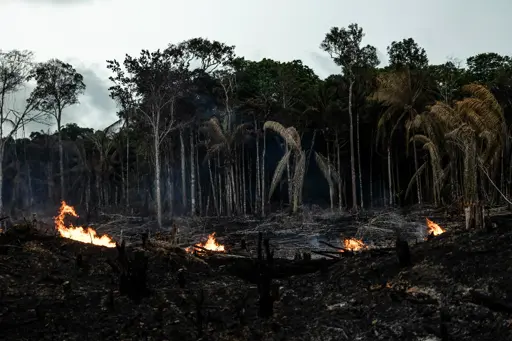
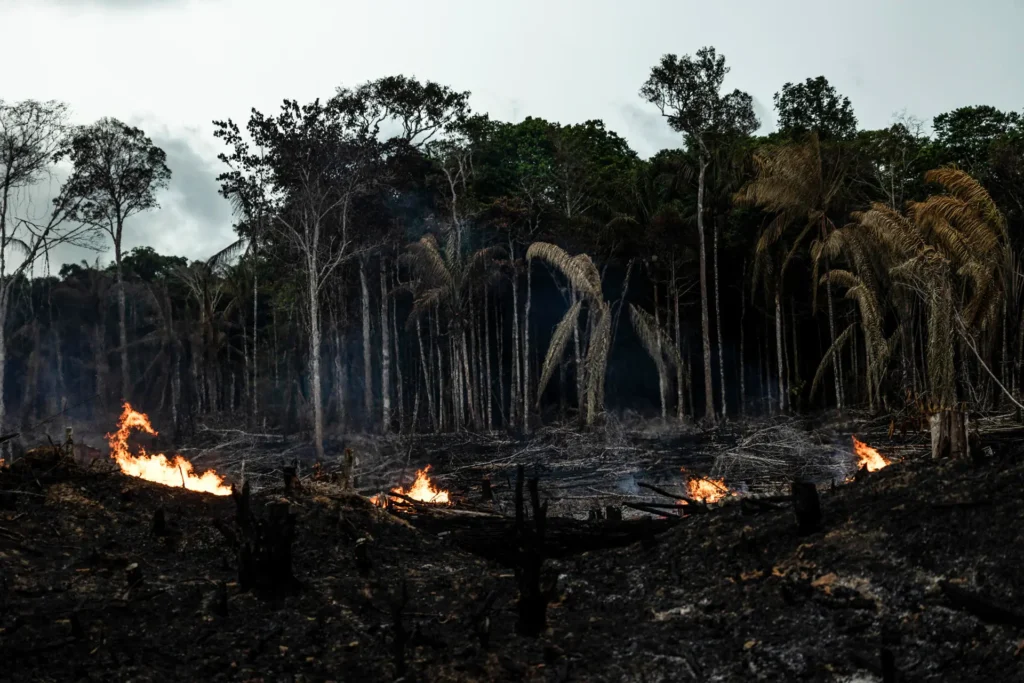
Wildfires in the Brazilian Amazonia surged 74.2% in September 2026 compared with the same month last year, as a strengthening El Niño phenomenon drove drought conditions across the region, according to official data released Thursday by Brazil’s National Institute for Space Research (INPE).
Brazil’s National Institute for Space Research (INPE) recorded 12,562 wildfires in the Amazonia during September, a figure that also surpassed August’s fire count -until then the highest of the year- by 36.4%.
Since the beginning of 2026, the total number of fire hotspots has reached 29,580, with the majority occurring in the last two months. However, the intensity of these fires did not reach the levels seen in 2024, when Brazil experienced its worst drought in 50 years. This extreme weather event, combined with a severe heatwave, resulted in over 140,000 fire hotspots, predominantly in September.
RELATED: Severe Storm Leaves Thousands of Families Affected in Paraguay Amid Super El Niño
Despite the sharp year-over-year increase, fire intensity this year has not reached the levels recorded in 2024, when Brazil experienced its worst drought in 50 years and an intense heat wave pushed the number of fire hotspots above 140,000, with most concentrated in September of that year.
The period known as the “Amazonian summer,” the biome’s dry season, typically runs from June through November. Effects from the current Super El Niño event are already being felt across the region, and forecasters warn that if it develops into an extreme event as projected, it could significantly worsen climate conditions across the rainforest.
🌎#Internacionales || EL NIÑO IMPULSA INCENDIOS EN LA AMAZONÍA BRASILEÑA
Brasil registró 12,562 incendios forestales en la Amazonía durante septiembre, un incremento del 74,2 % respecto al mismo mes del año anterior.
Los focos acumulados durante 2026 se acercan a los 30,000, en… pic.twitter.com/6ww9yu3Zji
— @ECCOSV (@eccosv) October 1, 2026
Text reads: “Brazil recorded 12,562 forest fires in the Amazon during September, an increase of 74.2% compared to the same month last year. The accumulated flares during 2026 are close to 30,000, in the midst of drought conditions associated with the El Niño phenomenon.”
El Niño Risk Grows
Under that scenario, the effects of human activity such as deforestation and the burning of pastureland to clear land would likely be amplified, would exacerbate the forest fires across the biome.
Projections from the U.S. National Oceanic and Atmospheric Administration (NOAA) indicate a probability above 90% that El Niño will reach very strong intensity during the Northern Hemisphere’s fall and winter of 2026-2027. That adverse climate outlook adds further pressure on the Amazonia, widely regarded as one of the most critical biomes for maintaining global environmental balance.
El Niño, part of the El Niño–Southern Oscillation phenomenon (ENSO), is characterized by higher-than-normal sea level air pressure over Indonesia and Australia, extending across the Indian Ocean to the Atlantic Ocean. This atmospheric oscillation is coupled with sea temperature changes, leading to significant climate disruptions. The warming phase of the sea surface temperature is known as El Niño, while the cooling phase is known as La Niña.
The coming months, as the dry season continues through November and El Niño effects potentially strengthen further, are expected to be a critical test of whether current fire trends accelerate toward the extreme levels seen in 2024 or stabilize at a lower, though still elevated, baseline.
From teleSUR English via This RSS Feed.