

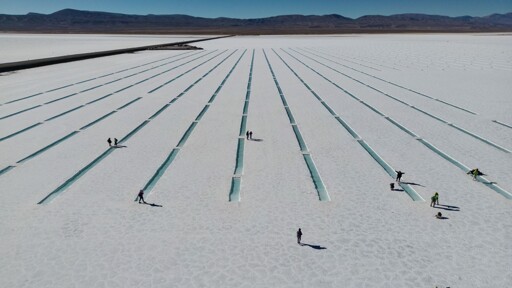
A new initiative between the U.S. and Argentina is meant to bolster investment opportunities and strengthen supply chains for critical minerals that could be used in the clean energy transition, such as copper and lithium. The Andes-Atlantic Corridor, announced Sept. 23, will make it easier to funnel U.S. investment into Argentina’s mining sector and to export critical minerals. At the same time, the initiative will help continue to develop the Vaca Muerta region, home to Argentina’s largest oil and gas reserves. “Working together, the United States and Argentina seek to continue to build on our robust relationship through increased U.S. investment, close security cooperation, and aligned values,” the two countries said in a joint statement. Argentina has about 117.91 million metric tons of copper reserves and 216.32 million metric tons of lithium carbonate equivalent, the chemical used in lithium-ion batteries. Many of the country’s minerals are needed for building the cables and transformers in power grids, wind turbines and solar panels, among other things. The country is also part of the “Lithium Triangle,” alongside Chile and Bolivia, an approximately 400,000-square-kilometer (154,400-square-mile) stretch of salt flats where 40-60% of the world’s lithium is located. Historically, exporting minerals has been a challenge for Argentina. The closure of a major copper mine and a lack of foreign investment, among other economic troubles in the country, saw copper exports drop between 2012 and 2019, according to an analysis by the Payne Institute for Public Policy, a U.S.-based think tank studying energy, natural resources, and…This article was originally published on Mongabay
From Conservation news via This RSS Feed.