


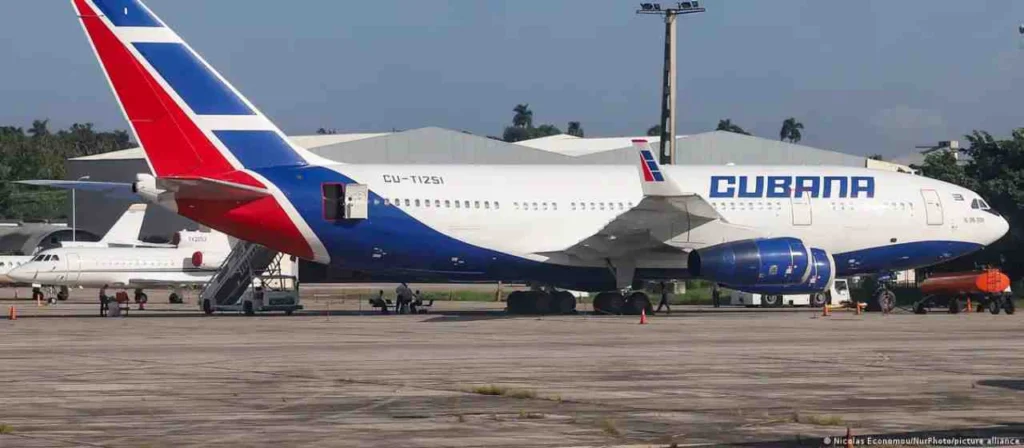
Few airlines are maintaining operations in Cuba due to the country’s severe fuel crisis—stemming from the current U.S. administration’s energy blockade against the island—yet members of the Cuban diaspora still travel there to visit their families.
RELATED:
Cuba energy blockade: Bruno Rodríguez condemns U.S. fuel restrictions
In February, the Cuban government announced a lack of Jet A-1 fuel, leaving aircraft unable to refuel at Cuban airports.
Major carriers such as Air Canada, Iberia, Air France, and Turkish Airlines suspended flights to the Caribbean nation, dealing a heavy blow to tourism—a key revenue source for the island of eternal summer, which saw a 64.4% year-on-year drop in tourist arrivals during the first eight months of 2026.
However, amidst this situation, some airlines—including U.S. carriers American Airlines, Southwest Airlines, and Delta Air Lines—are maintaining flights by carrying enough fuel for both the inbound and outbound legs of the journey.
Other airlines continuing their routes include Copa Airlines (from Panama), Aeroméxico and Viva Aerobus (connecting the island to Mexico), Venezuela’s Conviasa, and Colombia’s Wingo, as well as Air Europa, which flies to Spain with a technical refueling stop in the nearby Dominican Republic.
In this current climate, travel by Cubans living abroad to visit family on the island is complicated by rampant dollarization and ever-rising prices.
El cerco energético de EE.UU contra #Cuba ha provocado que los suministradores tradicionales de combustible que trabajaban con nuestro país y que suministraban en condiciones lícitas, hayan dejado de suministrar combustible a nuestro país.
#CubaNoEsUnaAmenaza, el Bloqueo Sí pic.twitter.com/1zZCLAT8pP
— MINCEX🇨🇺 (@MINCEX_CUBA) October 1, 2026
The text reads, “The U.S. energy blockade against #Cuba has caused traditional fuel suppliers—who previously supplied our country under lawful conditions—to stop providing fuel. #CubaIsNotAThreat; the Blockade Is.”
The impact of increasingly severe U.S. sanctions against Cuba is further evidenced by the fact that only one fuel tanker—the Russian vessel *Anatoly Kolodkin*—has arrived on the island in the last six months (in May).
The island’s First Deputy Minister of Energy and Mines, Argelio Jesús Abad, denounced that the U.S. administration intercepted at least seven oil tankers—intimidating suppliers in the process—which reduced Cuba’s oil imports by 80 to 90 percent.
He added that this situation causes blackouts lasting 20 hours or more, affecting the refrigeration of food and medicines and leading to humanitarian consequences. Furthermore, he reported that 40 foreign banks refused to do business with the nation and 140 bank transfers were blocked—many intended for the purchase of solar and wind technology—while a total lack of fuel prevented the use of over 1,100 megawatts of distributed generation capacity.
Sanctions and justifications
This situation worsened when the U.S. government added the Cuba-Petroleum Union (Cupet) to the Specially Designated Nationals list maintained by the Office of Foreign Assets Control (OFAC)—an agency of the Department of the Treasury. This designation prohibits transactions with the Cuban entity absent a specific license and extends the risk of penalties to foreign actors doing business with it.
The measure prohibits U.S. citizens from conducting transactions or business with Cupet unless they hold specific licenses issued by OFAC. Additionally, the regulations extend the risk of commercial and financial penalties to foreign corporations and individuals maintaining operational dealings with the state-owned oil company, in accordance with the secondary sanctions regime established by Executive Order 14404. Consequently, all Cupet assets and interests subject to U.S. jurisdiction are blocked and must be reported to OFAC. The inclusion of Cupet intensifies the oil blockade implemented since January under the Trump administration—measures that official Cuban sources have linked to shortages, humanitarian emergencies, and the paralysis of the productive sector.
The impact is critical because Cupet manages the receipt, extraction, processing, and distribution of hydrocarbons in Cuba, supplying public service stations, state-owned enterprises, power plants, government ministries, healthcare institutions, and potable water distribution systems.
Washington justifies the measure by citing the need to protect civil liberties, accusing the Cuban government of misappropriation and the diversion of energy resources toward institutional, military, and political propaganda purposes, while holding it responsible for power outages and fuel shortages.
However, Cuban authorities maintain that the limitations and problems affecting the population stem from financial, commercial, and energy-related hostilities by the White House—part of a tightening of sanctions that also targets the Business Administration Group (GAE), its leadership, and the joint venture Moa Nickel S.A. under the same executive order.
From teleSUR English via This RSS Feed.