

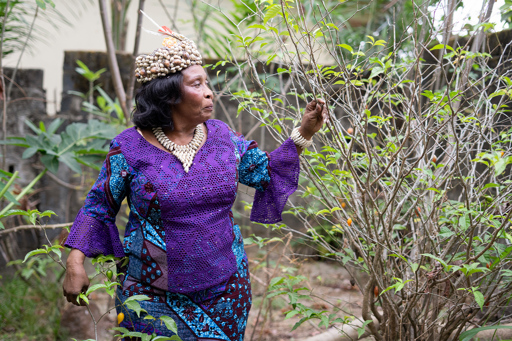
LIBREVILLE — In the traditional-medicine corner of La Peyrie Market in Libreville, iboga comes in a repurposed clear rum bottle packed to the neck with pale bark powder, set among tinctures in old plastic bottles. Two men appeared within a minute, and once they heard they were talking to a journalist, went half-giddy. They were happy to say where the root goes: overseas, to clinics, some of it ground into capsules. “Do the buyers pay well?” “They pay well,” one said. And all of it, he insisted, was legal. Iboga, Tabernanthe iboga, is a plant native to the wet forests of West-Central Africa. And here in Gabon, its root bark plays a central role in several Bwiti (or Bwété) traditions. It is also the original source of ibogaine, an alkaloid extracted from the root, now drawing intense interest as an experimental treatment for addiction and other mental-health conditions. The sellers at the market called the money good. But, further down the value chain, ibogaine treatment can cost thousands of dollars per patient. That gap, Gabonese practitioners and officials say, is at the heart of the dispute: the plant and the knowledge are theirs — and are threatened with overexploitation — while a lot of the money is made abroad. A 2023 Interpol analysis also found much of the trade was illicit, identifying that online resellers nearly quadrupled between 2021 and 2023. And the market for the plant may only get bigger, officials speculate. An unidentified participant holds a portion of…This article was originally published on Mongabay
From Conservation news via This RSS Feed.