

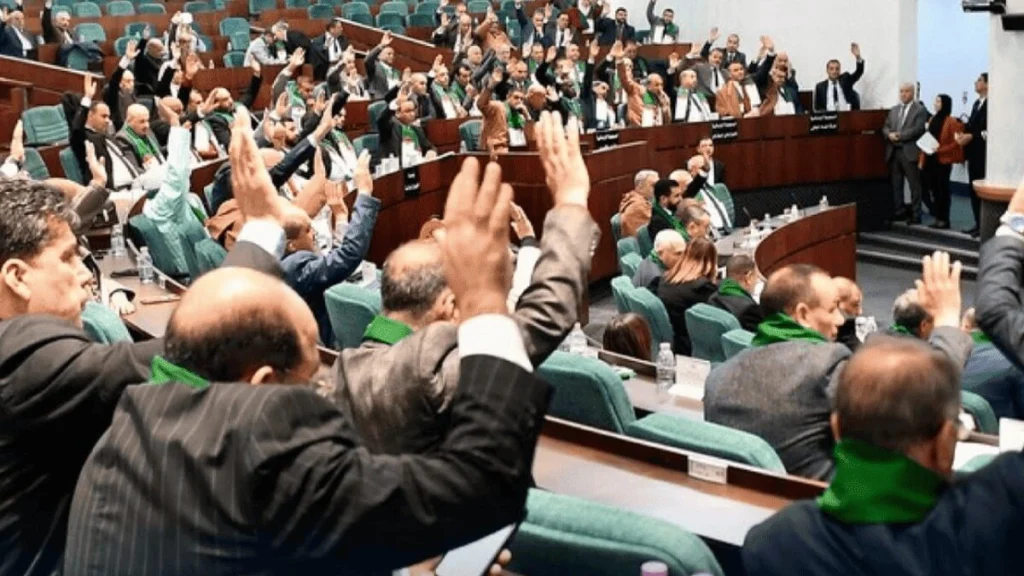
Lawmakers in Algeria’s National People’s Assembly (APN) approved an amendment to the Penal Code on Thursday that mandates the death penalty for those found responsible for arson and child abduction, the state news agency APS reported.
RELATED:
Dismantled in Algeria an International Network Dedicated to Economic Crimes
The vote took place during a public session presided over by APN Speaker Khalida Boufedech. The text stipulates the application of capital punishment for perpetrators of arson committed on behalf of foreign parties, as well as for those who intentionally set fire to forests, wooded areas, or agricultural fields—whether cultivated or not.
Justice Minister Lotfi Boudjemaa defended the reform, stating that adopting the death penalty for these acts constitutes the appropriate legal response to eradicate such crimes. According to the official, investigations have identified possible links between arson attacks and foreign parties, and such incidents have reached the level of organized crime.
The amendment also mandates the death penalty for anyone who abducts a minor by any means if the crime involves torture, sexual assault, or mutilation. In these cases, the legislation excludes the possibility of applying the mitigating circumstances otherwise provided for in the Penal Code.
ACTU
ALGÉRIE 🇩🇿: Le ministre de la Justice présente son projet de loi réinstaurant la peine de mort.
Le projet de loi révisant le Code pénal algérien a été présenté lundi 21 septembre par le ministre de la Justice Lotfi Boudjemaâ devant la Commission des affaires juridiques et… pic.twitter.com/NO6Sva7I8a— France-AfriqueMÉDIA (@FranceAfrique23) September 24, 2026
The text reads, “ALGERIA 🇩🇿: The Justice Minister presents a bill to reinstate the death penalty. The bill revising the Algerian Penal Code was presented on Monday, September 21, by Justice Minister Lotfi Boudjemaâ to the National People’s Assembly’s Committee on Legal and Administrative Affairs, Freedoms, and Human Rights. Tasked by President Abdelmadjid Tebboune with swiftly proposing amendments, Lotfi Boudjemaâ outlined the bill’s provisions, but advocacy groups are vehemently opposing the text (RFI).”
Previously, arson and child abduction offenses carried penalties of up to 20 years in prison or life imprisonment, Boudjemaa explained to the lawmakers. Algerian legislation had previously reserved the death penalty only for fires resulting in fatalities and for child abductions involving torture, ransom demands, or the victim’s death.
The minister noted that the judicial system retains safeguards regarding legal appeals and the possibility of requesting a presidential pardon. The reform establishes that capital punishment may be carried out only after all legal avenues of appeal provided by law have been exhausted. Forest fires
The initiative was spearheaded by Algerian President Abdelmadjid Tebboune following a series of forest fires that occurred during the northern summer in the country’s eastern and central regions. According to official reports, the blazes resulted in 12 deaths, although witnesses cited in the text suggested the death toll could be higher.
In late August, Tebboune ordered the Justice Minister to conduct an urgent legal review and amend the Penal Code by September 15, with the aim of reinstating the death penalty—including actual execution—for those involved in arson. To date, there have been no reports of any further review of the measure.
On September 16, Amnesty International urged Algerian authorities to abandon the plan and called for effective investigations into the causes of the fires, as well as accountability mechanisms that do not resort to capital punishment.
Algeria has maintained a de facto moratorium on executions since 1993, although it continues to hand down death sentences, particularly for terrorism and intentional homicide. In July 2025, the country approved the application of the death penalty for serious drug trafficking offenses, especially those involving schools. Since then, no executions have been made public.
#Algeria | Algeria has severed diplomatic relations with the UAE, accusing Abu Dhabi of “provocative and hostile” actions despite repeated warnings.
Algiers says it exhausted diplomatic efforts before cutting ties, marking a major escalation between the two countries.#UAE… pic.twitter.com/olDt5H06OJ— teleSUR English (@telesurenglish) September 11, 2026
From teleSUR English via This RSS Feed.