

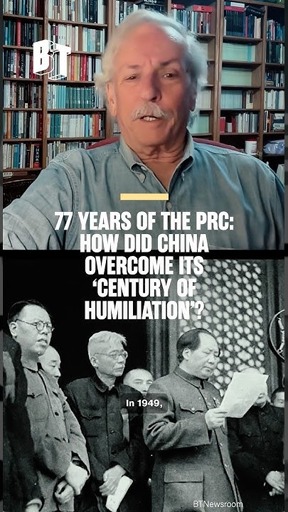
On October 1, 1949, Mao Zedong stood in Tiananmen Square in front of 300,000 people and declared the founding of the People’s Republic of China. This would mark the end of China’s “Century of Humiliation” and usher in a new chapter of self-determination. But in 1949, China faced seemingly insurmountable challenges: Average life expectancy was only 35 years of age, infant mortality was sky high, and the illiteracy rate was a staggering 80%. Professor of East Asian and Global History Ken Hammond discusses the massive gains in health, literacy, education, and industrial capacity overseen by the Communist Party of China and the Chinese people themselves during the three decades following the revolution. Hammond notes that these years would lay the groundwork for China’s “economic miracle” ushered in by Deng Xiaoping’s Reform and Opening Up period. Watch full episodes of The China Report at breakthroughnews.org.
From BreakThrough News via This RSS Feed.