

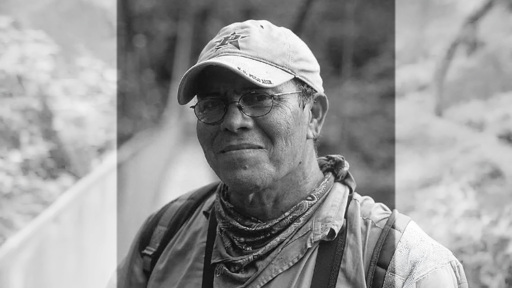
Founder’s Briefs: An occasional series where Mongabay founder Rhett Ayers Butler shares analysis, perspectives and story summaries. For much of the 20th century, Cuba’s spiders and scorpions received limited attention beyond specialist circles. Identifying them required careful research in museum collections and comparing them with descriptions published abroad. Giraldo Alayón García spent much of his career documenting Cuba’s arachnids and bringing them to the public’s attention. In San Antonio de los Baños, southwest of Havana, he used Radio Ariguanabo to discuss wildlife with a general audience. At the National Museum of Natural History of Cuba, where he spent almost four decades, he helped build one of the Caribbean’s principal collections of arachnids. At the museum, he curated specimens collected in Cuba and elsewhere in the Caribbean, and added the records that made the collection useful to other researchers. Under Alayón, the museum’s arachnological collection became one of the Caribbean’s most substantial. In 1994, he published a list of Cuba’s spiders, which became a standard point of reference for work on the island’s arachnids. Across his career, he described about 95 species and genera, most of them endemic to Cuba. He also worked abroad. From 1993 to 1995, he directed the Arachnological Project of Yucatán in Mexico. In 1999, he led an expedition to Navassa Island — contested between Haiti and the U.S. — where researchers identified several species new to science. One, the scorpion Cazierius alayoni, was named for him. Alayón first took wildlife to a wider audience on Radio…This article was originally published on Mongabay
From Conservation news via This RSS Feed.