

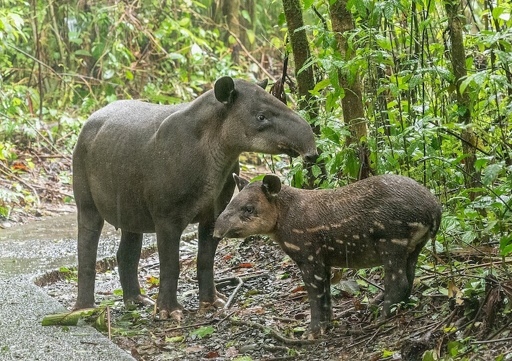
With illegal logging and agricultural expansion closing in on their lands, four Indigenous Wounaan and Emberá-Wounaan villages in Panama’s Darién forest started a biodiversity monitoring project to document their forests’ conservation status, reports Mongabay contributor María Paula Rubiano A. Their biodiversity monitoring project recorded more than 200 species across 18,000 hectares (44,500 acres) of threatened forest, including three “umbrella” species: Jaguars (Panthera onca), Baird’s tapirs (Tapirus bairdii) and crested eagles (Morphnus guianensis). At least 15 of the species they documented are classified as threatened. The communities are now using the data as a baseline for joining the biodiversity credit market, which they hope can generate revenue in an area where there are few opportunities to earn money. The communities are using bioacoustic monitoring and camera-trapping with the support of the Panama-based NGO FSC Indigenous Foundation and Health In Harmony, an international nonprofit. They are employing a methodology developed by Savimbo, a biodiversity credit company co-founded by Indigenous community members, that uses 15 indicator species as a proxy for forest health. Samuel Cheucarama, who lives in an Indigenous Wounaan village, told Rubiano the efforts have already changed behavior in the communities. “People don’t go hunting anymore. They’re saying, ‘We’re going to put up a ‘No Hunting’ sign.” Read the full article here. Banner image:Baird’s tapirs (Tapirus bairdii) are the largest native land mammals in Central and South America. Image by user Rhododendrites via Wikimedia Commons (CC BY-SA 4.0). This article was originally published on Mongabay
From Conservation news via This RSS Feed.