

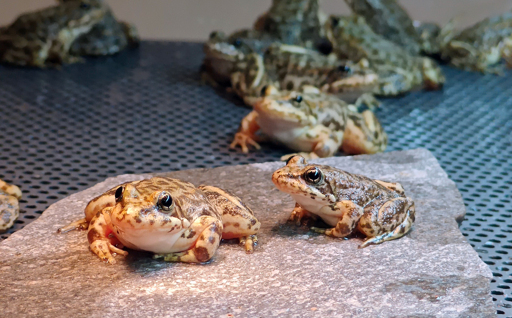
Frog release days always start early, at about 4 a.m., so that staff can get up to the site before the day gets too hot, said Erin Lundy, manager of conservation initiatives at the Aquarium of the Pacific in the U.S. The first challenge is catching the frogs. A newly morphed southern mountain yellow-legged frog (Rana muscosa) is about an inch long, fast, and very good at squeezing into cracks, Lundy said. It can take a couple of hours for staff to scoop them all up from the tanks. Lundy prefers grabbing them with gloved hands, though others use nets. The aquarium has been rearing southern mountain yellow-legged frogs since 2021, as part of a multi-agency, 20-plus-year conservation effort for the species, a Southern California amphibian listed as endangered on the IUCN Red List. Head-starting the frogs by ushering them through metamorphosis in captivity boosts their odds of survive, Lundy said. This year’s cohort arrived at the aquarium late last summer as 2-month-old tadpoles from the Los Angeles Zoo, where they were bred. Through winter and into spring, aquarium staff watched as their limbs erupted and tails slowly reabsorbed. By August, most were ready for life in the wild. (Metamorphosis for this species takes from one to five years in the wild, and is highly variable in captivity. Those that did not fully metamorphosize by the release date will be held back and released as larger adults next summer). Developing southern mountain yellow-legged frog (Rana muscosa) embryos inside eggs at…This article was originally published on Mongabay
From Conservation news via This RSS Feed.