

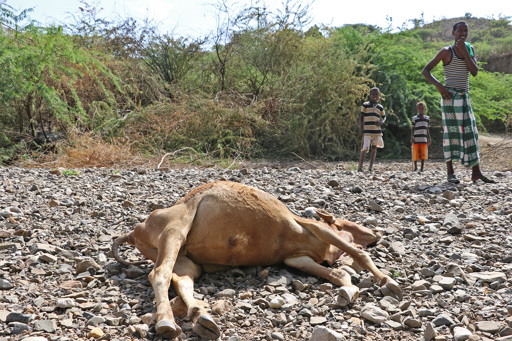
As a potentially historic El Niño builds in the Pacific, evidence suggests that climate change is ratcheting up the intensity of such events. And as temperatures rise in the future, the number and frequency of strong El Niños could increase even further, some experts say. “The evidence is accumulating that climate change makes for more powerful El Niños,” climate scientist Mark Cane with Columbia University in the U.S. told Mongabay in a video interview. His work was instrumental in enabling accurate forecasting of El Niño events in the late 1980s and early ’90s. This year’s El Niño is on the verge of breaking all records as it continues to build and is forecast to peak between October and December 2026, according to most models. A pre-print study found an event of this size is six times more likely due to climate change. The 2026-2027 event “is clearly going to be very large, up there with the handful of largest events that we’re aware of,” Cane said. A coral reef in the Galapagos Islands. In 1982, a marine heatwave triggered by a very strong El Niño killed off around 95% of the coral in the Galapagos. That left “death horizons” in the coral samples, evidence of the catastrophic impact of that event. Image by Julia Cole. A continuing debate Whether climate change is intensifying El Niños and altering their frequency — and crucially, whether it will continue to do so — remains an open question. Today’s El Niños can be forecast…This article was originally published on Mongabay
From Conservation news via This RSS Feed.