

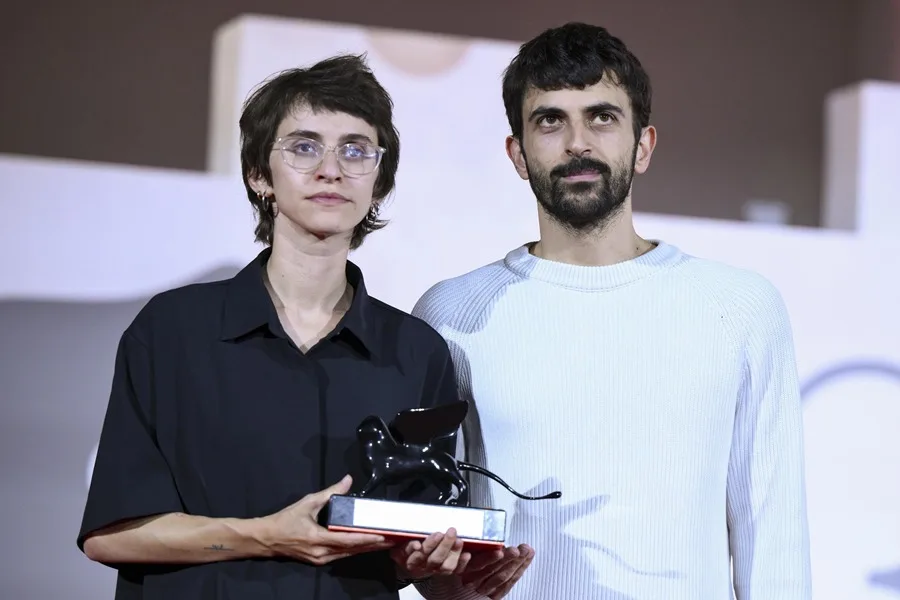
Israeli journalists and directors Yuval Abraham and Rachel Szor have faced an intense harassment campaign since the premiere of their award-winning documentary “NAZA,” which addresses Israel’s genocidal campaign in Gaza.
The filmmakers revealed they have not been able to return to Israel since the production debuted at the Venice Film Festival, when the recognition it drew for its criticism of the Zionist military siege and its tens of thousands of victims marked the start of an escalation of government pressure and direct threats against their physical integrity.
RELATED: Israelis Storm the Al-Aqsa Mosque in Jerusalem
Tension escalated when groups of far-right activists and supporters of Prime Minister Benjamin Netanyahu — who faces charges and an arrest warrant from the International Criminal Court for war crimes and crimes against humanity — surrounded the private homes of the creators and their families. The demonstrators publicly labeled them “traitors” and chanted slogans calling for their death. The situation worsened this same week when Netanyahu likened the dissemination of the documentary to the launching of ballistic missiles against Israeli territory, an analogy the filmmakers described as a green light for violence against them.
“It is obvious what must be done with those who launch ballistic missiles. They must be killed. This is incitement to murder,” Abraham said.
When algorithms decide life and death, who is accountable?
The documentary NAZA examines Israel’s attacks on Gaza and the role of technology, surveillance, and artificial intelligence in modern warfare. As algorithms increasingly shape battlefield decisions, the film raises… pic.twitter.com/zKmkdXADRi
— teleSUR English (@telesurenglish) September 28, 2026
The controversy centers on the film’s content, which exposes through direct testimonies from members of the Israeli army a pattern of systematic killings of Palestinians in the Gaza Strip.
Given the official ban on screening the film in Israeli cinemas, the directors and the production announced a measure of cultural resistance: The Guardian will stream the feature film online free of charge starting in November, seeking to denounce institutional censorship and the violence unleashed on multiple fronts to prevent its public projection.
State harassment is not an isolated event, as the Israeli government has maintained constant pressure on both filmmakers since the early phases of the project, even threatening them with severe legal proceedings and revoking their citizenship, according to the report. Faced with anger from broad sectors of Israeli society that in many cases condemn the film without having seen it, Abraham maintains that the official machinery is using its institutional power to divert public attention, criminalize documentary work and evade a critical debate on military policies in Gaza.
“NAZA” is a Hebrew acronym translated as “collateral damage,” a military term used to set in advance the maximum number of civilian deaths tolerated before carrying out an attack on a specific target.
Despite the boycott, censorship and death threats in their country of origin, the work has achieved success on the international film circuit. “NAZA” was recently awarded the Donostia City Audience Award for Best European Film at the San Sebastián Festival, where attendees applauded the film while raising Palestinian flags and banners with the slogan “We are Naza too.”
From teleSUR English via This RSS Feed.