

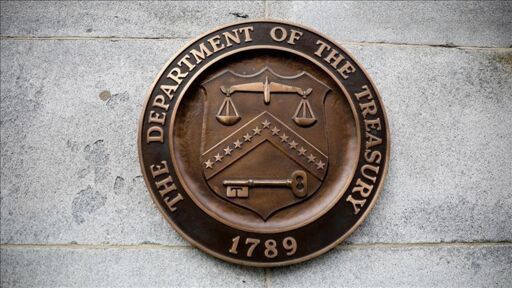
Caracas (OrinocoTribune.com)—On Monday, the US Treasury Department [updated three OFAC licenses](https://ofac.treasury.gov/recent-actions/20260928](https://ofac.treasury.gov/recent-actions/20260928) covering Venezuela’s oil, petrochemical, and electricity sectors on Monday, retaining Washington’s control over transactions while permitting selected activities under the US economic blockade.
General Licenses 46E, 48D, and 49B replace earlier versions. Comparing the documents shows that electricity-related permissions already existed. Methanol has been added to the petrochemical products that are covered by the licenses, but the changes certainly do not constitute a sweeping opening of Venezuela’s energy sector.
Electricity: central to recovery
Electricity issues cut across the activities covered by the licenses: expanding oil and petrochemical production requires reliable power, while repairing the grid requires equipment, financing, and technical services.
Chevron’s plans illustrate the scale of that challenge. On September 2, the company announced that its Venezuelan joint ventures plan to invest more than US $7 billion over five years, aiming to more than oil double production to approximately 600,000 barrels a day.
Venezuelan analysts point to the damage inflicted by US sanctions, compounded by domestic mismanagement and inadequate maintenance. They identify further pressures from the June 24 earthquakes and increased demand accompanying economic recovery. The approaching dry season and El Niño add risks for a country heavily dependent on hydroelectricity. The US National Weather Service September outlook confirms that El Niño is strengthening, although its local effects are not guaranteed.
Analysts in Venezuela warn that restarting mature oil fields around Lake Maracaibo without substantial electricity improvements could overwhelm the already strained network. Their warning highlights the need to coordinate production plans with power supplies rather than assume that additional oil investment alone will resolve the problem.
Some propose solar energy as a potentially faster way to supply some operations and reduce pressure on the grid. International equipment shortages strengthen that argument: the International Energy Agency reports waits of two to three years for cables and up to four years for large transformers.
What the licenses permit—and restrict
License 46E permits qualifying US companies to trade, transport, and refine Venezuelan oil, including sales to destinations outside the United States. Petrochemical products covered by the license are authorized for US importation. Commercially reasonable exchanges involving crude, diluents, or refined products are also permitted.
License 48D allows equipment, technology, and services from the United States or US persons for oil, gas, and petrochemical operations, as well as electricity generation, transmission, storage, and distribution. It includes maintenance and repairs but excludes forming new joint ventures. Its exclusion of diluent exports is not a blanket prohibition: the separate License 47B authorizes supplies of US-origin diluents.
License 49B permits negotiations, preliminary assessments, and conditional agreements for new investments, including electricity projects and proposed joint ventures. Carrying out those investment contracts requires separate OFAC authorization; preparatory work is already permitted.
Washington’s financial control mechanisms remain. Under 46E and 48D, monetary payments to sanctioned recipients must generally enter US Treasury-designated accounts, with exceptions for local taxes, permits, and fees. Contracts with Venezuela or PDVSA must place dispute proceedings in the United States, United Kingdom, France, or Singapore. Both licenses prohibit debt swaps, gold payments, and Venezuelan state-issued digital currencies.
The licenses also retain restrictions targeting dealings linked to Russia, Iran, Cuba, North Korea, and China, with different wording and scope. Under 46E, the China restriction specifically concerns certain Chinese-linked entities in Venezuela or the United States.
Orinoco Tribune Weekly Digest #353 — September 21–September 27, 2026
The documents leave Washington’s sanctions framework in place. Venezuela’s electricity recovery and productive expansion therefore remain subject to US-imposed conditions on the transactions these licenses cover.
Special for Orinoco Tribune by staff
OT/JRE/SL
From Orinoco Tribune via This RSS Feed.