

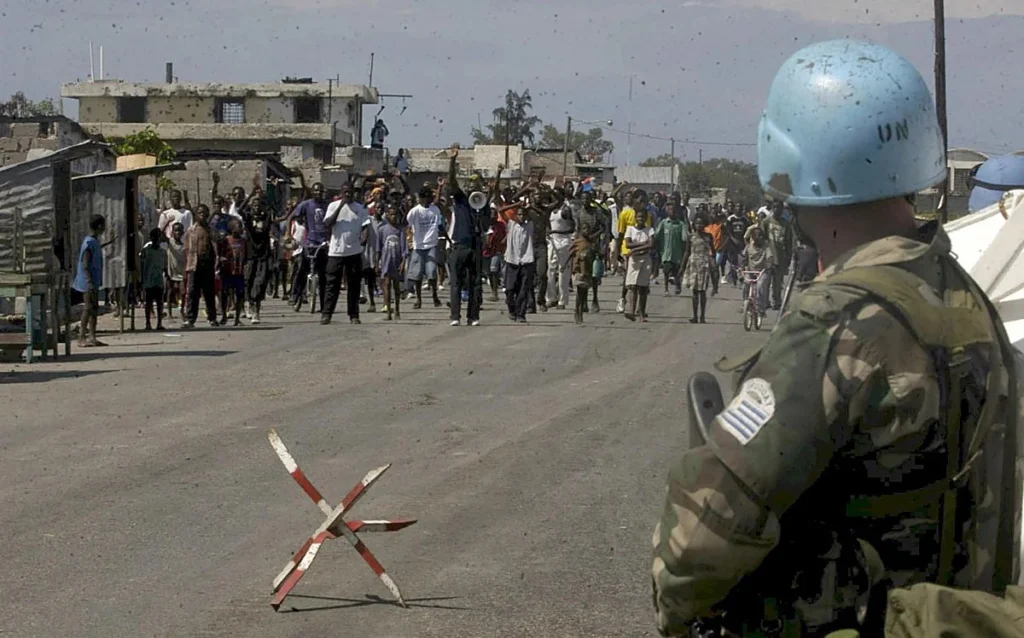
The United Nations Security Council has renewed the mandate of the Gang Suppression Force (GSF) in Haiti for an additional six months, until March 31, 2027.
The U.N. Security Council voted Tuesday to renew for six months the mandate of the Gang Suppression Force (GSF) in Haiti, extending its authorization through March 31, 2027, even as the mission continues to face significant challenges completing its deployment and confronting the expansion of armed gangs across the country.
The resolution, sponsored by United States and Panama, was approved with 12 votes in favor, no votes against, and three abstentions.
RELATED: Haiti Announces October 5 Campaign Kickoff for December 13 Elections
The text extends the authorization of the Gang Suppression Force (GSF), which was created a year ago to replace the Multinational Support Mission for Security (MSS). The force continues to receive logistical and operational support from the United Nations through the United Nations Support Office in Haiti (UNSOH).
The Gang Suppression Force (GSF), initially authorized in September 2025 for a 12-month period, operates in coordination with the Haitian National Police and benefits from UN logistical support, although it is not a UN peacekeeping mission. In July, GSF Special Representative Jack Christofides informed the Security Council that the force had established a command structure and its first operational base, in addition to carrying out operations in the communes of Tabarre and Delmas, where suspects were detained, weapons were seized, and hundreds of Molotov cocktails were destroyed.
#Breaking: Security Council ADOPTS resolution extending the mandate of the Gang Suppression Force (GSF) in Haiti for another six months, until 31 March 2027.
VOTE RESULT:
In favor: 12
Against: 0
Abstain: 3 pic.twitter.com/yk2jTQTyKK— UN News (@UN_News_Centre) September 29, 2026
Christofides said at the time that the mission remained in an early phase and called for greater international support to increase pressure on the gangs. That same month, UN Special Representative for Haiti Carlos Ruiz Massieu highlighted before the Security Council some progress made in preparations for elections, including the review of the electoral decree, consensus on its budget, and the start of voter registration. However, he warned that insecurity remains the primary obstacle to stability, arguing that electoral preparations and improvements in security conditions must advance in parallel.
Operational Challenges
The mandate renewal comes amid the continued expansion of armed gangs and ongoing operational difficulties in fully deploying the multinational force across Haitian territory. In this sense, the Security Council stressed the need to strengthen international support so the force can complete its deployment and contribute meaningfully to the country’s stabilization.
Haiti has struggled for years with escalating gang violence that has displaced hundreds of thousands of people and repeatedly disrupted efforts to hold elections and restore functioning state institutions. The country has not held a presidential election in years, and gangs are estimated to control significant portions of the capital, Port-au-Prince, complicating both security operations and the broader path toward political normalization.
The @UN Security Council has voted to renew the Gang Suppression Force and UN Support Office in Haiti.
Working in partnership with the Haitian authorities, the GSF is helping to secure long-term stability for the Haitian people. pic.twitter.com/3yhzgqJIG0
— UK at the UN 🇬🇧🇺🇳 (@UKUN_NewYork) September 29, 2026
The international community has expressed concern over the situation in Haiti and has called for increased support for the GSF. The UN and its partners have provided logistical and operational assistance, but more resources are needed to address the growing threat posed by armed gangs.
The renewed mandate reflects the international community’s continued, if cautious, commitment to supporting Haiti’s security transition, even as officials acknowledge that the force remains far from fully operational nearly a year after its creation.
From teleSUR English via This RSS Feed.