

Amelia Schafer
ICT
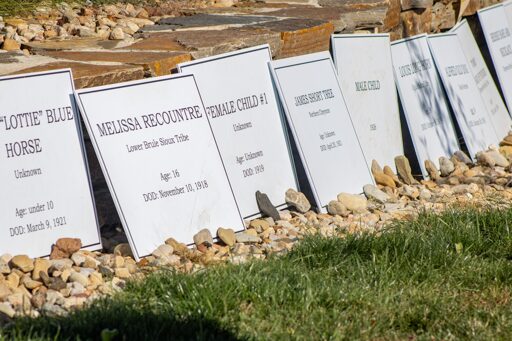
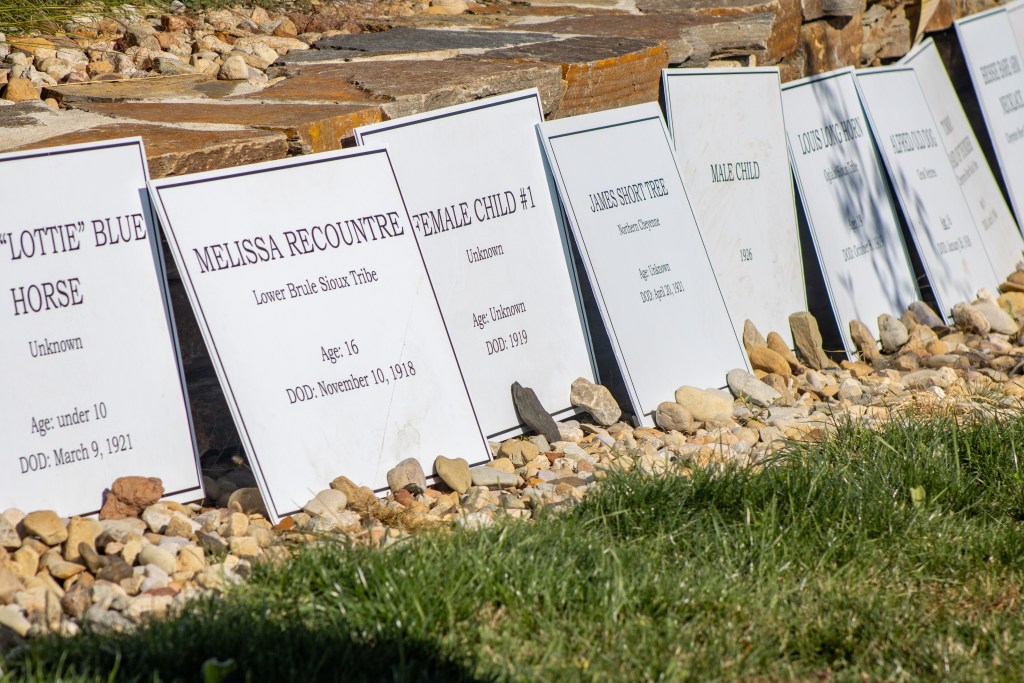
MILWAUKEE, Wisc. – Communities across the United States and Canada are planning for the National Day for Truth and Reconciliation to honor children of the Indian boarding school era.
Sept. 30, also known as Orange Shirt Day in honor of First Nations survivor Phyllis Webstad, spotlights Canadian and U.S. federal policies active from the 1860s through the 1970s which forcibly removed thousands of Indigenous children from their homes and communities and placed them in schools meant to assimilate them into Western culture.
As part of these policies, the military-inspired schools were established in cities around the continent – often contracted with religious institutions. As of January 2025, the National Native American Boarding School Healing Coalition has identified a total of 526 Indian boarding schools in the United States. The Department of Interior’s report in 2024 identified 417 of these schools that received federal funding or support from 1819 to 1969.
By 1926, an estimated 84 percent of all U.S. American Indian, Alaska Native and Hawaiian Native children attended these schools, according to the coalition.
“That’s a large majority of our population, that is a huge break between moms and dads,” said Mark Denning, a Milwaukee-based cultural educator and organizer who is Oneida, Menominee and Stockbridge-Munsee. “A lot of those families’ children didn’t return.”
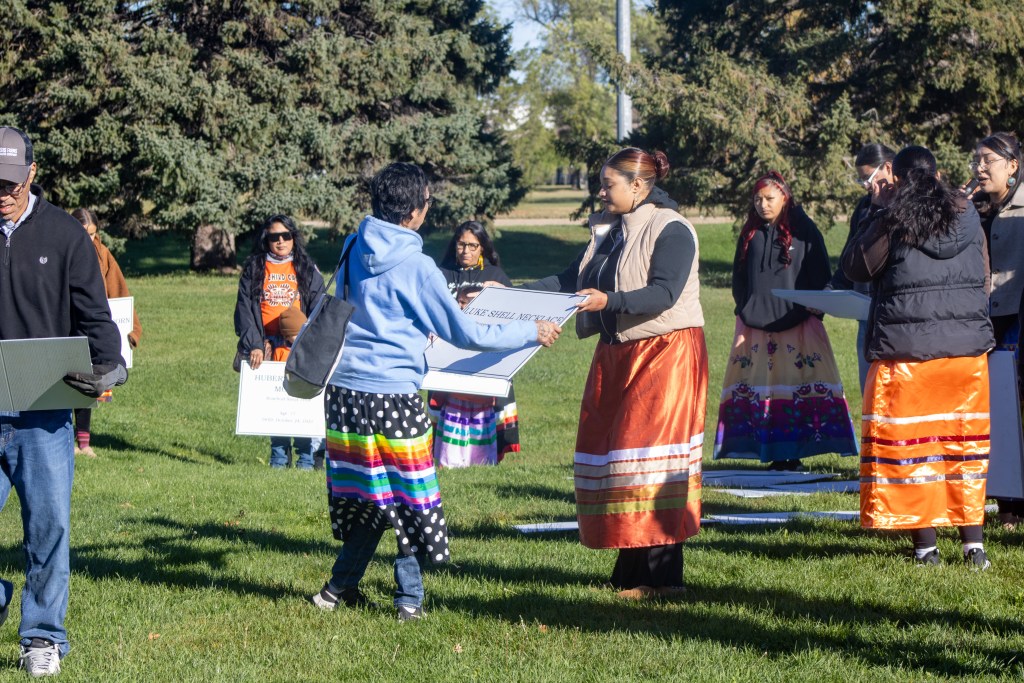
A volunteer for the 2025 Rapid City boarding school memorial walk takes a sign depicting the name of a student who died at the city’s federal boarding school. Credit: Amelia Schafer / ICT
This week, communities across the United States and Canada will hold vigils, remembrance walks, powwows and feasts in honor of children subjected to the boarding school era.
Denning leads the annual Every Child Matters walk in Milwaukee. The walk begins at the cemetery where 11 Turtle Mountain girls died while attending the Good Shepherd Industrial School three miles northwest of downtown Milwaukee.
“We’re going to speak the names of the girls that haven’t been spoken for over 100 years because they’ve been forgotten,” Denning said. “They were sent here against their will. The government paid for that ticket, but nobody paid to send them home. Somebody has to remember them, and we’re going to do it.”
At least a dozen graves of Milwaukee Indian boarding school students uncovered
Denning said he felt compelled to dig into the school’s history after first learning about it in 2022.
“Through the action of using our bodies, of walking, of running and participating in the host of events we have on the day, [we can work to heal],” Denning said.
Denning was inspired to bring the Every Child Matters movement to Milwaukee after speaking with Métis and Anishinaabe elder Murray Sinclair, the head of Canada’s Truth and Reconciliation Commission. Denning and Sinclair attended the ceremony together through the Midewiwin medicine society across the Great Lakes region.
Sinclair led Canada’s efforts to uncover the truth of its boarding school era and carve pathways forward to healing and change through the nation’s official taskforce beginning in 2009. The project released its final report in December 2015, followed by a groundbreaking list of 94 calls to action which outlined necessary steps towards reconciliation. Sinclair died in November of 2024.
“It’s thanks to him and in his memory and his work and the work of so many thousands of other people that this moment has come to Milwaukee,” Denning said.
The Milwaukee boarding school memorial walk is scheduled for Oct. 3, beginning with a sunrise ceremony.
“There’s so many different stories about the boarding school experience, and now is the time to begin to speak about the generational impact,” Denning said. “[What it means] to descend from the parents, grandparents, and great-grandparents of people who were sent to these schools.”
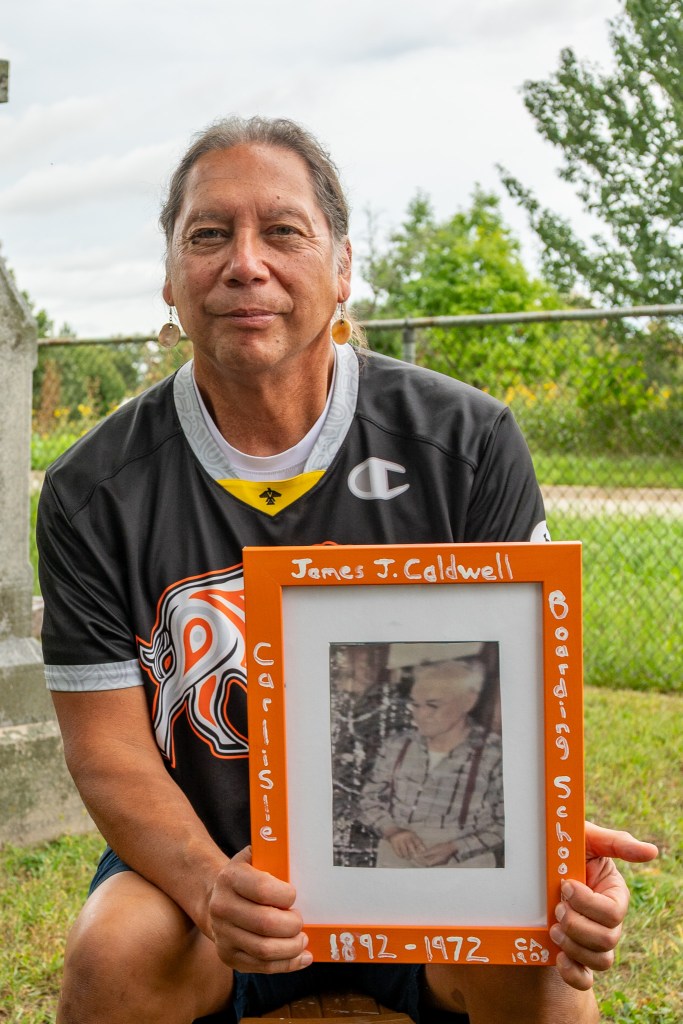
Mark Dennings poses with a framed photo of his grandfather, James Caldwell, who attended the Carlisle Boarding School. Credit: Amelia Schafer / ICT
As an adult, Denning found out that his grandfather, James Caldwell, and great-aunt Claudia Caldwell, both of the Menominee Nation, attended the infamous Carlisle Indian Boarding School in Pennsylvania. Claudia died there.
“I can’t imagine what it was like to be him, but I know what it’s like to be his grandson,” Denning said. “He kept it from us thinking that we would be safe from what life would do to us as Native people. But life continued to happen. The difficulties, the poverty, the health issues, the inability of the world to see us wholly and completely, that world remained long after his passing.”
The Milwaukee walk and collective work to understand the continued generational harms of the boarding school era is all part of a larger effort toward community healing.
“In order to heal as a community, heal as a person, heal as a parent, you have to understand the implications it’s caused,” said Averie Anderson, Oneida and Menominee. “It’s an excellent starting point and it will kind of make everything make sense right and that’s where you’re able to start to move forward.”
Anderson is an organizer with the Milwaukee-based Urban Indigenous League, a grassroots community advocacy group. Urban Indigenous League partners with Denning and other organizers for the annual Every Child Matters walk.
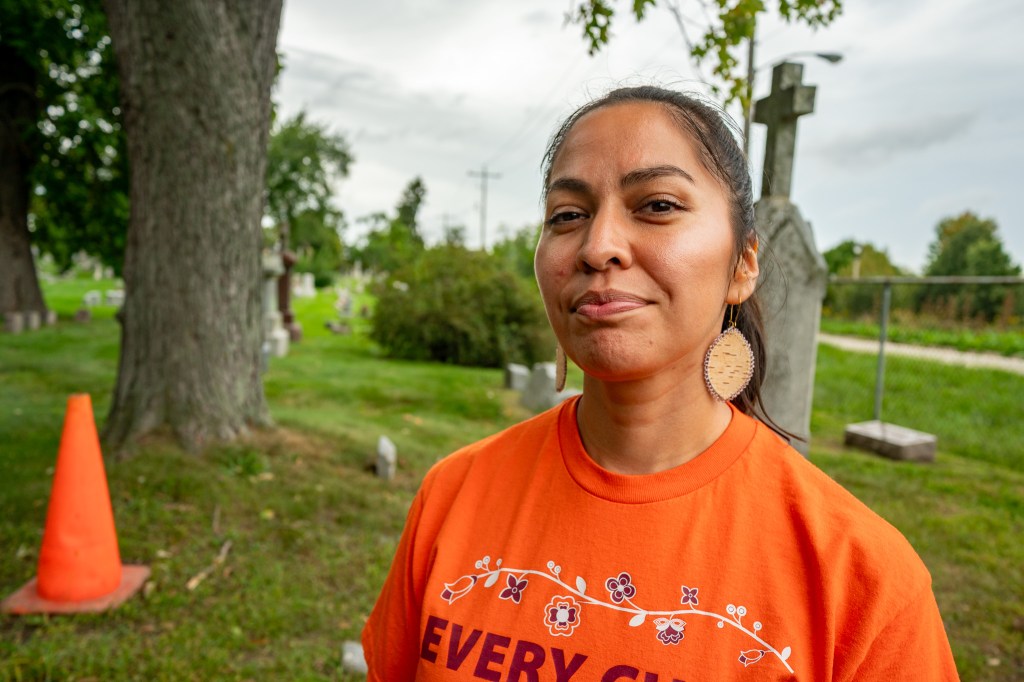
Averie Anderson poses for a photo in the Calvary Cemetery in Milwaukee where at least 11 girls from the Turtle Mountain Chippewa Tribe are buried. The girls died while attending the Good Shepherd Industrial Boarding School. Credit: Amelia Schafer / ICT
The boarding school era created deep lasting trauma among Indigenous people. By separating Indigenous children from their parents and traditional family structures, it led to cycles of abuse, emotional detachments from families and a deep disconnect.
Survivors of the Indian Boarding School era often grew up without positive parental role models and were removed from traditional indigenous family structures, leaving them with limited parenting skills to pass on to their own children, according to the National Native American Boarding School Healing Coalition.
Understanding this has been a key aspect of Anderson’s healing journey, she said.
“Our parents didn’t always have an understanding of what it looks like to heal and how you can best allow yourself to deal with that trauma,” Anderson said. “And that’s where the education comes in because if you understand (that) your parents and their parents went through these things, and then they went on to raise (children).”
Children at Indian boarding schools were forbidden from speaking their Indigenous languages or practicing their culture, greatly diminishing language fluency rates and impacting cultural knowledge.
Denning said his grandfather rarely spoke Menominee when he returned from Carlisle, despite being fluent in the language. He didn’t share about his sister or what he’d experienced while in Pennsylvania. But the pain and long-lasting effects of what he’d experienced are far reaching.
As an adult, Denning said he found himself falling into the same pattern of not talking about his pain – or even outright denying it. On one occasion he said he lied on a mental wellness assessment he’d taken.
“Guys didn’t talk about what was happening to them on the daily or the pressures that were coming to them from around family-wise, surrounded by poverty and other folks,” Denning said. “So you can manipulate the test, and so that’s what I did. And what I didn’t know in doing it is that I was doing the same thing my grandfather did. I was keeping a part of our family history that could help our family’s future.”
Denning said his oldest son Taylor was attending law school Arizona, miles from home, and ended up failing his bar exam. Taylor didn’t want to burden his parents, Denning said, so he didn’t tell them what was happening or how he was struggling. Taylor died by suicide, Denning said. Just over a month later, Taylor’s sister Isabela, Denning’s second oldest child, also died by suicide.
“And that sadness that pervaded all of us and all of our family eventually claimed our third son, Sawyer,” Denning said. “So I wonder, had I been honest about my own mental health challenges then? And knowing what we know now, the heredity that can pass trauma from one generation to another? Because I’ve been through my own story as a young person, but in not speaking about it, did I keep them from getting help that they could have gotten before?”
The walk is much more than just a walk, Denning said. It’s an opportunity to be surrounded by community and know you’re not alone. The optional 14 mile walk, which starts at the cemetery and ends at the site of the local Indian Community School, is called “Isabela’s Run” named after Denning’s daughter.
“I sit here and think of how I fell short of something that could have helped,” Denning said. “And that something is a story that started long before my birth. It started with boarding schools. … It was then that we were introduced to the poverty of the spirits, of the body, of the mind. And all of those things have and [continue to] take tolls.”
The Milwaukee walk on Oct. 3 will conclude with a celebration of Indigenous culture and resilience at the Indian Community School in Franklin, Denning said. The event will feature traditional lacrosse games, traditional cooking lessons and spoken word poetry.
The post ‘Somebody has to remember them, and we’re going to do it’ appeared first on ICT.
From ICT via This RSS Feed.