

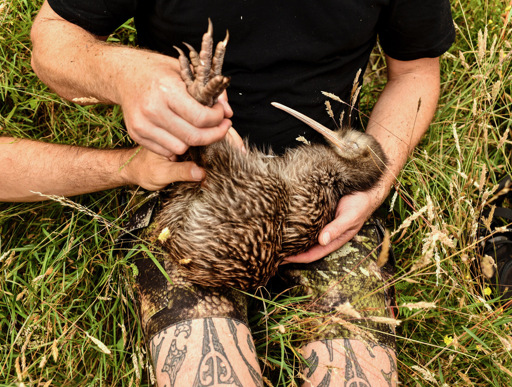
For the first time in 150 years, kiwi once again live in the hills surrounding Wellington, Aotearoa New Zealand. More than 250 manu (“birds” in the Māori language) were successfully translocated back to the region, thanks to the efforts of the iwi (nations of Aotearoa), community members, and landowners behind the Capital Kiwi Project. Paul Ward, the project lead and founder, joins the Mongabay Newscast this week to explain the yearslong effort to make this possible. A large part of it was removing stoats, which prey on kiwi before the chicks reach “fighting weight” (1 kilogram, or 2.2 pounds), which is when they can defend themselves. The project did this by deploying more than 5,300 traps to remove stoats from the project area, covering about 24,000 hectares (59,300 acres). But removing predation threats to the kiwi was only the start, as it took years of relationship building with iwi, translocating birds, and educating community members on care — many of whom had never seen a kiwi in person before. “The three legs on which this project are based are those relationships with iwi, with Māori, the relationships with the communities, and the relationships with the landowners. And if you pull one of those legs off, the tripod falls over,” Ward says. “This is a relational project as much as it is what you might traditionally call a conservation project. And I think at a fundamental level that if we lose our relationship with these animals, with these manu … they…This article was originally published on Mongabay
From Conservation news via This RSS Feed.