

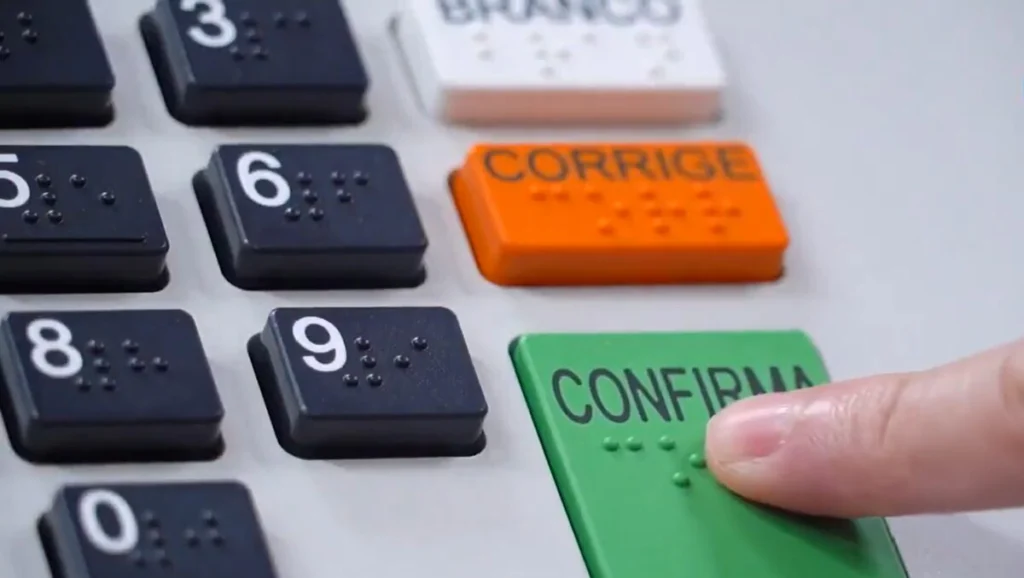
Nearly 160 million citizens are called upon to elect president, regional leaders, senators and legislative representatives.
On Tuesday, Brazil’s Superior Electoral Court (TSE) began distributing voting machines nationwide to ensure the elections scheduled for Oct. 4, in which nearly 160 million citizens are called upon to elect the president, vice president, regional leaders, senators and legislative representatives.
RELATED:
Brazil Police Arrest 28 Bolivians Carrying Cocaine Capsules
Over the weekend, presidential candidates held campaign events to consolidate their government proposals. President Luiz Inacio Lula da Silva reiterated his defense of national sovereignty and the protection of workers’ rights, while far-right candidate Flavio Bolsonaro focused his speech on attacks against the national executive branch.
The race is moving forward with Lula da Silva leading voting intentions at 39 percent following a provisional decree that halts the operation of digital betting houses to safeguard workers’ family assets from gambling and speculative capital, while far-right candidate Bolsonaro stood at 34 percent, according to a poll by the Quaest polling firm.
A total of 918,876 Brazilians residing in 134 countries — a figure representing just over 0.5 percent of the total voter registry and an increase of 358 percent since 2010 — are eligible to vote exclusively for president and vice president in 186 cities abroad, mainly at embassies and consulates.
This electorate abroad is composed mostly of women (57 percent), single people (52 percent), people who have completed higher education (38 percent) and those predominantly between the ages of 40 and 44. They are concentrated mainly in countries such as the United States, Portugal, Japan, Canada and Germany, where political polarization is also manifested among conservative and progressive sectors.
“A vote for Bolsonaro is a vote for a guy who wraps himself up in the American flag before going to bed every night,” President Lula told a crowd of 80,000 in Recife (population 1.6 million) yesterday. My story on his surprise visit, announced 2 days prior, for @telesurenglish pic.twitter.com/y3TbvbTSAe
— BrianMier (@BrianMteleSUR) September 26, 2026
More Than 51,000 Electoral Complaints Reported in Brazil
On Tuesday, Brazil’s Electoral Justice reported receiving 51,395 complaints of irregular campaign advertising since the start of the campaign for the October elections.
The complaints were submitted through Pardal, an electronic application created by the Electoral Justice to receive reports of possible irregularities. The largest number of incidents was reported in the state of Sao Paulo (10,388), followed by Bahia (5,969), Minas Gerais (4,635) and Pernambuco (3,505).
The main category of complaints involves irregular advertising or advertising outside the established rules on public roads, accounting for 43.78 percent of the total received so far.
Next were complaints related to irregular advertising on private property (11.94 percent), including wall paintings that do not comply with electoral rules.
Cases of advertising on public property were also recorded, such as murals on government buildings or institutional advertising.
During the electoral period, this type of dissemination is permitted only in exceptional circumstances and with authorization from the Electoral Justice.
The system also receives complaints related to advertising disseminated through the internet, newspapers, magazines and radio and television stations, as well as graphic materials such as vehicle stickers whose size exceeds established limits.
So far, 27 percent of the complaints received have been converted into cases, referring to complaints that have advanced to formal proceedings within the electoral judicial system.
Pardal is available free of charge for phones running Android and iOS, and users can access the tool after logging into the e-Titulo or Gov.br platform.
The identities of those who file complaints are protected, and they may provide photographs, videos, audio recordings or electronic links related to the possible violation.
When a complaint does not fall within Pardal’s jurisdiction, the user is directed to other institutional mechanisms, including the Electoral Disinformation Alert System or the Electoral Public Prosecutor’s Office of the corresponding state.
teleSUR/ JF
Sources: PL – teleSUR
From teleSUR English via This RSS Feed.