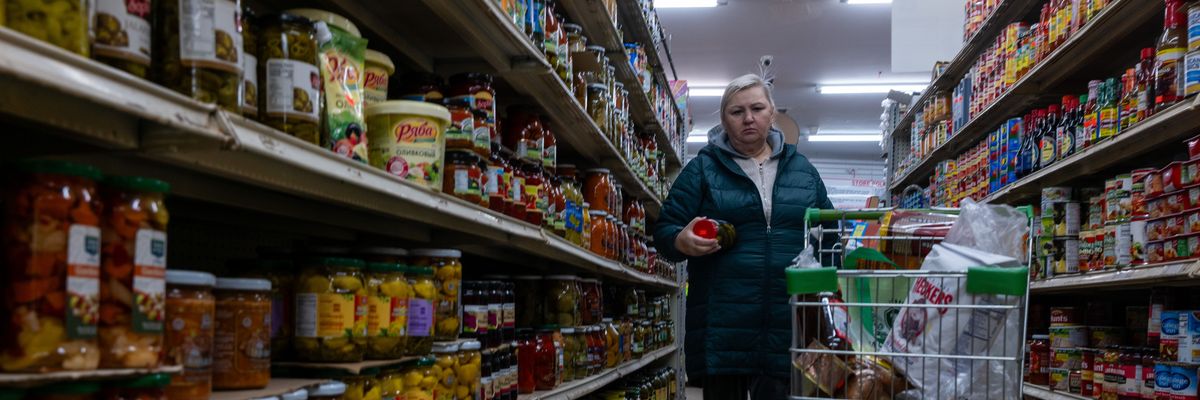
Research published Tuesday shows that more than half of the income gains seen by the typical American worker since 2022 has been swallowed by debt payments, as high and still-rising costs of housing, groceries, utilities, and other essentials force families to turn to credit cards and other sources of borrowing to stay afloat.
The new report released by The Century Foundation and Protect Borrowers estimates that take-home income for a typical US household rose by approximately $109 per month while the average worker’s debt payments rose by $57. In households with a single earner, the groups noted, “52 cents of every dollar a worker gained went to paying down their debt before they could actually spend it on other things.”
In two-income households in which both earners faced the average debt payment increase, “the household’s entire real income gain was lost to debt, and then some.”
Credit cards and auto loans—which often come with extremely high interest rates—account for most of the debt burden carried by typical US households, which have seen their debt payments grow more than eight times as fast as their income over the past four years, according to The Century Foundation and Protect Borrowers.
“The economy is rigged against working families, and this report shows one big reason why,” US Sen. Elizabeth Warren (D-Mass.), the top Democrat on the Senate Banking Committee, said in a statement. "For the typical worker, more than half of every dollar of income growth is going right back out the door in debt payments. Instead of letting lenders rip off families, [President] Donald Trump and congressional Republicans should act today to protect families from getting trapped in cycles of debt, including a cap on credit card interest rates.”
Trump repeatedly vowed during his 2024 presidential campaign to cap credit card interest rates at 10%, but he has since done nothing substantive to fulfill that promise as the nation’s credit card debt crisis continues to spiral amid deteriorating economic conditions, with sluggish hiring and inflation—fueled by the president’s illegal war on Iran—outpacing wage growth.
“Families are going further into the red just to cover basic essentials, all while the Trump administration touts hollow talking points about a booming economy and fails to deliver on promises to lower costs,” said Aissa Canchola Bañez, policy director for Protect Borrowers. “Today’s report shows just how dire the affordability crisis is for working people who are being forced to surrender their hard-earned income gains to paying off debt and padding the pockets of credit card executives and debt collectors.”
“Growing household debt is burying America’s workers,” she added, “and policymakers must take action to get them real relief.”
The new research warns that, in the absence of ambitious policy action, the debt emergency facing working-class US households “is about to get worse,” with many student-loan borrowers about to be forced into expensive repayment plans due to the Trump administration’s assault on Biden-era relief efforts.
“Cancelling student and medical debt, capping interest rates, and restraining employer debt traps are all examples of solutions available to provide help to struggling households,” the new report states. “We should also address the ways workers end up in debt in the first place through stagnant wages, eroded bargaining power, and lack of public provisioning. Together these interventions represent a coherent alternative to the status quo so that economic growth is measured by what workers actually keep and not just by what employers pay.”
From Common Dreams via This RSS Feed.
The system is working as intended