

According to US think tank, the Peterson Institute for International Economics, Donald Trump’s next resource grab targets Brazil’s critical minerals.
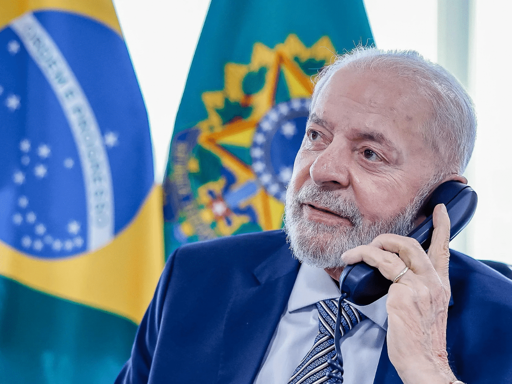
Brazil’s President Lula made a post-colonial leader’s grave mistake: he tried to assert national sovereignty, making him a target of the US’ wrath. Hence, Trump has backed Flavio Bolsonaro against Lula in the upcoming elections.
Brazil under incumbent Lula signed a new critical minerals law on 16 September, only two weeks after USA Rare Earth completed its $2.8 billion takeover of Brazil’s only large rare earth mine. Its aim? To boost domestic processing, though its success depends on regulations and funding still to come.
USA Rare Earth, partly owned by the US government, has acquired Serra Verde, an important producer of critical minerals in Brazil. Lula tried unsuccessfully to block the deal, but it may still be abrogated & may only last while Trump is in power. https://t.co/K9MGx1rsxD
— Peterson Institute (@PIIE) September 17, 2026
Lula’s objection to USA Rare Earth’s acquisition of Serra Verde led to fast-tracked new rules for critical minerals projects.
As the Peterson Institute notes:
If Lula wins re-election in October — the race is very close — he may seek to negate the deal by relying on the new law.
The institute adds that the deal could be revisited once those rules take effect, consistent with Lula’s campaign emphasis on protecting Brazilian economic sovereignty.
Brazil’s Flavio Bolsonaro is Trump’s pick
Bolsonaro, the 45-year-old senator and son of imprisoned former president Jair Bolsonaro, is running against Lula in Brazil’s election on 4 October, with a runoff on 25 October if needed.
Bolsonaro has touted his ties to Trump, including a private White House meeting earlier this year.
Andrew Fishman, president and co-founder of Intercept Brasil, told Al Jazeera:
Flavio Bolsonaro has made it clear that if he wins this election, he will hand over to Trump basically whatever they want, particularly rare earths and lithium…[and] reducing ties with China.
And this is something that’s been so explicit and scandalous, but much of the mainstream media in Brazil shares much of the ideology with the US and the US mainstream media. And so what Flavio is proposing tends to align more with what the owners of the mainstream media believe.
Lula, in turn, used his UN General Assembly speech earlier this month to warn against foreign interference in Brazil’s election. He stated “Brazil is nobody’s backyard” and that the country does not need “aircraft carriers patrolling our waters”. These remarks are widely read as aimed at both Trump and Bolsonaro.
Brazil and critical minerals
Brazil is the world’s dominant exporter of niobium and holds roughly 95% of global reserves, making it a key supplier of an industrial input central to EVs, batteries, wind turbines, high-performance magnets, electronics, data centre and defence systems.
Lula has been explicit in wanting to use the critical mineral reserves for Brazil’s own economic sovereign development, as Drop Site reported earlier this year.
Brazil’s President Lula said today:
“Critical minerals are a new opportunity for our countries to grow. Anyone who wants to explore them should come, invest here, produce here, and generate development here. We are no longer colonized countries. We will not give up our… pic.twitter.com/sJv0Jub905
— Drop Site (@DropSiteNews) March 23, 2026
In a webinar, Peterson Institute fellow, Cullen Hendrix, said Brazil sits at a key intersection — it has rare earths, graphite, a major mining industry, a strong industrial base, and abundant renewable energy for low-carbon processing. Combined, this makes Brazil central to the US’ efforts to build ex-China supply chains.
Hendrix is not shy about saying that US critical minerals policy is “defence policy full stop” or about describing the weapons used in the Persian Gulf (i.e Trump’s war on Iran) as “bundles of critical minerals” in “very kinetic form”.
Conclusion
A return to power for the pro-Trump far right would have a huge impact because Brazil is Latin America’s biggest country and economy.
A Flavio win would add Brazil to a regional map already tilting Trump’s way, with right-wing or Trump-aligned governments in Argentina, Chile, Peru, Bolivia, Honduras and elsewhere.
This would hand Washington a major prize for its “Donroe Doctrine”, the Trump-era push to restore US primacy (i.e neo-colonialism) in the Western Hemisphere.
Featured image via Ricardo Stuckert/PR
By The Canary
From Canary via This RSS Feed.