

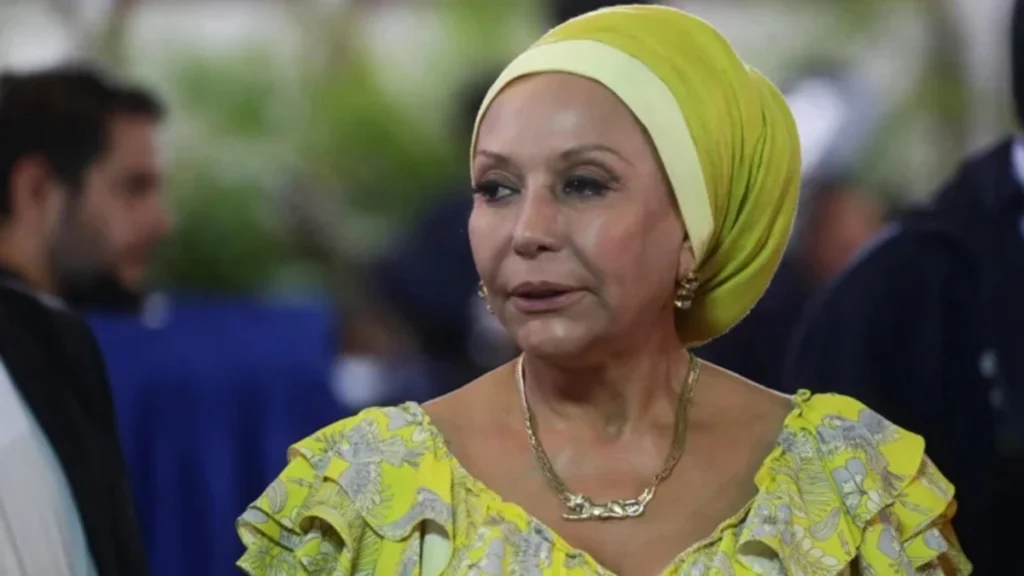
Jose Narvaez was convicted as the mastermind behind the 1999 kidnapping of the former senator and human rights advocate.
This week, the Criminal Chamber of the Medellin Superior Court upheld the 28-year prison sentence against former Administrative Department of Security (DAS) director Jose Miguel Narvaez Martinez for his responsibility as the mastermind behind the 1999 kidnapping of then-Senator Piedad Cordoba (1955-2024), a recognized human rights defender in Colombia.
RELATED:
Colombia Extradites FARC Dissident Negotiator To The U.S.
The ruling upholds the sentence issued in October 2025 by the Third Specialized Criminal Circuit Court of Medellin, after dismissing the appeals filed by the defendant’s defense.
The court upheld the additional sanctions, which include a fine of 3,500 minimum wages, a 20-year ban on exercising public rights and functions, and the declaration of the acts as a crime against humanity.
The events date back to May 21, 1999, when an armed commando intercepted and detained the leftist politician in the El Poblado neighborhood of Medellin, holding her captive until June 4 of that year.
During its review of the appeal, the court examined the challenges raised regarding the assessment of evidence, the existence of telephone recordings and the possible statute of limitations for the criminal action.
The judges concluded that the action had not expired under the statute of limitations after deducting 1,135 days corresponding to Narvaez’s proceedings before the Special Jurisdiction for Peace (JEP) between Aug. 20, 2019, and Sept. 28, 2022, as well as the periods covered by two challenges that were declared unfounded.
Nuestras más sentidas condolencias a los familiares y amigos de la Senadora Piedad Córdoba, quien durante muchos años trabajó por la Paz en #Colombia y fue una gran amiga de #Cuba. pic.twitter.com/GSj64b2j6B
— Miguel Díaz-Canel Bermúdez (@DiazCanelB) January 20, 2024
Cuban President Miguel Diaz-Canel’s text reads, “Our deepest condolences to the family and friends of Senator Piedad Cordoba, who worked for peace in Colombia for many years and was a great friend of Cuba.”
The evidence evaluated jointly established Narvaez Martinez’s links to former paramilitary leader Carlos Castaño and his role within an illegal structure. Testimonies from former leaders of the far-right organization known as the United Self-Defense Forces of Colombia (AUC) identified Narvaez Martines as an ideological instructor and operational guide for the criminal organization and highlighted his direct influence in ordering the kidnapping of the congresswoman.
“With this decision, another step is taken in the fight against impunity for these officials who, cloaked in power, commit these human rights violations,” said Eduardo Carreño Wilches, co-founder of the Jose Alvear Restrepo Lawyers’ Collective (CAJAR).
“The court found that Narvaez’s intellectual authorship as the mastermind behind the kidnapping is fully proven through orders or messages from members of the public security forces, as established by testimony from paramilitaries, his coordination relationship with Carlos Castaño, and his role as an ideologue and teacher at the paramilitaries’ training school, and that, in this capacity, he concretely influenced the commission of this crime,” he added.
The former official has accumulated other convictions and legal proceedings for serious human rights violations, including a conviction for the murder of journalist and activist Jaime Garzon, as well as his involvement in the investigation into the assassination of Sen. Manuel Cepeda.
Piedad Cordoba served as a senator for many years. The social leader and continental figure in the struggle for peace, human rights and social justice was also a humanitarian mediator, advocate for Afro-descendant peoples, an uncomfortable voice for oligarchic elites and a steadfast advocate of political dialogue as an alternative to war.
One of the most consequential chapters of her career was her role as a humanitarian mediator in the Colombian armed conflict. For Cordoba, peace was not merely the silencing of weapons, but the structural transformation of the social causes of the conflict.
teleSUR/ JF
Source: CAJAR
From teleSUR English via This RSS Feed.