

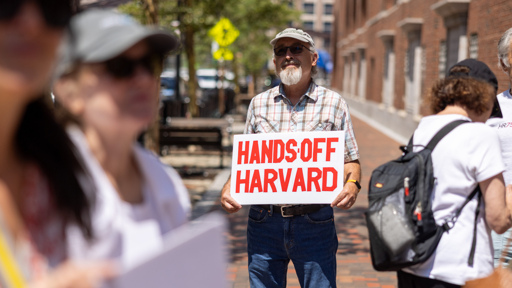
After returning to office last January, President Donald Trump made it clear to America’s universities that federal money comes with strings attached. Since then, the administration has frozen or withdrawn billions of dollars in federal funding from top schools and launched investigations into them, using its leverage to influence admissions, hiring, and DEI policies. The consequences have been stark: According to the Academic Freedom Index, institutional autonomy in the United States dropped sharply last year, placing it on a steeper descent than those seen in Hungary, Turkey, and India.
A new study argues that this attack didn’t come out of nowhere. In the paper recently published in the journal Energy Research & Social Science, researchers show how corporate interests, including oil companies, have sought to influence universities for at least half a century, using big donations to shape research agendas. That weakened schools’ defenses against outside influences, the authors say, paving the way for Trump’s attack.
“Private donors had been practicing a smaller version of the same playbook for years by offering funding in exchange for a say over how university programs are run,” said Noel Healy, the lead author of the paper and a professor of geography and sustainability at Salem State University, in an email.
This pattern, called “corporate capture,” gives donors sway over who gets hired, what researchers study, and what’s taught in classes. Some experts trace the current strategy to a 1971 memo written by Lewis F. Powell Jr. a year before he became a Supreme Court justice. Powell told the U.S. Chamber of Commerce that it should defend free enterprise by funding scholars to evaluate textbooks and urging boards of trustees to correct the “imbalance” caused by too many liberal faculty members.
The conservative Olin, Scaife, Koch, and Bradley foundations helped drive the corporate capture of higher education, the study says. These foundations, formed by tycoons who made their fortunes in fields such as chemical manufacturing and fossil fuels, also spent decades funding The Heritage Foundation, the conservative think tank behind Project 2025. That far-right playbook for the Trump administration lays out strategies to bring universities into closer ideological alignment with conservative priorities.
“I mean, you go back and read the Powell memo, you already had the agenda of the Trump administration,” said Robert Brulle, an environmental sociologist at Brown University.
A handful of schools have caved to some of the Trump administration’s demands, including Columbia, Brown, and Northwestern. The administration has targeted climate initiatives in particular, revoking $4 million in grants to Princeton partly because it said the research was fueling “climate anxiety.”
Many of the funders influencing universities are linked to the fossil fuel industry. One analysis found that Exxon Mobil, BP, Chevron, Shell Oil, ConocoPhillips, and Koch Industries donated at least $700 million to 27 U.S. universities from 2010 to 2020. BP funded Princeton University’s Carbon Mitigation Initiative for a quarter century before letting its contract expire in 2025. An email uncovered in a congressional investigation showed a BP executive in 2020 celebrating how its relationship with Princeton was “becoming increasingly synergistic (as of course we had planned!)”.
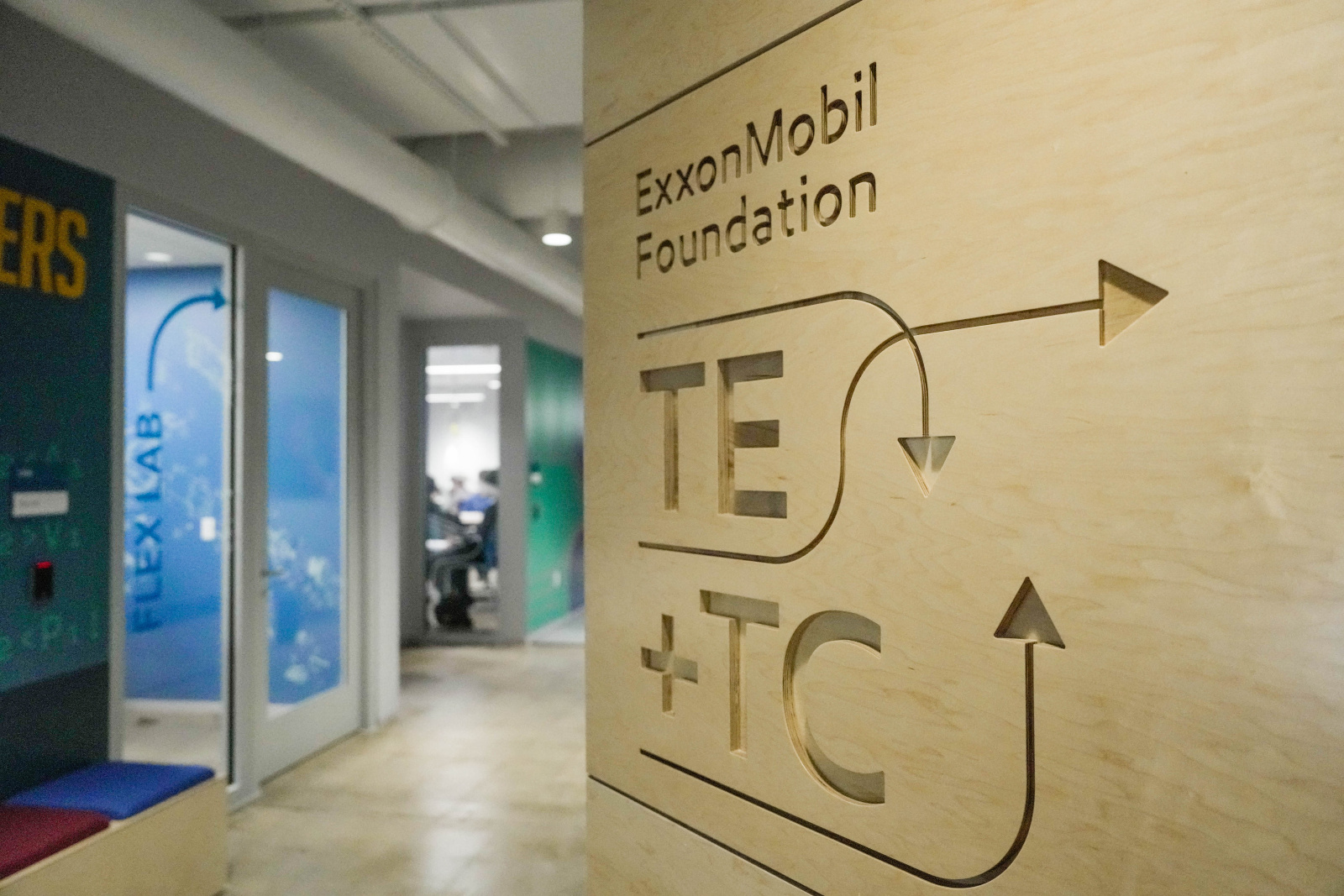
A free after-school STEM program for students in Houston is hosted at the ExxonMobil Foundation Teen Engineering and Tech Center in January 2026.
Raquel Natalicchio / Houston Chronicle via Getty Images
These kinds of relationships can sway the direction of research and even go on to shape policy discussions: A study in 2022 found that reports published by MIT, Harvard, and Stanford while they received funding from oil companies were biased in favor of natural gas compared to independent research. A 2011 report from MIT, funded by fossil fuel interests, popularized the framing of natural gas as a “bridge fuel” to a cleaner future, a phrase repeated by former President Barack Obama. Meanwhile, a famous 2004 paper from Princeton, which was significantly shaped by BP, vaulted carbon capture into international climate policy discussions — but it remains unproven at scale today.
“Corporate capture isn’t necessarily blatant propaganda; it’s a slow drift toward market-friendly climate solutions and away from anything that threatens the industry,” Healy said. It’s not just oil companies that have shaped higher education: pharmaceutical companies, agricultural interests, and other industries have followed a similar strategy — in some cases, for more than a century. Electric utilities ran a wide-ranging propaganda campaign in the 1920s to promote free-market ideals, hiring academics to rewrite textbooks and develop curricula, according to a congressional investigation at the time.
In addition to universities, K-12 education has been a target of oil propaganda for decades. Fossil fuels are such a part of the fabric of life in some states that the industry’s efforts aren’t questioned. The Louisiana Mid-Continent Oil and Gas Association claimed that “the oil and natural gas industry makes the back-to-school transition possible” in a post in 2022, highlighting how backpacks, glue, and crayons are all derived from petroleum.
The withdrawal of federal funding deepens universities’ reliance on these kinds of private donors. “As budgets have gotten tight historically, that’s been one of the reasons why university administrations have been more willing to make some of these deals with funders that bypass normal academic practices,” said Ryan Wishart, a co-author of the paper and a sociology professor at Creighton University.
Many funding arrangements remain hidden from public scrutiny. The authors of the paper call for a dedicated congressional investigation into fossil fuel influence in higher education and for schools to disclose their donor contracts and outside partnerships. Brulle, who wasn’t involved in the paper, warned that these solutions have limits. The University of Texas, he pointed out, is subject to the whims of the Texas state legislature, which has deep ties to the oil industry.
The first step, in Wishart’s view, is for schools to stop falling in line with the Trump administration before it’s asked of them. “I think university leaders need to stop engaging in anticipatory obedience [and] self-censorship,” he said.
This story was originally published by Grist with the headline How elite universities got tangled up in politics and petroleum on Sep 29, 2026.
From Grist via This RSS Feed.