

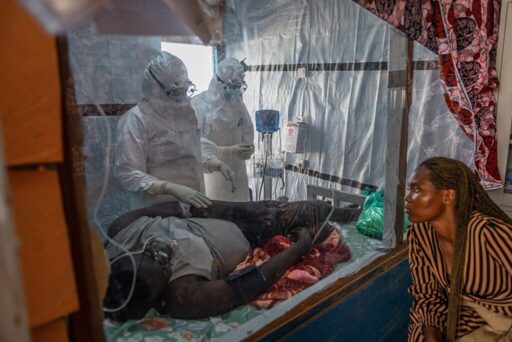
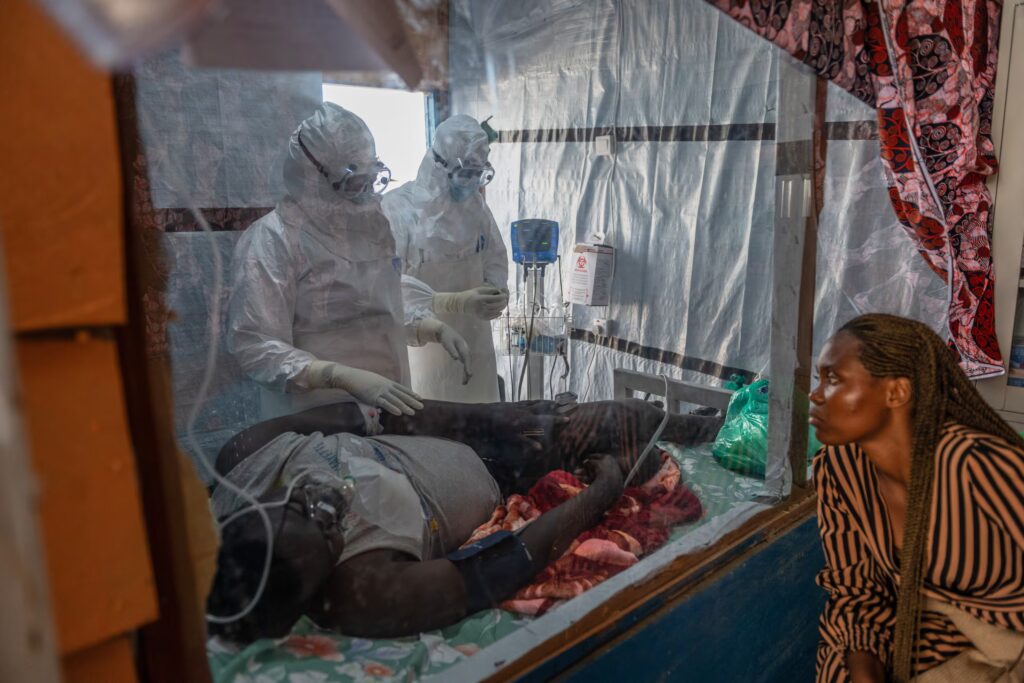
The World Health Organization (W.H.O) warned this Monday that the Ebola outbreak in the Democratic Republic of Congo has entered a critical phase of geographic expansion, significantly raising the risk of international transmission as the virus spreads into new provinces.
Since the publication of the last epidemiological report on September 11, the Bundibugyo strain responsible for this outbreak has spread to two new health zones, covering the Bulu health district in Sud-Ubangi province and the Dungu district in Haut-Uélé, a region bordering South Sudan.
According to the report, as of September 28, cases now span 63 affected health zones distributed across seven of the country’s 26 provinces.
RELATED: DR Congo Ebola Outbreak Surpasses 8,000 Confirmed Cases
W.H.O. said this territorial expansion substantially increases the risk of transmission to neighboring countries.
Despite the already high daily incidence rate nationally, the severity of the outbreak is compounded by the persistent frequency of deaths occurring within communities, a pattern reflecting severe delays in timely detection and access to early medical care.
In an #Ebola response, every element must work together, from diagnostics and patient care to community engagement, leadership and coordination. When every part of the response is aligned, lives are saved, and the outbreak can be brought to an end. pic.twitter.com/2QyzNoI0fv
— World Health Organization (WHO) (@WHO) September 26, 2026
Conflict Fuels Spread
Behind this territorial advance lies a complex humanitarian crisis accelerating the virus’s spread. W.H.O. warned that active armed conflict and forced displacement of populations in eastern DR Congo are breaking down the epidemiological containment perimeter. Infected families are being forced to flee internally, carrying transmission into previously unexposed areas, while health teams face serious security risks in their efforts to monitor more than 26,000 identified contacts.
Compounding this dynamic of violence is the impact of household-level transmission. W.H.O. emphasized that institutional distrust and fear of isolation stem from high community mortality rates, where patients often die without medical assistance and traditional burials conducted without proper medical protocols become significant sources of further infection.
On the clinical front, W.H.O. underscored the particular vulnerability of the current outbreak, noting that, unlike previous outbreaks caused by the Zaire species, no approved vaccines or antiviral treatments currently exist for the Bundibugyo strain. This stands in contrast to previous Zaire-strain epidemics, for which approved biological tools do exist, including the Ervebo vaccine and monoclonal antibody treatments.
This absence of immunological tools leaves health authorities without immediate biological containment options, significantly increasing the population’s vulnerability, accelerating secondary transmission rates, and forcing reliance exclusively on traditional measures such as clinical isolation, strict contact tracing, and safe burial protocols.
Ver esta publicación en Instagram
Una publicación compartida de teleSUR English (@telesurenglish)
Given this scenario, W.H.O. declared the national health risk level “very high,” with a “high” risk designation for neighboring countries. The organization, however, was emphatic in discouraging border closures or restrictions on international trade, arguing that such measures would stifle local economies and push movement toward informal border crossings, making cross-border health monitoring even more difficult.
Instead, global health authorities issued an urgent call to fund field operations, strengthen surveillance at legal points of entry, and focus efforts on community awareness before the virus can establish a broader foothold beyond the country’s borders.
From teleSUR English via This RSS Feed.