

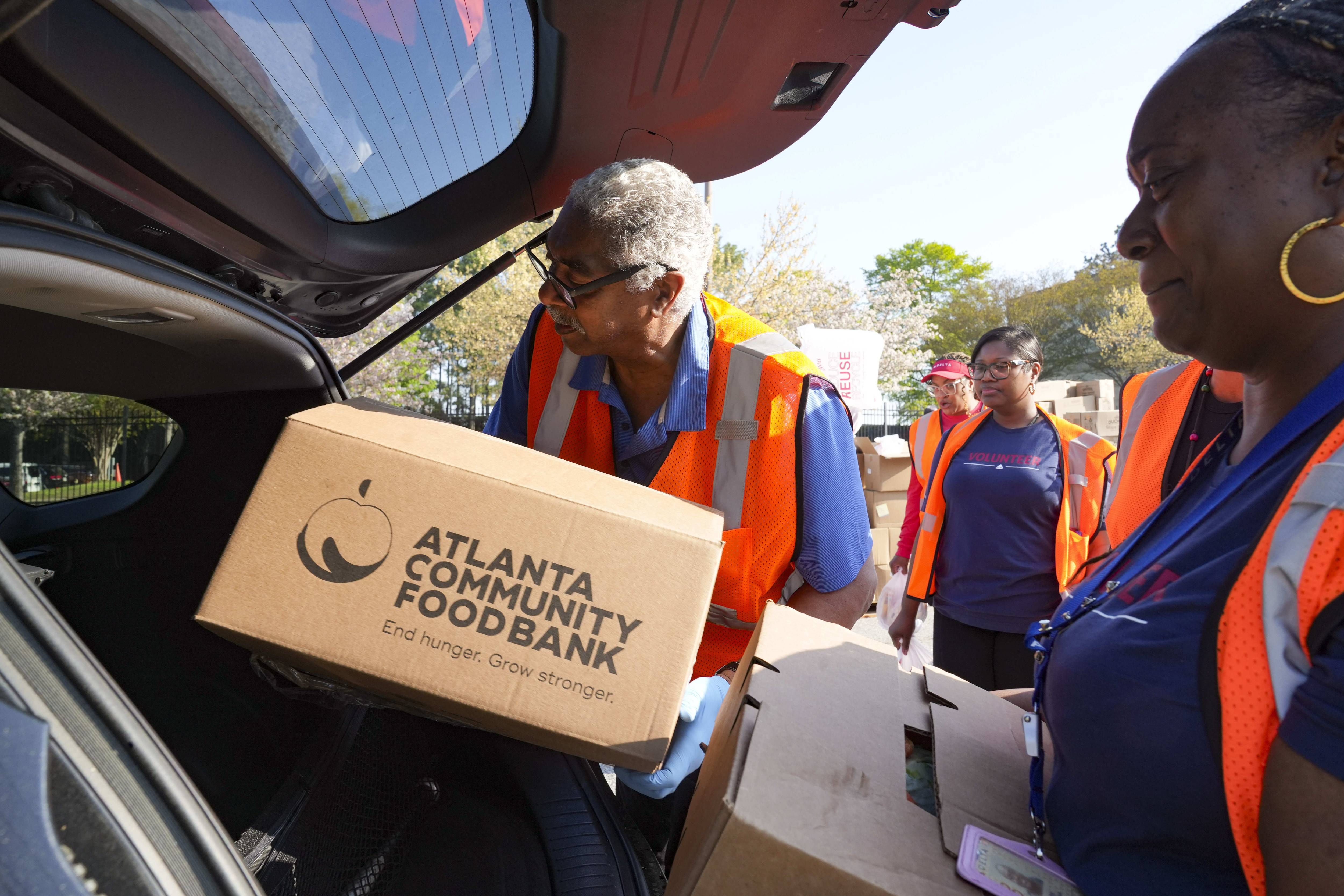
Two of President Donald Trump’s signature policies—the illegal war with Iran and cuts to the Supplemental Nutrition Assistance Program—are putting pressure on food banks throughout the country in the form of higher demand from clients and increased shipping costs.
In a Sunday report from Meidas News, reporter Scott MacFarlane published interviews with several food bank officials who said the increased cost of energy caused by Trump’s Iran War has strained their ability to serve their communities.
From a demand side, more families have been relying on food banks because the increased cost of gasoline has left them with less money to spend at the grocery store.
And from a supply perspective, record-high diesel prices have hurt food banks’ budgets by increasing transportation costs for staple items.
Craig Rice, chief executive officer at the Manna Food Center in Maryland, told MacFarlane that his organization is “seeing so many people come to us, who’ve never come to [the food bank] before.”
“It used to be people who were working hourly-wage jobs,” Rice added. “Now we see people who are salary employees. They may have been stable at one price, but suddenly they’re impacted by gas prices.”
Amy Beros, president of the Food Bank of Central and Eastern North Carolina, similarly told MacFarlane that organizations in her region have seen demand for food services increase by between “20% to 60%” over the last year.
“It’s really hard for people in the United States to understand the scale of hunger,” Beros said, “because it doesn’t look like it looks on TV.”
The strain on food banks isn’t just limited to one state or region.
Greta Faworski, associate director of Kalamazoo Loaves and Fishes, said in an interview published Monday with Michigan advance that she’s seen a 56% increase in people who are reaching out to her organization for help.
Faworski said the recent surge in demand was akin to what she saw last year during a nationwide delay in SNAP benefits in the wake of a federal government shutdown.
“On an average day, we serve about 800 people a day,” explained Faworski. “When there was notification because of the government shutdown that November SNAP benefits would not be released on time, in one week, we saw an increase to where we were serving 1,200 people a day.”
The problem is expected to grow more acute because state governments starting next month will have to pay for a largest share of SNAP administrative costs due to provisions in the 2025 One Big Beautiful Bill Act.
A report published last week by Spectrum News 13 put a spotlight on how surging diesel costs are squeezing food banks in central Florida.
Greg Higgerson, chief development officer for Second Harvest Food Bank, told Spectrum News 13 that his organization’s fuel bill is “somwhere around $15,00 per month,” which he said was “up significantly from this time last year.”
And like food banks elsewhere in the US, Higgerson said, the Second Harvest Food Bank is being forced to pay higher costs as demand for its services is going up.
“It’s going to be harder to make ends meet in the next few months,” Higgerson said. “There’s going to be more people. We know that, we see it already, and it’s going to cost more to help those folks.”
From Common Dreams via This RSS Feed.