

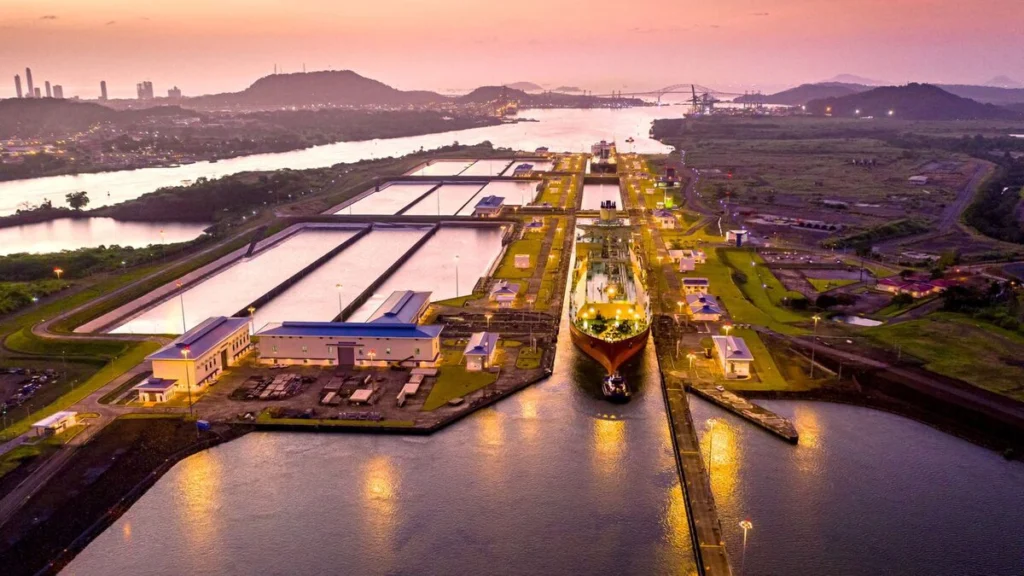
The Panama Canal Authority (ACP) announced that it will increase daily vessel transits from 32 to 33 starting October 15, 2026, following improved rainfall in the watershed and the restoration of the maximum draft to 49 feet.
RELATED:
El Niño Could Reduce Panama Canal Revenues by Up to $400 Million in 2027
The move follows an increase in the operational capacity of the Neopanamax locks, which will rise from nine to 10 daily slots. Meanwhile, the Panamax locks will maintain 23 transits per day—three fewer than their usual average of 26.
According to the ACP, the decision was based on current and projected levels of Gatun Lake, the lock system’s primary water source alongside Alhajuela Lake. The authority also attributed the adjustment to the positive impact of near-average rainfall in the Panama Canal Watershed and the implementation of water-saving measures.
As of this Monday, the Panama Canal restored the maximum authorized draft for Neopanamax vessels to 14.94 meters (49 feet), a condition that will remain in effect until further notice. Draft refers to the submerged portion of a vessel and determines the amount of cargo it can carry.
This limit represents a recovery from restrictions applied in recent weeks. The draft had previously been reduced to 48 feet (14.63 meters) as part of measures taken to address the water deficit associated with the El Niño phenomenon. The waterway’s maximum operational draft is 50 feet (15.24 meters).
🇵🇦 Hoy la Asamblea Nacional aprobó por unanimidad en segundo debate el presupuesto del Canal de Panamá para el año fiscal 2027.
Este paso nos permite continuar avanzando con nuestra visión estratégica, fortaleciendo la operación, la sostenibilidad hídrica y los proyectos que… pic.twitter.com/hGh5FXAkd0
— Canal de Panamá (@canaldepanama) September 24, 2026
The text reads, “Today, the National Assembly unanimously approved in its second debate the Panama Canal budget for fiscal year 2027. This step allows us to continue advancing with our strategic vision, strengthening operations, water sustainability, and the projects that prepare the Canal for the challenges of the future. We continue working to maintain a safe, competitive, sustainable Canal that generates benefits for Panama.”
Throughout 2026, the Canal implemented phased adjustments. In July, the draft was reduced from 50 to 49.5 feet; On July 24, the draft was set at 49 feet; on August 15, it dropped to 48.5 feet, and throughout September and October, it remained at 48 feet, with a scheduled reduction to 47.5 feet. Additionally, on September 3, the number of daily Neopanamax transits decreased from 10 to nine.
Although recent rains allowed for an increase in booking slots, the ACP warned that the water deficit in the Canal Watershed persists. Consequently, the Transit Reservation System—known as the “Booking System”—remains the only way to guarantee a transit date.
As of noon this Monday, 53 vessels held reservations and one did not, while the total number of ships waiting to cross stood at 63.
The Panama Canal, operational since 1914, connects the Atlantic and Pacific Oceans and handles between 3% and 5% of global maritime trade. The waterway links 180 maritime routes and 1,920 ports across 170 countries. Its primary customers are the United States, China, and Japan, and its busiest routes connect the U.S. East Coast with Asia and the west coast of South America, as well as Europe with that region.
#Panama began hosting the Latin American Congress of Marine Sciences (COLACMAR 2026), one of the region’s leading scientific gatherings dedicated to studying oceans and marine ecosystems.https://t.co/lEN1jkHTcB
— teleSUR English (@telesurenglish) September 25, 2026
From teleSUR English via This RSS Feed.