

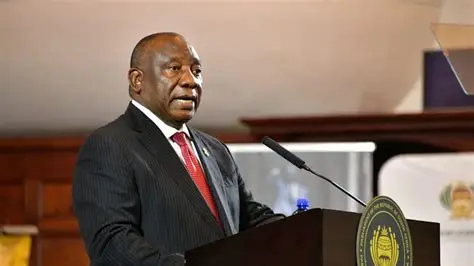
On Monday, South African President Cyril Ramaphosa condemned xenophobia and intolerance in response to calls for new marches by the “March and March” movement, which set September 30 as the deadline for irregular migrants to leave the country.
RELATED:
More Than 53,000 Foreigners Deported From South Africa Amid Xenophobia Wave
“We refuse to be defined by xenophobia and intolerance. The peoples of Africa provided moral and material support to our liberation struggle and our democracy,” Ramaphosa stated in his weekly letter to the nation.
“Democratic remains committed to promoting the ideals of African unity and integration,” the president emphasized, referring to the historic role played by other countries on the continent during apartheid.
However, the head of state stressed that migration must take place within the framework of the law and that the government has a responsibility to manage borders effectively. Ramaphosa reminded the public that every resident in South Africa is obliged to respect national regulations and warned that racism would never define who they are.
RECAP | President Cyril Ramaphosa called for an end to gender-based violence during the 2026 National Heritage Day celebrations at Bongolethu Stadium in Oudtshoorn.
He urged South Africans to build a safer society where women could live with dignity and without fear.… pic.twitter.com/GaeHezyl2r
— South African Government (@GovernmentZA) September 28, 2026
The anti-immigration movement “March and March” plans to lead protests this coming Wednesday, the day the deadline they set regarding irregular migrants in South Africa expires. Organizers expect a turnout of 1.5 million people at demonstrations scheduled for Johannesburg, Pretoria, Durban, Cape Town, and other major cities, according to local media reports.
In a video posted on its Facebook account, the movement also called on men to take a stand against gender-based violence and femicide—an issue Ramaphosa himself described last week as a national disgrace.
Context of xenophobic tensions and repatriations
Anti-immigration groups blame migrants for South Africa’s economic woes, poor public service delivery, and high crime rates, and have even gone so far as to block their access to healthcare and education at public facilities.
Approximately 180,000 citizens from Zimbabwe, Malawi, Ghana, Mozambique, Nigeria, Kenya, Uganda, Tanzania, and the Democratic Republic of the Congo (DRC) have been repatriated to their home countries in recent months amidst a wave of xenophobia targeting African migrants, according to official data provided by the respective governments.
Xenophobic tensions are a recurring issue in South Africa and have erupted into waves of violence on several occasions in recent years—resulting in dozens of deaths—particularly in the most vulnerable neighborhoods.
The president urged vigilance against those seeking to undermine national unity and pit South Africans against one another, warning that “at a time when irregular migration is fueling social tensions, inflammatory statements regarding foreign nationals are dangerous and irresponsible.”
#Africa | South Africa has returned to Zimbabwe ancestral human remains and a stone carving of the sacred bird that represents its national emblem, stolen more than a century ago during the colonial era.https://t.co/l96BwbqCel pic.twitter.com/W8C8urOmsb
— teleSUR English (@telesurenglish) April 16, 2026
From teleSUR English via This RSS Feed.