

The Republic of Ireland’s football coach praised his players’ protest during the match against Israel for having “raised awareness worldwide” of the genocide in Gaza.
After Sunday’s game, in which the Republic of Ireland won 3-0, Heimir Hallgrímsson told RTÉ that “It has been so difficult for so many players”.
I hope that will not be in the next game because they have shown support to the protest, they have raised awareness worldwide, not only in Ireland, on the subject and that is normally the reason for protesting, to raise awareness of a situation.
“I think these players have done that with all their actions, with all that they have been saying. No more than Gavin Bazunu, but the others have done it here on the pitch and how they have shown their actions, so I hope people understand that.
Goalkeeper Gavin Bazunuwithdrew from the two fixtures against Israel. He said his decision was linked to his “personal belief that the killing of innocent people is wrong”.
Eventually, it was decided that the team would take to the pitch, but the Republic of Ireland chose to boycott certain aspects of the proceedings.
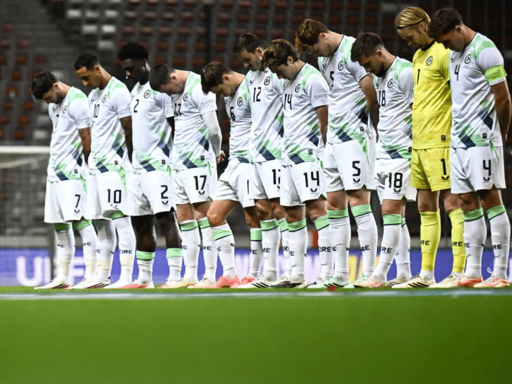
The UEFA Nations League kick-off was preceded by minutes laden with political and humanitarian messages. The Irish players entered the pitch wearing black armbands, then bowed their heads whilst the Israeli national anthem was played, and refused to shake hands or exchange commemorative flags with the Israeli players.
When Jack Moylan scored the Republic of Ireland’s third goal, he removed his black armband, kissed it and raised it aloft – a moment that received widespread attention in international coverage.
Israel politicians react badly
Players’ gestures did not go unnoticed by the Israelis.
The Israeli national team captain, Manor Solomon, who did not receive a handshake from the opposition captain, Dara O’Shea, criticised their behaviour.
Meanwhile, Israeli media portrayed the bowing of heads, the refusal to shake hands and the black armbands as clear acts of protest.
Israeli Foreign Minister Gideon Sa’ar also attacked the Irish stance before the match. He wrote on X:
Ireland’s unique talent for finding itself on the wrong side of history remains intact.
Comments made by Republic of Ireland manager Heimir Hallgrimsson prior to the game that his team was “playing against genocide” had landed him in hot water. He was accused of “ignorance, hypocrisy and stupidity” by the Israel Football Association, which Micheál Martin, Taoiseach (Irish Prime Minister) called “unacceptable”.
Republic of Ireland v Israel this week
The two teams are set to face each other again on Sunday 4 October in Bačka Topola, Serbia. The Irish Football Association (IFA) had moved the match – which was originally set to be played in Dublin – to a neutral venue.
Irish media reports suggest that the pressure to cancel the second fixture will continue, whilst the question remains as to whether the players will repeat the same actions or take further steps.
RTÉ chose to scale back its coverage of the matches. It will continue to omit the usual studio analysis, advertising and sponsorship associated with the fixtures and just do enough to fulfil its contractual broadcasting obligations.
As the 4 October match approaches, the debate will continue off the pitch, with public and sporting pressure mounting on the IFA, and differing views on Israel’s participation in European competitions.
Featured image via Ben McShane/ Sportsfile/ Getty Images
By Alaa Shamali
From Canary via This RSS Feed.