

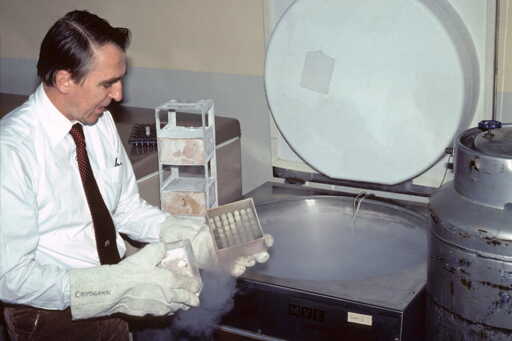
Kurt, a Przewalski’s horse, was born at San Diego Zoo in the U.S. in August 2020. Less than three years later, Ollie followed. Out in the wild, their species had gone extinct in the 1960s. Both individuals, born of a surrogate mother — a domestic horse — were the first Przewalski’s horses (Equus ferus przewalskii) to be successfully cloned from another of their species whose DNA had been preserved at the zoo for 40 years. At the San Diego Zoo Wildlife Alliance’s Frozen Zoo, the largest initiative of its kind in the world, genetic materials from animals and plants are stored — cryopreserved using liquid nitrogen at temperatures as low as -196° Celsius (-320° Fahrenheit) — for posterity. But the Frozen Zoo is only part of the alliance’s broader biodiversity banking initiative, which also includes a native plant gene bank and a tissue and DNA bank. “I think of it as saving DNA for the future,” Katie Heineman, conservation program leader for biodiversity banking at the San Diego Zoo Wildlife Alliance (SDZWA), told Mongabay in a video interview. “It really is an optimistic act to conserve biodiversity for a time where we’ve solved the threats facing nature.” Applications are aplenty. Biodiversity banking can help not just in the recovery of threatened species, but also in preserving genetic diversity. It’s also crucial for scientific research. However, given the pace of habitat degradation and biodiversity loss, Heineman said there’s an urgency to build capacity around the world to ensure more samples are…This article was originally published on Mongabay
From Conservation news via This RSS Feed.