


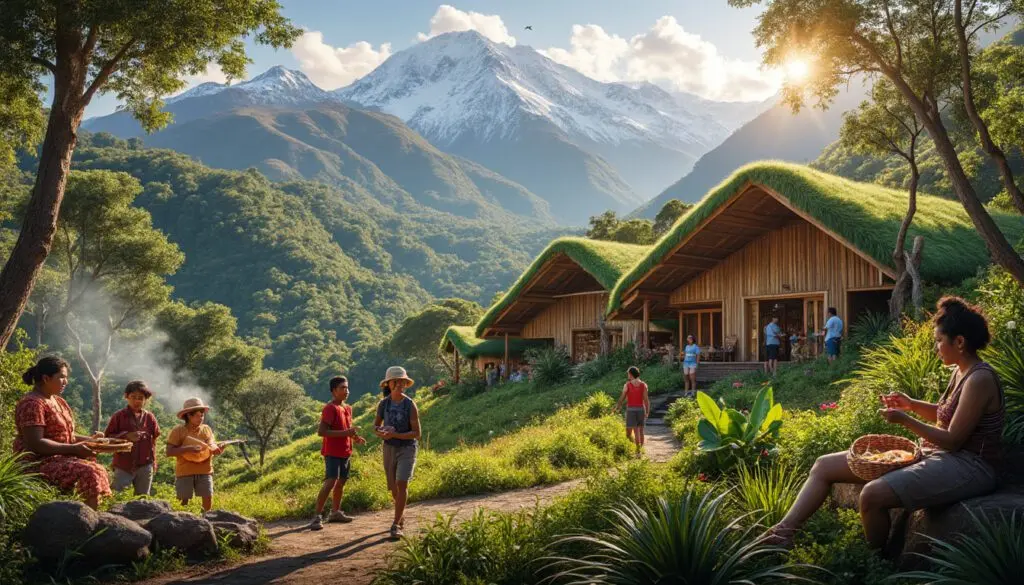
Peru has a significant opportunity to strengthen the development of its regions through the recovery of tourism and international interest in sustainable travel, the National Center for Strategic Planning (Ceplan) highlighted this Sunday.
RELATED:
Peru’s Inca Trail Network to Machu Picchu Reopens to Tourism
Marking National Tourism Day—observed every September 27—the state agency noted that sector trends can guide the diversification of destinations, heritage conservation, and the generation of benefits for communities.
According to the Center, one sign of recovery in the tourism sector—which was hard hit by the COVID-19 pandemic—is evident in accommodation establishments: the number of guests rose from 36.4 million in 2020 to 57.6 million in 2024. Of the latter figure, 50.9 million were domestic guests, “demonstrating the importance of the domestic market to accommodation activity,” the agency detailed.
Sustainability and Challenges
En el #DíaMundialDelTurismo 2026, el Mincetur anunció el Quinquenio de la Infraestructura Turística, una apuesta de largo plazo que contempla 4 megaproyectos estratégicos para diversificar destinos, fortalecer la oferta turística y generar nuevas oportunidades en las regiones. pic.twitter.com/p6y141X2YF
— MINCETUR 🇵🇪 (@MINCETUR) September 27, 2026
The text reads, “On #WorldTourismDay 2026, the Mincetur announced the Quinquennium of Tourist Infrastructure, a long-term commitment that includes 4 strategic megaprojects to diversify destinations, strengthen the tourism offer, and generate new opportunities in the regions.”
International surveys reflect shifts in traveler preferences: the intention to stay in sustainable accommodations rose from 62% in 2016 to 78% in 2022. In 2025, 93% of surveyed travelers expressed a willingness to make more sustainable travel choices. For Peru, this presents an opportunity to develop experiences that integrate nature, heritage, and living culture, while involving local communities and adhering to conservation and responsible management criteria.
The Center emphasized that, to capitalize on these opportunities, destinations must prepare to meet new traveler preferences and address environmental challenges by incorporating measures for climate change adaptation, risk management, and the conservation of natural and cultural heritage. “A forward-looking perspective invites us to go beyond merely increasing visitor numbers,” the speaker noted, before emphasizing that the challenge lies in building destinations that offer quality experiences, create opportunities for local communities, and preserve the resources that define their identity.
Meanwhile, the National Institute of Statistics and Informatics (INEI) reported on September 4 that the arrival of foreign visitors to Peru fell by 5.5% during the second quarter of 2026 compared to the same period the previous year.
The majority of foreign visitors arriving between April and June came from Chile (31.9%), followed by the United States (14.3%), Ecuador (8.9%), Colombia (8.8%), Brazil (6%), Spain (5.8%), Panama (5.2%), and Bolivia (5.1%); these countries accounted for 86.0% of all foreign arrivals.
In 2025, Peru received 4,157,469 international visitors—a 4.1% increase over the previous year and a recovery rate of 78.8% relative to pre-pandemic levels, when the country recorded 4.4 million visitors, according to official figures.
China’s Archaeology Institute, Peru’s Culture Ministry, and the Archaeology Faculty at the National University of San Marcos signed an agreement to expand their cultural cooperation through a joint archaeological research project on the Caral civilization.https://t.co/CUO67xbMgY
— teleSUR English (@telesurenglish) August 27, 2026
From teleSUR English via This RSS Feed.
Come visit our country full of slop!
