

By Francisco Dominguez – Sep 26, 2026
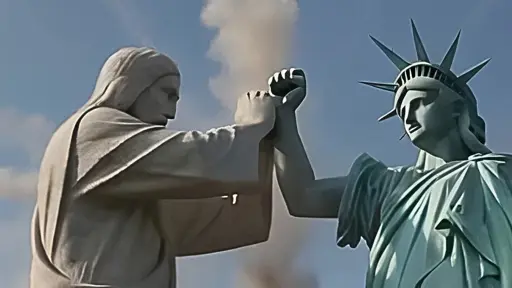
Brazil goes to the polls on 4 October 2026 to elect its next president for the 2026-2030 period. Unsurprisingly, as it has done elsewhere in Latin America, the Trump administration is overtly and intensely interfering in favour of the far-right candidate, Flavio Bolsonaro (Jair Bolsonaro’s son) and against the incumbent, Inácio Lula da Silva.
In July 2025, US Secretary of State, Marco Rubio, imposed sanctions on Brazil’s Supreme Court president, Alexandre de Moraes for having had the temerity to preside over the trial of Jair Bolsonaro and associates, for their involvement in a violent coup attempt in January 8 2023, aimed at overturning Lula’s 2022 electoral victory. Trump publicly demanded and “immediate” end to the trial but justice prevailed and Bolsonaro was sentenced to 27 years in prison.
Trump’s offensive had begun earlier. In June the State department designated two Brazilian criminal gangs –Primeiro Comando Capital and Comando Vermelho, both involved in drug trafficking– as terrorist organizations, a designation that supposedly allows the US to impose sanctions or undertake military actions. Drug trafficking was the key justification to militarily attack Venezuela and kidnap President Maduro on 3 January 2026.
In August 2025, the US, also revoked the visas of eight of Brazil’s eleven Supreme Court justices and also of other state officials, including Brazil’s Minister of Health, associated with the Mais Medicos programme that brought nearly twenty thousand Cuban doctors to Brazil to serve some of the country’s poorest communities. Also in August, the US revoked the visa of Brazil’s ambassador to the US, Maria Luiza Riveiro Viotti, although she was not expelled from the US, without a visa, she is unable to carry out her official duties.
Trump’s brutal offensive is multifaceted. In December 2025 – led him to impose 50% tariffs on a range of Brazilian goods. Trump had threatened the tariff in July 2025 immediately after president Lula promoted Brazil’s domestic instant-payment system, Pix, an independent financial infrastructure that reduces dependency on the dollar. Around 91% to 93% of Brazil’s adult population are active users of Pix. Lula did not buckle. He made it abundantly clear that Brazil was prepared to retaliate in kind.
Eduardo Bolsonaro, another of Jair Bolsonaro’s sons, a lawmaker, has been heavily lobbying in Washington for the imposition of US sanctions and tariffs against state officials and the economy of his own country. He was also ordered by Brazil’s Supreme Court to remove posts containing false information– aimed at discrediting the country’s electronic voting machines and casting doubt on the election results in the event of an electoral defeat.
The Sopranos, sorry the Bolsonaros and the US government are using the customary tool-kit of right-wing playbook binding and subordinating themselves to Trump as his proxies against Brazil’s national interest. Defeating Lula at the coming election would represent a gigantic step forward for Trump’s National Security Strategy, which aims at the colonial domination of the Western Hemisphere and, ultimately, the obliteration of national sovereignty across Latin America.
U.S. interference in favour of far-right political forces has produced substantial political gains. Far-right or right-wing governments now hold power in a number of Latin American and Caribbean countries, including Ecuador, Argentina, Honduras, Bolivia, Chile, Peru, Colombia, Costa Rica, El Salvador, Panama, Paraguay, the Dominican Republic, Trinidad and Tobago, and Guyana, many of which enjoy strong support from Trump. At the same time, Washington is rapidly expanding its military reach across the continent.
The Trump administration’s explicit aim is to enforce U.S. hegemony by, among other things, preventing countries in the region from peacefully trading and collaborating with ”non-Hemispheric” actors, principally China, Brazil’s main trading partner. This, it intends to enforce through economic warfare, political pressure and, if necessary, military means.
This is a cherished Trump objective against which Brazil represents a formidable obstacle. Brazil’s GDP is US$2.64 trillion, while the combined GDP of Latin America and the Caribbean is around US$8 trillion. Brazil is one of the world’s ten most industrialized countries. It is also a central player and founder member of BRICS while being the prominent member of the most influential multilateral economic and political bodies, including the G20, MERCOSUR, the World Economic Forum in Davos, COP31, the Amazon Cooperation Treaty Organization and CELAC, among others. Its voice carries considerable weight in these institutions. The continental balance of forces is therefore quite favourable to Trump.
The US has had a series of political successes in its “backyard,” where through gross and brutal interference it has managed to subvert the political complexion of many left wing and progressive governments in the region –too many, in fact. There are right-wing or far-right governments in Ecuador, Argentina, Honduras, Bolivia, Chile, Peru, Colombia, Costa Rica, El Salvador, Panama, Paraguay, the Dominican Republic, Trinidad and Tobago, and Guyana, all of which enjoy strong Trump’s support.
US Meddling in Brazilian Elections, Preparing for Possible Military Intervention
Trump’s offensive against the Brazilian government seeks to secure Lula’s electoral defeat and a victory for Bolsonarismo that would remove almost every obstacle to Trump’s full-spectrum dominion of Latin America and the Caribbean. The stakes could not be higher. And for that objective, the array of forces ranged against Lula’s candidacy –that is, the pro-Trump coalition– is indeed formidable.
What Lula’s candidacy faces is a powerful coalition of internal and external social, economic and political forces hegemonized by US imperialism. These include economic interests that weaponize tariffs, media organizations that fabricate narratives, algorithms that shape perceptions and a powerful international machinery determined to ensure Lula’s defeat. It is a sinister media machinery that seems to have grown out of proportion and out of control. The fact that Brazil, with its immense size, economy and influence, adheres to a national sovereign project is for imperialism, an unforgivable transgression.
The struggle over Brazil is about whether Latin America can determine its own destiny, negotiate trade agreements with whichever nation it chooses, and whether a multipolar world can emerge beyond U.S. hegemony. Brazil stands at the centre of that struggle.
A far-right victory in Brazil would also mean major setbacks on environmental protection, climate policy and human rights, including the rights of Indigenous and Black communities, women and LGBT+ people, and workers. The UN says that limiting warming to 1.5°C is now unlikely; unchecked Amazon deforestation and destruction would push temperatures beyond liveable limits. The previous Bolsonaro government dismantled Indigenous and environmental protection agencies, while many Indigenous, environmental and land defenders were murdered during his administration.
At the 81st UN General Assembly (22 September 2026) president Lula, criticized the use of tariffs as weapons of coercion, condemned the renewed hegemonic temptations and the revival of racial supremacy or female subjugation, objected to “aircraft carriers guarding our waters”, denounced efforts to recolonize the Global South and the acceptance of apartheid as a legitimate system. He poignantly pointed out that on 4th October, millions of Brazilians will not just be voting for a new president, state governors and lawmakers, “they will decide between democracy and denialism.” “We will not allow the enemies of democracy, whether domestic or foreign, to undermine the popular will. Brazil will continue to be a sovereign nation!”.
What happens in Brazil will affect the future of world affairs in many ways. Show solidarity with Brazil’s democracy and sovereignty and help us defend a peaceful multipolar world.
Defend Brazil. Defend Latin America. Join the Alliance for Brazilian Democracy and Sovereignty by signing here
From Orinoco Tribune via This RSS Feed.