

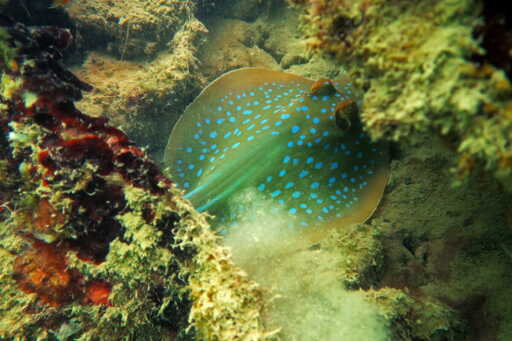
SINGAPORE — “For seven thousand years, Singapore has changed around these reefs,” says Debby Ng, a Singaporean biologist who studies the city-state’s shrinking coastlines of seagrasses, mangroves and corals. “They are still here.” Despite colonization, war, shipping and industrialization, reefs a few kilometers south of Singapore’s gleaming shoreline have endured. “It would be a tragedy if we were to lose them now — in peacetime, at the height of our prosperity, when we possess more knowledge and capacity to protect them than any generation before us,” Ng tells Mongabay. At a National Day rally on Aug. 23, Prime Minister Lawrence Wong announced plans to merge a cluster of islands covering roughly 590 hectares (1,460 acres) of seascape into a new “western island” for advanced manufacturing, energy and defense. No timeline for the western island project was given. Wong said reclamation would take place “over the coming decades” and that plans were being studied carefully. But the announcement has alarmed Singapore’s marine conservation community, which says the project could affect some of the country’s most biodiverse waters. The islands include Pulau Semakau, which houses Singapore’s offshore landfill, and Pulau Bukom, home to an oil refinery, as well as Pulau Sudong and smaller islands including Pulau Hantu, Pulau Jong and Pulau Sebarok. The area is estimated to contain about 60% of Singapore’s remaining coral reefs, 22% of its seagrass meadows and 5% of its mangroves. Black sun coral (Tubastraea micranthus), Singapore. Image by © Tsu Soo Tan via iNaturalist (CC BY-NC 4.0).…This article was originally published on Mongabay
From Conservation news via This RSS Feed.