

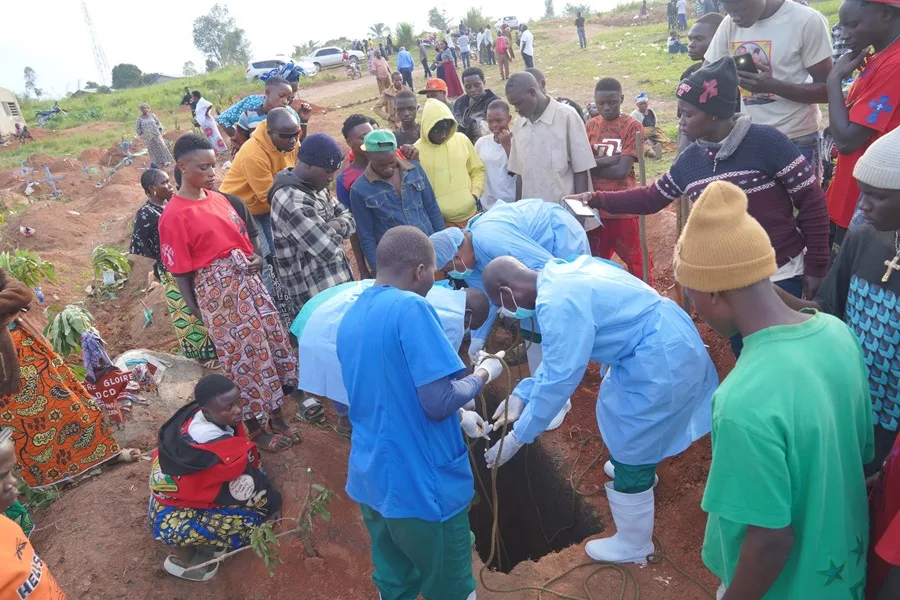
The outbreak has killed 3,901 people, with active community transmission reported in four provinces.
The Democratic Republic of the Congo’s Ebola outbreak has surpassed 8,000 confirmed cases and is approaching 4,000 deaths, according to the country’s National Institute of Public Health (INSP).
RELATED: MSF Calls for Transparency in the Development of Drugs Against Ebola
As of September 26, the outbreak had recorded 8,067 confirmed infections and 3,901 deaths, giving it a case-fatality rate of 48.4%, the INSP said Monday. Another 2,070 patients have recovered, while 773 remain hospitalized or in isolation. Contact tracing currently covers 74.7% of cases.
The number of confirmed Ebola cases in the Democratic Republic of Congo has risen above 8,000 for the first time in the Central African country’s ongoing outbreak, government data showed on Monday. https://t.co/JAYOEt55to https://t.co/JAYOEt55to
— Reuters Health (@Reuters_Health) September 28, 2026
Breaking the chain of transmission
The outbreak is affecting 63 health zones across seven of the Democratic Republic of the Congo’s 26 provinces: Ituri, Tshopo, Bas-Uélé, Haut-Uélé, North Kivu, South Kivu and South Ubangi.
The INSP said active and persistent community transmission was continuing in Ituri, North Kivu, Haut-Uélé and Bas-Uélé.
“Community transmission remains active and persistent in the provinces of Ituri, North Kivu, Haut-Uélé and Bas-Uélé,” the institute said, adding that epidemiological investigations were continuing. Health authorities had investigated 95.2% of suspected cases within 24 hours of notification.
“Strengthening priority interventions — surveillance, care, outbreak control, logistics and community engagement — remains essential to rapidly interrupt chains of transmission,” the INSP said.
The current outbreak is the second-deadliest and most contagious Ebola outbreak recorded globally. It has surpassed the outbreak that struck the same region of the Democratic Republic of the Congo between 2018 and 2020, but remains below the 2014-2016 outbreak in West Africa, which caused about 11,000 deaths and 28,000 infections.
First vaccine
The current outbreak is caused by the Bundibugyo strain, for which no specific treatments are available. The World Health Organization is working on two vaccines that have entered Phase 1 human trials and have so far been shown to be safe, although their development could take several months.
The Democratic Republic of the Congo launched an Ebola vaccination campaign in late August using Ervebo, the only vaccine currently available on a large scale. It was originally designed for the Zaire strain, the more common variant of the virus, but has shown positive indications against the Bundibugyo strain in animal studies.
The outbreak also spread to neighboring Uganda, where the WHO declared the end of the outbreak on August 26 after 20 confirmed cases were recorded. Fifteen of those cases were imported from the Democratic Republic of the Congo, and two people died.
Ebola is transmitted through direct contact with the bodily fluids of infected people or animals. The virus can cause severe hemorrhagic fever, vomiting, diarrhea and internal bleeding.
From teleSUR English via This RSS Feed.