

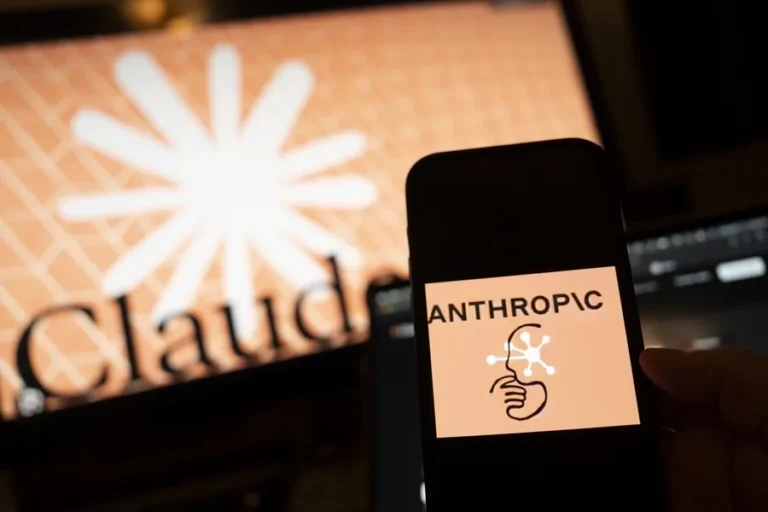
Anthropic Pentagon AI ban upheld 2–1 as a U.S. appeals court backs military restrictions on Claude over safeguards against autonomous weapons and surveillance.
Related: Anthropic’s AI Hacks the Systems of Three Organizations
Anthropic Pentagon AI Ban Upheld by Divided Appeals Court
The Anthropic Pentagon AI ban was upheld Friday after a divided federal appeals court ruled that the U.S. Department of Defense could restrict the military use of Anthropic’s Claude artificial-intelligence models.
The 2–1 decision by the U.S. Court of Appeals for the District of Columbia Circuit allows the Pentagon to maintain Anthropic’s designation as a national-security supply-chain risk.
The ruling is a major victory for President Donald Trump’s administration and Defense Secretary Pete Hegseth in a dispute over who controls the use of advanced AI systems in military and intelligence operations.
The case began after Anthropic refused to remove safety restrictions that prohibit the use of Claude for autonomous weapons and mass surveillance of civilians.
The Pentagon had demanded that Anthropic make its technology available for “all lawful uses.” The company argued that the demand was too broad because it could require Claude to be used in operations that violate the company’s safety principles.
Anthropic’s safeguards limit certain applications of Claude, including systems that could independently select and attack targets or conduct mass surveillance without meaningful human oversight.
The company also opposed allowing its models to be used for civilian espionage. Anthropic CEO Dario Amodei said the company would not remove those safeguards.
The dispute intensified after negotiations over a framework agreement worth approximately $200 million collapsed. The Pentagon then designated Anthropic as a supply-chain risk and restricted the company’s participation in Defense Department contracts.
The government argued that Claude’s built-in limitations could unexpectedly interrupt legitimate military operations. It said the Pentagon must be able to rely on systems used in national-security missions without a private company changing or blocking their functions.
Writing for the majority, Judge Gregory Katsas, joined by Judge Neomi Rao, said the Defense Department had ample legal grounds to act.
The judges accepted the Pentagon’s argument that Anthropic’s restrictions could prevent Claude from performing functions the department considered lawful and necessary.
The majority also rejected Anthropic’s claim that the government retaliated against the company because of its views on AI safety and military ethics.
The court concluded that the Pentagon acted because Anthropic would not accept essential contract terms, not because the company had publicly criticized military applications of artificial intelligence.[reuters][reuters][cnbc]
The decision does not prohibit all commercial use of Claude. It allows the Pentagon to exclude Anthropic from Defense Department contracts and military systems, while other government agencies and private companies may continue to work with the company under existing legal conditions.
Anthropic Pentagon AI Ban Raises Questions About AI Safety
Read Reuters’ timeline of the Anthropic-Pentagon dispute.

The Anthropic Pentagon AI ban has become a major test of whether AI companies can maintain ethical limits after their models are integrated into military systems.
Anthropic argues that advanced AI developers have a responsibility to prevent their products from being used in autonomous warfare or indiscriminate surveillance.
The company’s position is based on the principle that certain applications pose unacceptable risks even if the government describes them as legal.
The Pentagon takes a different position. Defense officials say military agencies must have access to tools needed for national security and cannot accept technical restrictions that may interfere with lawful operations.
The disagreement involves more than a single contract. It concerns whether companies can decide how their systems are used after selling or licensing them to the government.
If the Pentagon prevails broadly, defense agencies could demand unrestricted access to AI models as a condition of procurement.
If technology companies retain the right to block certain military uses, they could preserve ethical safeguards but risk losing access to the defense market.
The D.C. Circuit majority interpreted the Federal Acquisition Supply Chain Security Act of 2018, known as FASCSA, broadly.
The law was originally designed to protect federal procurement systems against infiltration, sabotage, or manipulation by foreign adversaries.
Anthropic argued that the law was not designed to punish a domestic company for honestly enforcing publicly disclosed safety restrictions.
Judge Karen LeCraft Henderson, the dissenting judge, agreed with Anthropic’s position. She said the administration had applied FASCSA excessively and improperly.
Henderson argued that the statute should not be used to classify a company as a supply-chain risk simply because it enforces contractual or ethical limits on the operation of its own technology.
Her dissent warned that the government’s interpretation could give federal agencies broad power to exclude technology companies that refuse to accept expansive contract demands.
The case therefore raises questions about administrative power, government procurement, corporate speech, and the constitutional limits of national-security authority.
Anthropic also argued that the Pentagon’s designation violated the company’s First Amendment rights and deprived it of due process.
The appeals court rejected those claims. The majority said the government was making a procurement decision rather than punishing Anthropic’s public statements.
The court’s reasoning creates a distinction between a company’s right to express opinions about AI safety and the government’s authority to decide which suppliers it will use.
Critics of the ruling say the distinction is not clear-cut. They argue that the government’s action came directly after Anthropic rejected a demand to remove safeguards based on ethical principles.
The case also raises concerns for other technology companies. If companies know that refusing military applications could result in blacklisting, they may become less willing to impose safety restrictions.
That could encourage a race among AI developers to offer fewer limitations in order to win defense contracts.
Supporters of the Pentagon’s position say national-security systems cannot depend on models that may refuse tasks or interrupt operations unexpectedly.
They argue that the government must be able to assess whether an AI system is reliable and available for lawful missions.
Anthropic says reliability should include safety and predictable limits, not merely unrestricted compliance.
Court Ruling Splits Anthropic’s Legal Strategy
See ABC News’ report on the 2–1 D.C. Circuit ruling.
The Anthropic Pentagon AI ban now stands in tension with a separate ruling from a federal court in San Francisco.
That court previously found that a broader executive-branch attempt to blacklist Anthropic was unlawful. The California decision blocked a general ban imposed by the White House but did not eliminate the Pentagon’s authority to exclude Claude from military contracts.
The two rulings address different government actions and are based on different legal questions. The D.C. Circuit ruling concerns the Defense Department’s use of federal procurement law.
The California decision examined the broader executive action and found that the administration had exceeded its authority.
The split creates uncertainty about the future of Anthropic’s relationship with the federal government.
Anthropic’s lawyers said the company is evaluating additional appeals. Its options include asking the full D.C. Circuit to rehear the case, a process known as an en banc review, or petitioning the U.S. Supreme Court to hear the dispute.
An en banc review would ask all active judges on the circuit to reconsider the decision rather than leaving the case with the original three-judge panel.
The Supreme Court could decline to hear the case, accept it, or wait for additional litigation before intervening.
The appeals process may also determine whether the Pentagon’s designation affects existing contracts, future bids, subcontractors, and private companies working on Defense Department projects.
The ruling could have financial consequences for Anthropic. Reuters reported that the company says the designation has already cost it billions of dollars in lost business and damaged its reputation ahead of a planned initial public offering.
The legal conflict may also affect Anthropic’s relationships with investors and commercial partners. Some customers may view the company’s safeguards as evidence of responsible AI development, while others may see them as a limitation that creates operational uncertainty.
The Pentagon’s decision could benefit competitors willing to provide fewer restrictions. OpenAI, xAI, Google, and other companies are competing for government contracts involving cybersecurity, intelligence, logistics, military planning, and autonomous systems.
The dispute is particularly significant because AI models are increasingly capable of writing code, analyzing intelligence, operating digital tools, and coordinating complex tasks.
Defense agencies want to integrate these capabilities quickly. Safety researchers warn that rapid deployment without effective controls could create new risks.
The case also comes shortly after Anthropic CEO Dario Amodei called for the AI industry to slow the pace of frontier-model development.
Amodei warned that recursive self-improvement, autonomous agent swarms, cyberattacks, and biological misuse could produce serious threats if systems become more capable faster than institutions can evaluate them.
His call for stronger safeguards contrasts sharply with the Pentagon’s demand for access to all lawful applications.
That contrast has made the court case a symbol of a broader conflict over AI governance. The government emphasizes national security and operational control. Anthropic emphasizes safety, accountability, and limits on harmful use.
Geopolitical Context: AI, Military Power, and State Control
The Anthropic Pentagon AI ban has implications beyond the United States because artificial intelligence is becoming central to global military competition.
The United States, China, Russia, and other powers are investing heavily in AI for surveillance, cybersecurity, battlefield analysis, autonomous systems, logistics, and intelligence.
The dispute demonstrates the tension between private technology companies and governments that want unrestricted access to advanced systems.
For Washington, dependence on private AI companies creates a strategic vulnerability. If a company can block military applications, the government may fear losing control over critical infrastructure and defense operations.
For technology companies, unrestricted military use can create ethical, legal, and reputational risks. They may be held responsible if their systems contribute to unlawful surveillance, civilian casualties, or autonomous attacks.
The court’s interpretation of FASCSA could become important for governments seeking to regulate domestic technology firms under national-security laws.
If the ruling stands, governments may have greater power to classify companies as supply-chain risks based on the operational limits built into their products.
Other countries may adopt similar policies, requiring AI companies to remove safeguards or risk losing access to public-sector contracts.
That could produce a global race toward less restricted AI systems, particularly in countries where military competition is intense.
The case also affects international efforts to establish rules for autonomous weapons. Many governments, researchers, and civil-society organizations support meaningful human control over systems capable of using lethal force.
Anthropic’s restrictions align with those concerns. The Pentagon’s position emphasizes that any lawful military use should remain available to authorized agencies.
The legal dispute may influence future debates at the United Nations and other international forums. The question is whether AI companies should be allowed to impose independent limits on military use or whether governments should control the full operational scope of national-security technology.
The case could also affect public trust in AI. Citizens may question whether companies, courts, or defense departments are capable of controlling systems that can monitor populations, generate intelligence, and support military decisions.
The decision does not resolve those issues. It confirms only that, under the D.C. Circuit’s interpretation, the Pentagon had sufficient authority to designate Anthropic as a supply-chain risk.
Anthropic may continue its legal challenge, and the Supreme Court could eventually be asked to clarify the limits of federal procurement law.
Until then, the ruling gives the Pentagon leverage over AI companies and signals that ethical restrictions may carry commercial consequences in the defense market.
The central unresolved question is whether an AI company can refuse military uses it considers dangerous without being treated as a national-security threat.
From teleSUR English via This RSS Feed.