

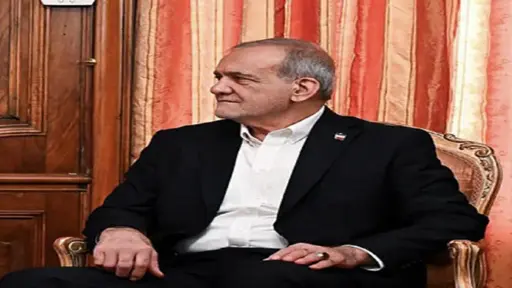
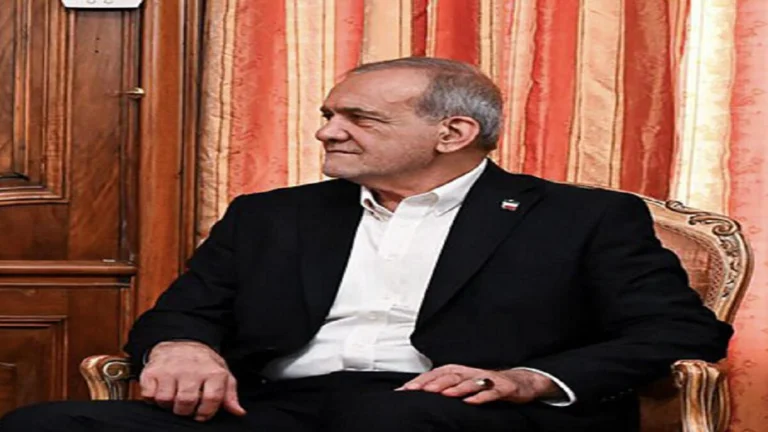
Iran Trump summit conditions require an end to U.S. hostilities, sanctions and broken agreements before Pezeshkian will meet Trump or resume nuclear talks.
Related: Colombia Breaks Ties With Iran, Labels IRGC Terrorist Group
Iran Trump Summit Conditions Block Bilateral Meeting
Iran Trump summit conditions have ruled out an immediate bilateral meeting between Iranian President Masoud Pezeshkian and U.S. President Donald Trump.
In an interview with CBS News, Pezeshkian said Tehran cannot enter close negotiations while Washington continues military pressure, imposes sanctions, issues threats, and violates written commitments.
The Iranian president said the first step toward renewed diplomacy must be respect for existing agreements.
“We have signed agreements. We have made commitments. They must fulfill what they agreed to so that we can trust that this process can work,” Pezeshkian said.
He added that the United States must respect its written commitments before Iran can consider resuming close talks.
“Then we can sit down and speak closely and resume negotiations,” he said.
Pezeshkian’s position reflects a deep crisis of confidence between Tehran and Washington. Iranian officials argue that negotiations cannot succeed while one side is under military attack and economic pressure.
The president questioned the value of sitting across from U.S. officials while American forces continue military operations and Washington imposes new sanctions.
He said it was extremely difficult to trust a government that increases sanctions daily, issues direct threats, and abandons commitments reached in writing.
The interview came after Iranian Foreign Minister Abbas Araghchi presented a conditional plan for ending hostilities, reopening the Strait of Hormuz, and returning to discussions about Iran’s nuclear program.
Iran’s proposal was delivered to Washington through intermediaries, including Qatar. According to the plan, the timeline would begin once the United States accepted Tehran’s conditions.
The proposed sequence would include several days of initial measures, the reopening of the Strait of Hormuz on the sixth day, and renewed U.S.-Iran nuclear talks on the seventh.
The conditions include an end to military operations, the lifting of a U.S. naval blockade of Iranian ports, the release of frozen Iranian assets, and sanctions relief for Iranian oil exports.
Iranian officials have said the plan is based on a memorandum of understanding reached earlier this year. They maintain that the steps are not new demands but commitments already included in previous agreements.
According to reports, the frozen assets could be worth at least $12 billion. Tehran has also demanded that the United States stop attacks on Iran and its regional allies.
Pezeshkian said Iran remains prepared for diplomacy but will not negotiate under coercion or military intimidation.
The Iranian government has also indicated that it could allow United Nations nuclear inspectors to return to the country as part of a long-term ceasefire agreement.
Pezeshkian rejected accusations that Iran is seeking nuclear weapons. He said inspections could be discussed if Washington first accepts a framework based on mutual commitments and respect for Iranian sovereignty.[france24][aljazeera][bbc.co]
Iran Trump Summit Conditions Include Sanctions Relief
Read the seven-day proposal to reopen the Strait of Hormuz and resume nuclear talks.
The Iran Trump summit conditions are closely connected to the future of the Strait of Hormuz, one of the world’s most important maritime energy routes.
The waterway links the Persian Gulf with the Gulf of Oman and the Arabian Sea. Before the current conflict, approximately one-fifth of the world’s traded oil and gas passed through the strait.
Iran has used control over navigation as leverage in its confrontation with Washington. Tehran says restrictions will remain until the United States ends military pressure and meets its demands.
Iran’s foreign minister told reporters at the United Nations that the seven-day plan would reopen the waterway only after Washington fulfilled the required conditions.
The initial measures would take four or five days. Iran would reopen the strait on the sixth day, and negotiations on a final nuclear agreement would begin on the seventh.
The proposal also includes a ceasefire covering the broader region, including Lebanon and Yemen. Tehran has insisted that an agreement cannot focus only on Iran while attacks continue against its regional partners.
The United States has rejected the proposal, according to officials cited by The Wall Street Journal. Trump reportedly told advisers that he intended to resume bombing operations against Iran after the November midterm elections.
Washington has not publicly confirmed all details of the reported rejection. The White House has continued to demand that Iran end what it describes as destabilizing regional activity and accept restrictions on its nuclear program.
The dispute has created a gap between Iran’s conditions and the U.S. position. Tehran wants an end to hostilities and economic pressure before nuclear negotiations. Washington wants concessions and verification before offering sanctions relief.
This sequencing issue is at the center of the diplomatic impasse. Each side wants the other to take the first step.
Iran says it cannot negotiate while under attack. The United States says it cannot ease pressure without proof that Iran will comply with its commitments.
Pezeshkian said Iran’s demands are grounded in international law. He accused the United States of violating agreements and harming the Iranian people through sanctions and military action.
The Iranian president also referred to the killing of senior officials and scientists in operations attributed to the United States and Israel. He argued that those attacks made it even more difficult for Tehran to trust Washington.
The dispute has implications for global energy markets. Any prolonged closure of the Strait of Hormuz could increase oil prices, shipping costs, insurance premiums, and pressure on countries dependent on Gulf energy.
Asian economies would be particularly vulnerable because a large share of their oil and gas imports pass through the waterway.
The diplomatic proposal is therefore being watched not only as a possible path toward negotiations but also as a test of whether military escalation can be replaced by an agreement.
Pezeshkian Gives Health Update on Mojtaba Khamenei
See reporting on Iran’s position regarding the Strait of Hormuz proposal and nuclear talks.
During the CBS interview, Pezeshkian also addressed the health of Ayatollah Mojtaba Khamenei, Iran’s supreme leader.
The president said Mojtaba Khamenei does not have any specific ongoing health problem following injuries sustained during the joint U.S.-Israeli offensive at the beginning of the year.
“No, he does not have any health problem or any specific ongoing difficulty,” Pezeshkian said when asked about the leader’s recovery.
He said he had met with Khamenei twice. The most recent meeting lasted more than seven hours.
Pezeshkian said the supreme leader was healthy enough to remain engaged throughout the meeting. He added that they changed angles and positions because they were not accustomed to sitting for such a long period.
The statement was significant because rumors about Khamenei’s health have circulated during the conflict. Iranian authorities have sought to project continuity and stability within the country’s leadership.
The president’s comments also offered a rare glimpse into the internal functioning of Iran’s leadership during a period of military confrontation and diplomatic pressure.
The health of the supreme leader is a matter of national and regional importance because the position holds ultimate authority over Iran’s defense, foreign policy, and nuclear strategy.
Any uncertainty surrounding the leadership could affect calculations in Washington, Tel Aviv, and other regional capitals.
Pezeshkian’s statement was intended to reduce speculation and reassure the public that the leadership remains capable of making decisions.
The president’s refusal to meet Trump should also be understood within that political context. Tehran wants to show that it is not negotiating from weakness, even while leaving the door open to diplomacy.
Iran’s public position combines two messages: it rejects talks under pressure, but it remains willing to negotiate if Washington stops hostilities and honors written commitments.
That approach allows Tehran to defend sovereignty while keeping open the possibility of a diplomatic settlement.
Geopolitical Context: U.S.-Iran Confrontation and Regional Security
The Iran Trump summit conditions reflect a broader transformation in the Middle East security environment.
The confrontation now involves direct U.S.-Iran hostilities, Israeli military operations, armed groups in Lebanon and Yemen, maritime restrictions, sanctions, and disputes over Iran’s nuclear program.
The Strait of Hormuz has become the central pressure point because it links military conflict with global energy security. Iran can use the waterway to increase pressure on Washington and its allies, while the United States can use naval power to demand open navigation.
Neither side appears willing to concede its core position. Tehran says it will not abandon sovereign rights under threats or intimidation. Washington insists that Iran must change its regional and nuclear policies.
The crisis also involves the United Nations. Araghchi announced the seven-day plan while attending the UN General Assembly, signaling Iran’s attempt to place the dispute within a multilateral diplomatic framework.
Iran wants sanctions, military operations, and naval restrictions to be debated as questions of international law and state sovereignty.
The United States is likely to present the conflict as a matter of protecting allies, preventing nuclear proliferation, and defending maritime commerce.
Those competing narratives make compromise difficult. A future agreement would have to address military operations, sanctions, frozen assets, nuclear inspections, regional armed groups, shipping, and security guarantees.
The issue of trust is particularly difficult. Iran’s leadership says previous commitments were violated by Washington. The United States says Iran’s actions demonstrate that only pressure can produce results.
Pezeshkian’s refusal to meet Trump until hostilities end sends a message to both domestic and international audiences. Inside Iran, it presents the government as defending national dignity. Abroad, it signals that Tehran will not accept negotiations conducted under military threat.
At the same time, the proposal to reopen Hormuz within seven days shows that Iran is not closing the door to diplomacy. Tehran is offering a sequence in which pressure is reduced first, navigation resumes, and nuclear discussions follow.
The role of Qatar and other intermediaries could become increasingly important if direct negotiations remain politically impossible. Regional governments have an interest in preventing the conflict from spreading and protecting energy shipments.
China, India, Russia, and European governments are also watching the crisis closely. Each has economic interests in Gulf energy and maritime trade, even though their political positions differ.
If the dispute continues, the consequences could include higher energy prices, disruptions to shipping, increased military deployments, and deeper divisions within the international system.
If negotiations resume, the seven-day plan could become a starting point for a broader ceasefire. But substantial obstacles remain, particularly over sanctions relief, nuclear enrichment, military withdrawal, and accountability for attacks.
For now, Pezeshkian’s message is clear: Iran is willing to negotiate, but not under ongoing bombardment, economic coercion, or broken promises.
From teleSUR English via This RSS Feed.